
Hamidian massacres
Mass killings of Armenians in the Ottoman Empire during the 1890s under Sultan Abdul Hamid II; estimates of victims vary widely and the events had lasting regional and international impact.
Overview
The Hamidian massacres were a series of violent attacks against Armenian communities in the Ottoman Empire that occurred in the mid-1890s. Most scholars place the main wave of killings and deportations in the period commonly dated to 1894–1896, though some contemporary accounts record related outbreaks before and after these years (start, end). Estimates of the number of Armenians killed vary considerably; contemporary and later figures range widely, with commonly cited totals in the hundreds of thousands (casualty estimates), reflecting the difficulty of precise accounting in the aftermath.
Image gallery
10 Images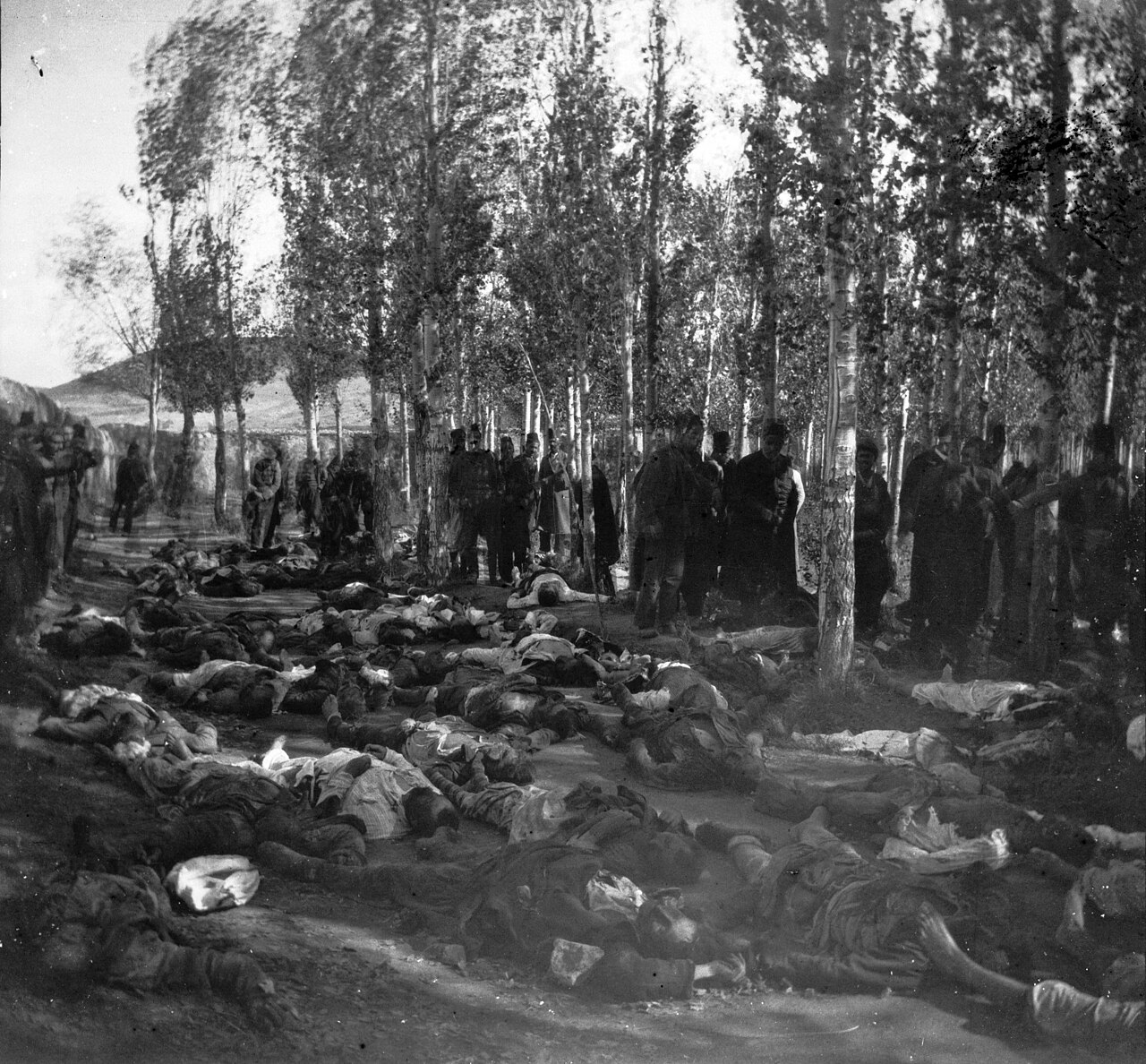


Context and causes
These events took place under Sultan Abdul Hamid II during a tense period for the empire. Armenian political activism and calls for reform were increasing after the Russo‑Turkish War of 1877–78 and the failure of earlier promises of improvement for non‑Muslim subjects. Ottoman efforts to centralize authority and control arms were codified in measures that were applied unevenly; regulations intended to restrict weapons were often enforced against minority populations while local irregular forces were tolerated or armed. The Armenian community and its political organizations—some advocating self‑defense or greater autonomy—became focal points for suspicion and repression.
How the violence unfolded
Violence erupted in different provinces, and in many cases involved Ottoman officials, regular troops, and Kurdish irregulars or tribal groups working with or tolerated by local authorities. Several contemporary diplomats and observers argued that incidents of banditry, clashes, and provocations were used or amplified as pretexts for wider punitive operations. Armenian communities describe the period as the "Great Massacres" (Armenian term), a label that highlights the scale and communal impact of the killings.
Key features and consequences
- Large numbers of civilian deaths and the destruction of villages and property.
- Mass displacement and refugee flows toward safer regions or neighboring territories.
- Intense international reaction and diplomatic pressure from European powers seeking reform guarantees.
- Strengthening of Armenian political movements and emigration to diaspora communities.
Interpretation and legacy
Historians view the Hamidian massacres as a major episode of anti‑Armenian violence in the late Ottoman era and as significant in the development of subsequent Armenian–Ottoman relations. Some contemporary and later Turkish writers characterized the unrest as the outcome of rebellions or intercommunal conflict, while other critics—both Ottoman and foreign—argued that security measures were used to justify mass attacks. A number of historians note that certain justifications offered at the time served as a pretext for repression (contested narratives).
Further notes
The memory of the massacres remains central in Armenian historical consciousness and in debates about late Ottoman policies and minority protection. The events stimulated international humanitarian concern and contributed to changing tactics among Armenian political groups. For contemporary documents, diplomatic dispatches, and survivor accounts see archival collections and specialist studies (regional sources, Armenian accounts, demographic studies).


Questions and answers
Q: What were the Hamidian massacres?
A: The Hamidian massacres took place between 1895 and 1897, during which an estimated 100,000 to 300,000 Armenians were killed. They are also known as the "Great Massacres" by the Armenian people.
Q: What caused the Armenian revolutionary groups to form?
A: The Armenian revolutionary groups formed at the end of the Russo-Turkish War of 1878 and grew with the introduction of Article 166 of the Ottoman Penal code 166, and a raid on Erzerum Cathedral.
Q: How was Article 166 used against Armenians?
A: Article 166 was meant to control possession of arms but it was used to target Armenians by not allowing them to possess arms. Local Kurdish tribes were armed in order to attack defenseless Armenian populations.
Q: What did some diplomats suggest about these events?
A: Some diplomats suggested that these events were committed in order to show counter-measures and invite foreign powers to intervene, as Istanbul's British Ambassador Sir Philip Currie saw in March 1894.
Q: Do Turkish authors admit that this was a pretext for massacres?
A: Yes, some Turkish authors do admit that this was just a pretext for massacres.
Q: Who initiated these attacks against Armenians?
A: These attacks against Armenians were initiated by local Kurdish tribes who had been armed by Article 166 of the Ottoman Penal Code.
Q: When did these events take place?
A: The Hamidian Massacres took place between 1895 and 1897.
Related articles
Author
AlegsaOnline.com Hamidian massacres Leandro Alegsa
URL: https://en.alegsaonline.com/art/42027