
Guadalcanal (island in the Solomon Islands)
Guadalcanal is the largest island of the Solomon Islands, home to Honiara and a tropical rainforest environment. It is historically notable for a major World War II campaign and today for its culture and nature.

Overview
Guadalcanal is the largest island in the Solomon Islands archipelago and one of the better-known islands in the South Pacific. The island hosts the national capital, Honiara, and combines tropical lowlands and rugged interior highlands. Its position made it strategically important during the 20th century.
Image gallery
9 Images




Geography and natural environment
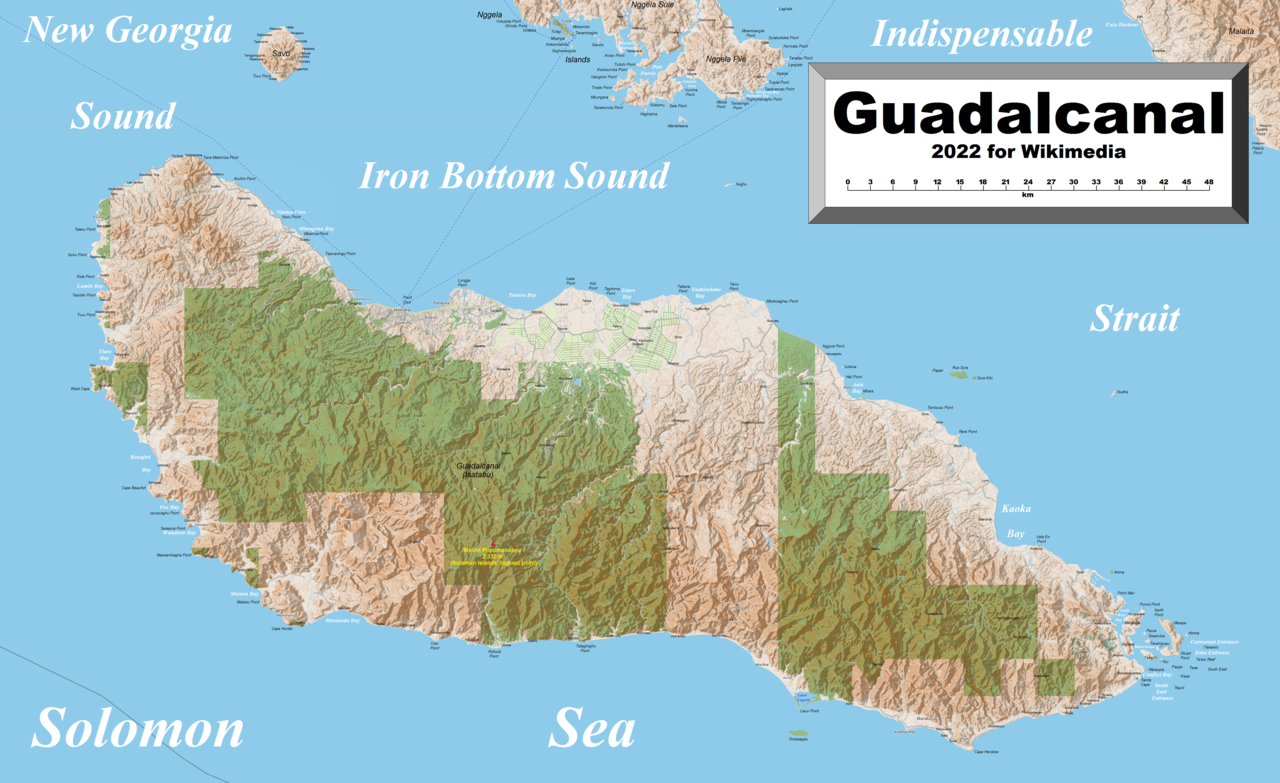
Guadalcanal features a mix of coastal plains, rivers, and steep forested mountains. The island’s climate is tropical and humid, supporting dense rainforests, mangroves and a diversity of bird and marine life. Many coastal areas are important for subsistence fishing and small-scale agriculture by local communities.
History and World War II significance
Long inhabited by Melanesian peoples, the island later became part of a British protectorate along with other islands in the group. Guadalcanal is widely known for the fierce campaign fought there during World War II, when Allied and Japanese forces contested control of its airfields and sea approaches. The fighting included land battles, naval actions and air operations; the campaign had a major influence on the course of the Pacific war and left many relics and wartime sites.
Economy, culture and modern uses
Today Guadalcanal’s economy mixes urban services around Honiara with rural activities across the island. People engage in smallholder agriculture, artisanal fishing, forestry and some mineral extraction, while cultural life remains anchored in local languages and traditions. The island attracts visitors for historical tourism, diving on wartime wrecks and for its natural scenery.
Notable facts and distinctions
- Largest island in the nation of Solomon Islands.
- Contains the national capital and main port, making it an administrative and transport hub.
- Famous in military history for a major Allied offensive that marked a turning point in the Pacific theater.
- Remains important for biodiversity, cultural heritage and as a destination for visitors interested in nature and history.
The island continues to balance development, environmental protection and the preservation of historical sites. Visitors and researchers alike come to Guadalcanal for its landscapes, living cultures and the visible traces of its pivotal 20th-century role.
Related articles
Author
AlegsaOnline.com Guadalcanal (island in the Solomon Islands) Leandro Alegsa
URL: https://en.alegsaonline.com/art/41133