
Grouper (Epinephelinae): reef predators, fisheries, and biology
Large, stout-bodied reef and coastal fishes of the subfamily Epinephelinae valued by fisheries. Overview of taxonomy, anatomy, behavior, human uses and conservation issues.
Overview
Groupers are a diverse group of mainly marine fishes known for their heavy bodies, large mouths and ambush hunting style. They belong to the subfamily Epinephelinae within the family Serranidae, a family that also includes various sea basses. Groupers occur mainly in tropical and subtropical coastal waters worldwide, where many species inhabit coral and rocky reefs. Popular with commercial and recreational fishers, groupers are also important in cultural and culinary traditions in many regions.
Image gallery
10 Images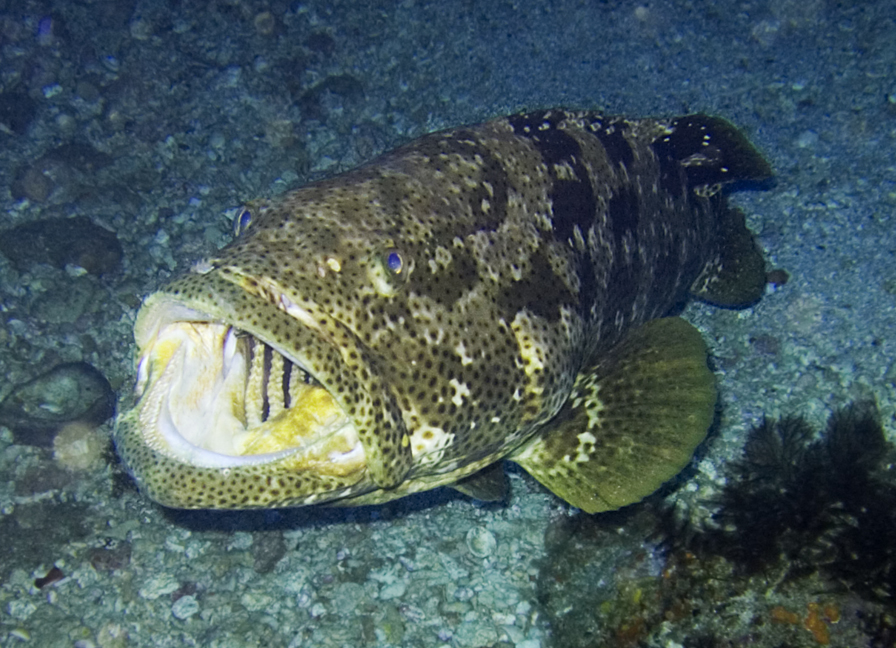


Taxonomy and common names
The name "grouper" is used for members of several genera within Epinephelinae, most prominently Epinephelus and Mycteroperca. Other genera such as Anyperodon, Cromileptes, Dermatolepis, Gracila, Saloptia and Triso include species commonly called groupers, while fishes of the genus Plectropomus are often referred to as coral groupers. Groupers and the broader sea bass group share family-level relationships with other perch-like fishes; for a general description of related forms see perch-like fishes. Because common names vary by region, "grouper" alone is usually applied to members of Epinephelinae in fisheries and field guides.
Physical characteristics
Groupers typically have robust, compressed bodies, rounded fins and large, protrusible jaws that allow them to create a vacuum for swallowing prey whole. Their coloration ranges from mottled browns and greens that camouflage on reef backgrounds to bright patterns in some coral-dwelling species. Many species are relatively slow-growing and long-lived compared with other reef fishes; larger species may exceed one meter in length and reach substantial weights.
- Body shape: chunky, laterally compressed.
- Mouth: large with strong pharyngeal teeth for crushing.
- Reproductive strategy: many are protogynous hermaphrodites (female-to-male sex change) and form seasonal spawning aggregations.
Behavior and ecology
Groupers are predominantly ambush predators that feed on fish, crustaceans and cephalopods. They are often solitary and territorial, occupying crevices or ledges on reefs. Notably, some groupers engage in cooperative hunting with other species; for example, divers have documented tactical partnerships between groupers and octopuses where each species uses complementary tactics to flush or trap prey. Spawning behavior frequently involves aggregations at specific sites and times, a vulnerability exploited by fishers.
Uses, importance and examples
Groupers are highly prized as foodfish for their firm, mild-flavored flesh. They support significant commercial and recreational fisheries and are cultured in some regions through aquaculture operations. Examples of well-known species include larger reef groupers sought by fishers as well as smaller species important locally. Their role as mesopredators on reefs contributes to ecological balance by helping regulate populations of smaller fishes and invertebrates.
Conservation and management
Many grouper species are vulnerable to overfishing because of life-history traits such as slow growth, late sexual maturity and the tendency to form predictable spawning aggregations. Habitat loss, particularly degradation of coral reefs, also threatens populations. Management responses include size and catch limits, seasonal closures around spawning sites, marine protected areas and efforts in aquaculture to relieve pressure on wild stocks. For readers seeking more technical or regional information, resources on related sea basses and fisheries management can be consulted via links such as sea bass resources and general references to perch-like fishes at perch-type fish descriptions.
Notable facts
Beyond their importance to fisheries, groupers are subjects of ecological and behavioral research because of their complex reproductive biology and interspecies interactions. The cooperative hunting with cephalopods is a well-known example of cross-taxa coordination on reefs. Conservationists emphasize protecting spawning sites and reef habitats to maintain healthy grouper populations and the fisheries that depend on them.
Related articles
Author
AlegsaOnline.com Grouper (Epinephelinae): reef predators, fisheries, and biology Leandro Alegsa
URL: https://en.alegsaonline.com/art/41059
Sources
- oxforddictionaries.com : "Oxford Dictionary: 'grouper'"
- bbc.co.uk : bbc.co.uk/iplayer/episode/b09g4d98/blue-planet-ii-series-1-3-coral-reefs