
Greene County, Pennsylvania
Rural county in southwestern Pennsylvania founded in 1796; county seat Waynesburg; known for Appalachian landscapes, coal and natural gas history, and small-town communities.
Overview
Greene County is a rural county in the southwestern part of Pennsylvania. It is part of the Appalachian Plateau and has historically combined agriculture, coal mining and energy production with small-town life. The county seat is identified on official records as the county seat and the borough of Waynesburg serves as the administrative and cultural center.
Image gallery
9 Images


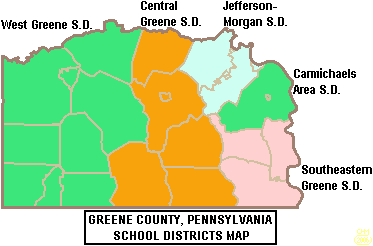
Geography and communities
The county occupies rolling hills, wooded valleys and small river corridors. Settlements range from boroughs and borough-like towns to numerous townships and unincorporated villages. Important communities include Waynesburg, Carmichaels, and Jefferson, along with many agricultural and residential townships.
History and origin
Greene County was established on February 9, 1796, carved from part of Washington County. It was named in honor of General Nathanael Greene, a prominent officer in the American Revolutionary War. The county developed through nineteenth-century patterns of farming and extractive industries, especially bituminous coal mining, which shaped settlements and transportation links.
Demographics and government
At the time of the 2010 United States census the population was recorded as 38,686; like many rural counties in the region, Greene County has experienced demographic change tied to economic shifts in manufacturing, mining and energy. County government and services are headquartered in Waynesburg, where courts, administrative offices and community institutions are concentrated. For official population and administrative data consult the county or census pages, for example census resources and the county's public site at official county pages.
Economy and culture
The local economy historically relied on agriculture, timber and coal. In recent decades natural gas development in the Marcellus and Utica shale formations has influenced employment and land use. Cultural life centers on small-community events, historic sites, educational institutions and outdoor recreation such as hunting, fishing and hiking across the Appalachian landscape.
Notable facts and distinctions
- Founded in 1796 and named for a Revolutionary War general—see Nathanael Greene.
- Waynesburg functions as the county seat and institutional hub; local information is available from municipal offices and Waynesburg resources.
- Economic history includes coal mining and more recently natural gas development, which have shaped demographics and land use.
- For broader state context and governance, consult resources on Pennsylvania and regional authorities.
The county remains representative of many Appalachian counties where history, resource-based economies and small-town civic life intersect. For more detailed governmental, historical and statistical information, visit official portals and archival sources indexed at county information and related reference pages.
Related articles
Author
AlegsaOnline.com Greene County, Pennsylvania Leandro Alegsa
URL: https://en.alegsaonline.com/art/40731
Sources
- quickfacts.census.gov : "State & County QuickFacts"
- naco.org : "Find a County" · web.archive.org