
Great gerbil (Rhombomys opimus)
A large, burrowing rodent of arid Central Asia, the great gerbil is notable for its extensive tunnel systems, social colonies, ecological role and interactions with humans and disease ecology.
Overview
The great gerbil (Rhombomys opimus) is a comparatively large species of gerbil native to much of Central Asia. It is adapted to arid and semi‑arid landscapes and is recognizable for its stocky build, strong digging limbs and conspicuous burrow mounds. The species plays important roles in steppe and desert ecosystems.
Image gallery
9 Images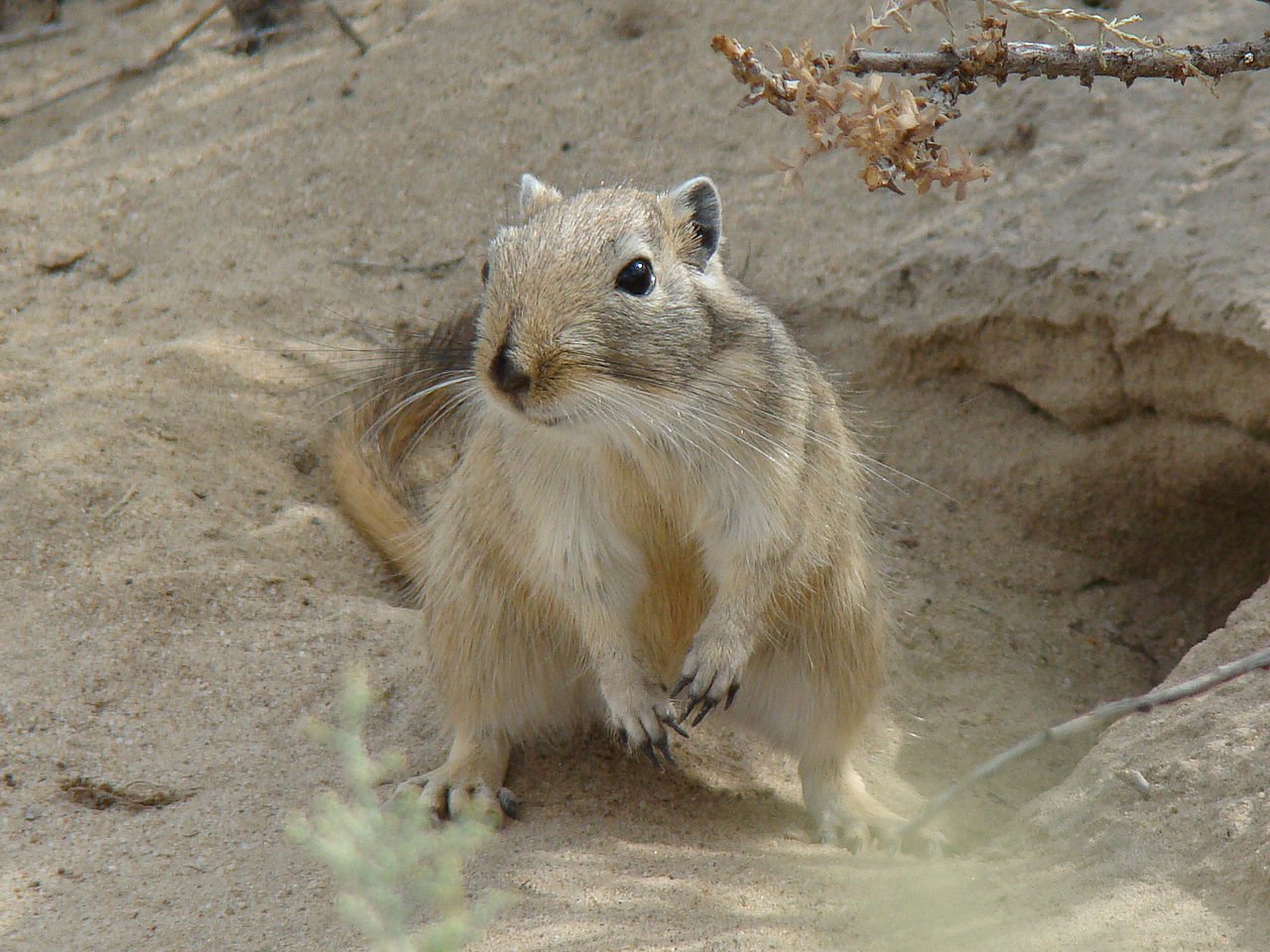


Physical characteristics
Adults are large for gerbils, with a robust body, short ears and a bushy tail. Fur coloration tends toward sandy or grayish tones that provide camouflage on bare ground. Powerful forelimbs and claws enable extensive burrowing. Sexual dimorphism is slight, and overall appearance varies with local soil and vegetation.
Range and habitat
Great gerbils occupy a broad belt across Central Asia, including steppes, saline flats, dune margins and agricultural fringes. They are most common where soils are suitable for burrow construction and where there is enough winter and summer vegetation for food and cover. Their distribution is tied to aridity and open ground.
Behavior, diet and reproduction
This species is primarily herbivorous, feeding on seeds, roots, tubers and green shoots. Great gerbils build extensive, often communal burrow systems with multiple entrances, storage chambers and nesting areas. They are social at the level of family groups or small colonies. Reproduction is seasonal in many parts of the range, producing several young per litter and allowing local populations to expand rapidly when conditions permit.
Ecological and human significance
By altering soil structure and vegetation, great gerbils influence local biodiversity and provide prey for raptors, foxes and mustelids. They can become agricultural pests when populations grow near croplands. The species is also notable in disease ecology: in parts of its range it has been implicated as a reservoir host for zoonotic pathogens, an association monitored by public‑health authorities.
Conservation and notable facts
- Often locally abundant and, across most of its wide range, considered of low conservation concern.
- Population size fluctuates with climate, food availability and land use.
- Its burrowing activity substantially modifies steppe and desert soils, affecting erosion and plant succession.
Related articles
Author
AlegsaOnline.com Great gerbil (Rhombomys opimus) Leandro Alegsa
URL: https://en.alegsaonline.com/art/40504