
Great Dane
Large, short-coated dog breed of German origin, known as a 'gentle giant'; notable for great height, several coat patterns, companion roles, and specific health and care needs.
The Great Dane is a very large domestic dog breed prized for its imposing height and typically placid temperament. Despite its name, which is English in origin, the breed was refined in what is now Germany and is often called the "Deutsche Dogge" in German. Great Danes are widely recognized as one of the tallest dog breeds and have a short, smooth coat that occurs in several well-known color patterns.
Image gallery
10 Images



Physical characteristics
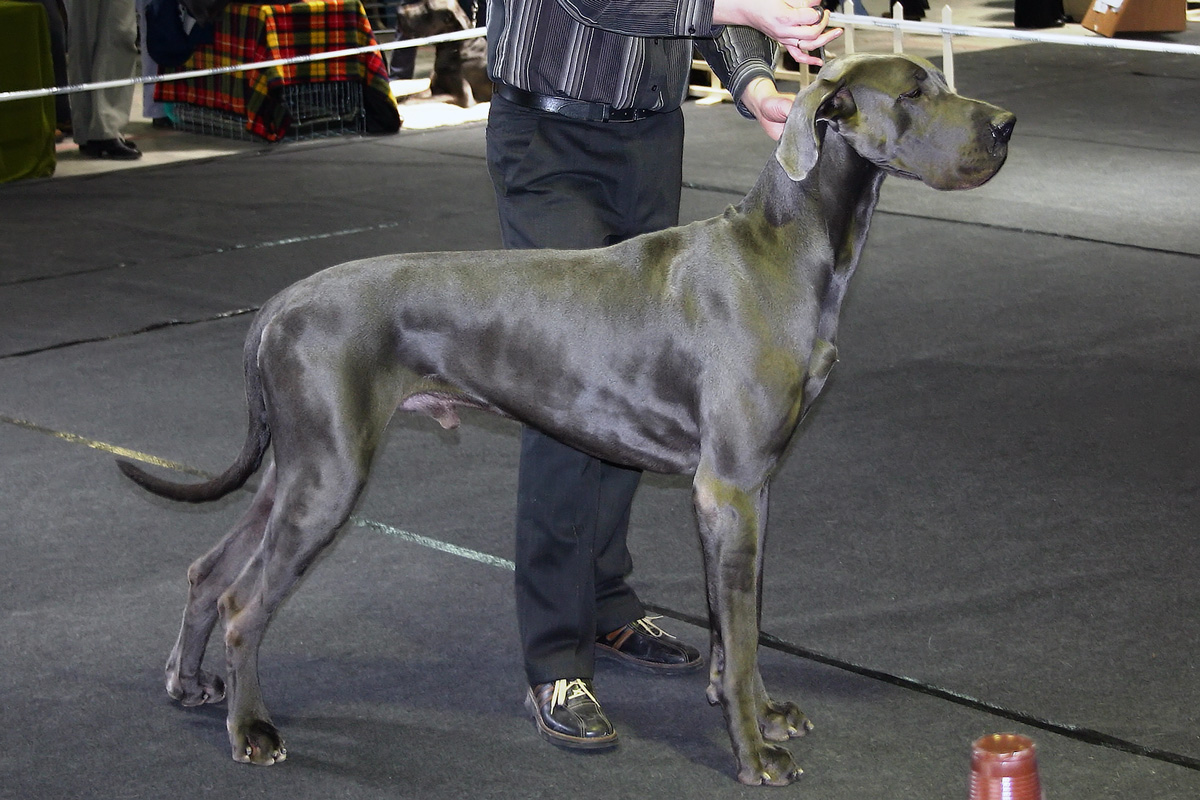
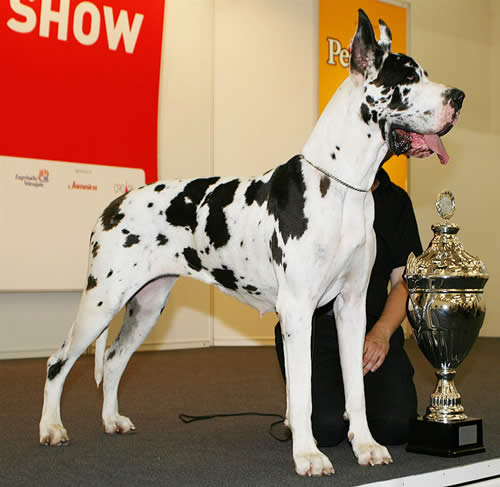
Great Danes are notable for a long, rectangular body, strong straight legs, and a deep chest. Typical adult heights commonly fall in the range of about 28–34 inches (71–86 cm) at the shoulder, with females generally a bit smaller than males. Weight varies with size and build but often lies between roughly 100 and 200 pounds (45–90 kg). Coat colors include fawn, black, harlequin (white with irregular black patches), blue, brindle, and mantle; detailed descriptions are maintained in official breed standards.
Temperament and behavior
Often nicknamed a "gentle giant," the breed is usually affectionate and people-oriented. Great Danes can be calm and patient with family members but require early socialization and consistent training because of their size. They tend to be good with children when supervised and can adapt to both rural and urban life if given proper exercise and space.
History and development
The modern Great Dane emerged from a long history of large European dogs used for hunting boar and for guarding estates. Selective breeding in Germany produced a taller, more streamlined dog suitable as a companion and show animal. Historical accounts link the breed to mastiff-type and hunting hounds, though precise ancestry combines several regional types. For comparative information on related breeds and classification, see general canine profiles.
Care, health, and uses
Because of their size, Great Danes need space, moderate daily exercise, and a diet formulated for large breeds. They are predisposed to certain health concerns common in large dogs, including hip dysplasia, cardiomyopathy, and gastric dilatation-volvulus (bloat). Average life expectancy is shorter than most small breeds, commonly around seven to ten years. Great Danes serve as companions, family guardians, and show dogs; their distinctive appearance also makes them popular in media and public events. For information on recognized coat types and color terminology consult resources on coat varieties.
Notable distinctions: the breed’s name refers to perceived grandeur rather than nationality, and despite their bulk, many individuals display a surprisingly gentle and affectionate nature. Prospective owners should research size-related care, veterinary costs, and training needs before acquiring one.
Related articles
Author
AlegsaOnline.com Great Dane Leandro Alegsa
URL: https://en.alegsaonline.com/art/40487