
Governors Island: history, features, and public use
Governors Island is a small island in Upper New York Bay near Manhattan and Brooklyn, known for historic forts, parkland, and its transformation from a long‑standing military post to a seasonal public destination.
Overview
Governors Island is a low, roughly oval island of about 172 acres (approximately 70 hectares) located in Upper New York Bay. It lies a short distance from the southern tip of Manhattan — roughly a half mile by water — and is separated from Brooklyn by the narrow Buttermilk Channel. Administratively the island is part of the borough of Manhattan in New York City, even though it sits between the two boroughs and is reached by ferry from Manhattan and Brooklyn.
Image gallery
10 Images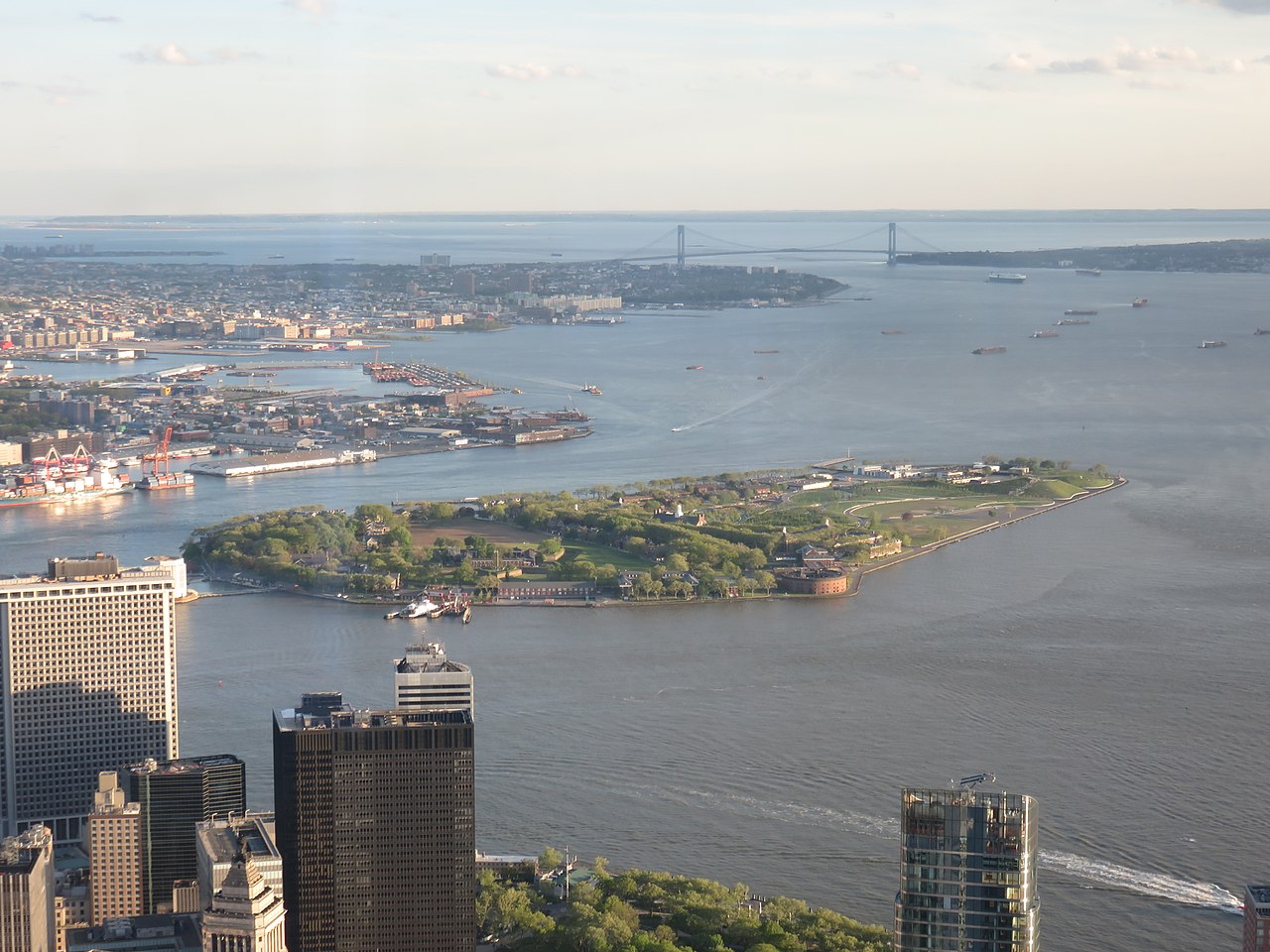


Physical characteristics
The island combines open lawns, tree‑lined promenades, and clusters of historic masonry structures. The larger defensive work is Fort Jay, one of several military installations that occupy the central and northern sections. The southern shoreline was expanded in the early 20th century with about 82 acres of landfill when construction related to the first city subway altered nearby waterways; this increase created the broader peninsula now used for park space and visitor facilities (landfill, subway).
History and change of use
For more than three centuries Governors Island served military purposes, hosting fortifications and later Army and Coast Guard bases that controlled access to the harbor. In the early 2000s control of much of the island passed from federal hands to state and city authorities, and the site began a transition from restricted base to recreational and cultural resource. Key historic buildings have been stabilized and adapted for new uses while large swaths of the island were redesigned as public parkland.
Public amenities and activities
Today the island is best known as a seasonal destination offering landscaped parks, walking and cycling paths, event lawns, and rotating public art and cultural programs. Visitors can tour restored fortifications, attend performances or festivals, and find food concessions, artist studios, and educational programs. Several nonprofit groups and small enterprises operate on the island, complementing city-run recreational offerings.
Access and notable facts
Governors Island is reached by regular ferries that operate seasonally from Manhattan and Brooklyn. Although compact, the island plays an outsized role as an urban green space and a living reminder of New York Harbor's military and maritime past. Its legal status as part of Manhattan, its proximity to major harbor landmarks, and the mix of preserved historic fabric with new public uses make it a distinct feature of the city's waterfront landscape.
More on size and layout • Metric conversion • Manhattan jurisdiction • Brooklyn proximity • City context • Landfill history • Subway construction link
Related articles
Author
AlegsaOnline.com Governors Island: history, features, and public use Leandro Alegsa
URL: https://en.alegsaonline.com/art/40017
Sources
- www1.nyc.gov : "2010 Census Tracts, Manhattan Community District 1"
- nrhp.focus.nps.gov : "National Register Information System"