
Government of New Zealand
Overview of New Zealand's constitutional monarchy and parliamentary system: structure, institutions, history, elections, and key constitutional features.
Overview
The Government of New Zealand operates as a constitutional monarchy and parliamentary democracy based on the Westminster model. The sovereign is the formal head of state and is represented domestically by an appointed Governor‑General. Executive authority is exercised by ministers led by the Prime Minister and the Cabinet, while legislative power rests with a single‑chamber Parliament. Constitutional practice depends heavily on statutes, precedent and conventions rather than a single written constitution.
Image gallery
10 Images




Core institutions and roles
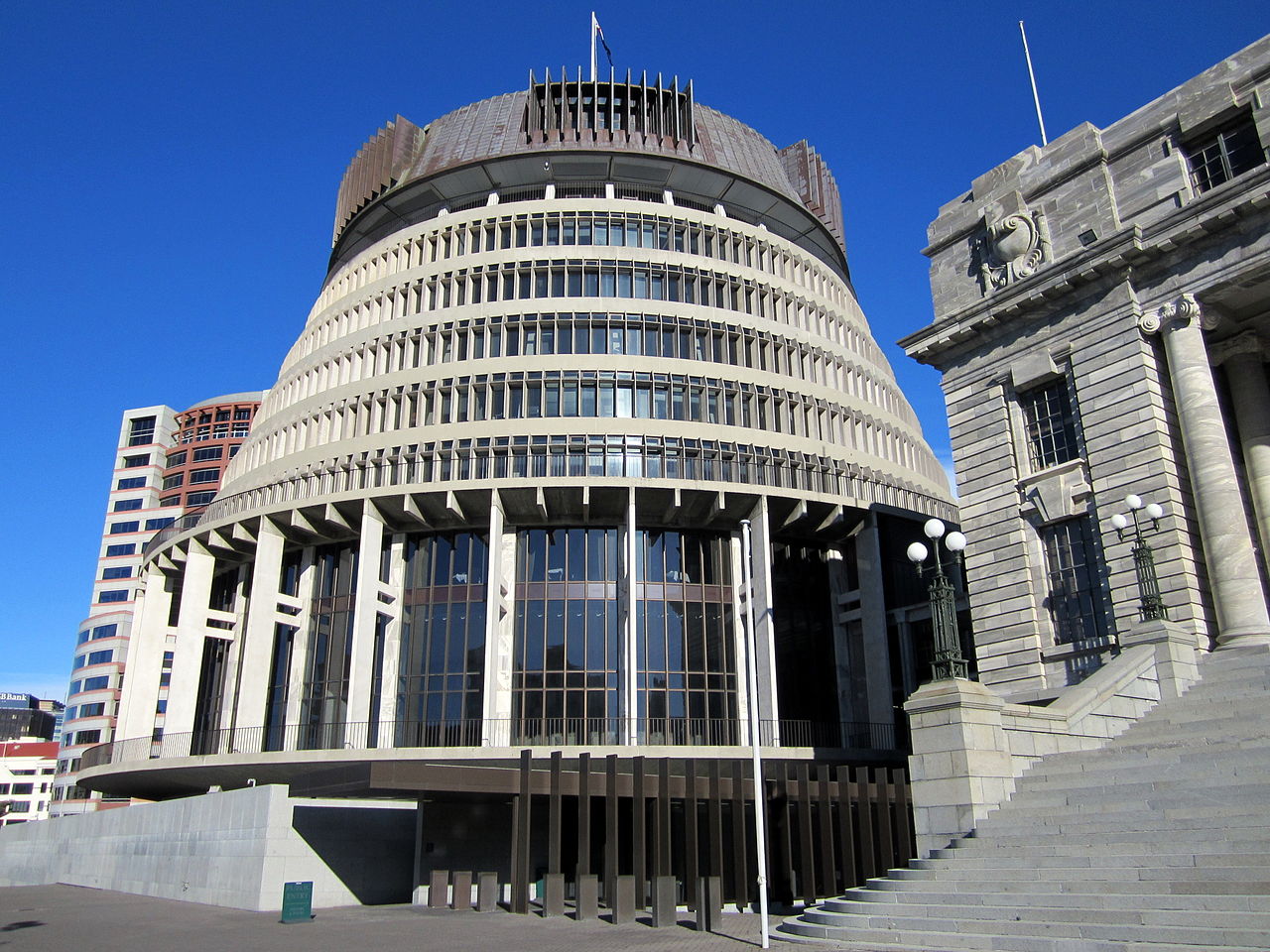
The main branches of government are the executive, the legislature and the judiciary. The executive includes the monarch as head of state (role of the head of state), the Governor‑General (Governor‑General) who carries out many formal duties, and ministers led by the Prime Minister (Prime Minister) and the Cabinet. The legislature is the New Zealand Parliament (Parliament), composed of elected members; New Zealand has a unicameral system following the abolition of the upper house in 1951. The judiciary is independent and interprets laws made by Parliament.
Characteristics of the system
New Zealand combines a hereditary sovereign (the monarch) with representative democratic institutions. This constitutional monarchy relies on written laws and long‑standing conventions from the Westminster tradition. Elections for the House of Representatives occur at regular intervals—typically every three years—and are conducted under a mixed‑member proportional (MMP) voting system introduced in the 1990s. MMP encourages multi‑party representation and has made coalition or confidence‑and‑supply arrangements a common feature of government formation.
Historical development
European settlement, the signing of the Treaty of Waitangi in 1840 and subsequent constitutional evolution shaped modern governance. New Zealand established responsible government in the 19th century and has been self‑governing since the mid‑1800s; formal colonial ties were gradually replaced by independent institutions while retaining the Crown as head of state. The country’s constitutional arrangements have developed incrementally — through statutes, key judicial decisions and political practice — rather than through a single foundational document. For a brief date reference see self‑government from 1853.
Practice, elections and public administration
Elections determine membership of Parliament and therefore which party or coalition forms the government. The Prime Minister (head of government) is normally the leader of the largest party or coalition in the House and directs policy and administration. The Governor‑General performs ceremonial duties and may exercise reserve powers in exceptional circumstances. Public services are administered by government departments and state agencies accountable to ministers and, through them, to Parliament.
Notable features and constitutional considerations
- Uncodified constitution: law and convention combine to define the system rather than one single constitutional document.
- Treaty relationships: the Treaty of Waitangi remains central to Crown–Māori relations and influences government policy and legal interpretation.
- Monarchy and representation: the sovereign (historically referred to, for example, in relation to past monarchs such as Queen Elizabeth II) is represented by the Governor‑General, while political leadership is exercised by elected figures including past prime ministers (for instance Jacinda Ardern).
- Governance culture: transparency, parliamentary scrutiny and an independent judiciary are key to democratic accountability.
The Government of New Zealand is therefore a blend of inherited constitutional forms and locally evolved democratic institutions. For official descriptions and further resources follow links about constitutional arrangements and the roles of specific offices such as the head of state, the Governor‑General, and the workings of the Parliament.
Related articles
Author
AlegsaOnline.com Government of New Zealand Leandro Alegsa
URL: https://en.alegsaonline.com/art/39951