
Government of the Dominican Republic
Overview of the Dominican Republic's government: constitutional basis, separation of powers, branches, electoral system, administrative divisions, history and notable features of its presidential republic.
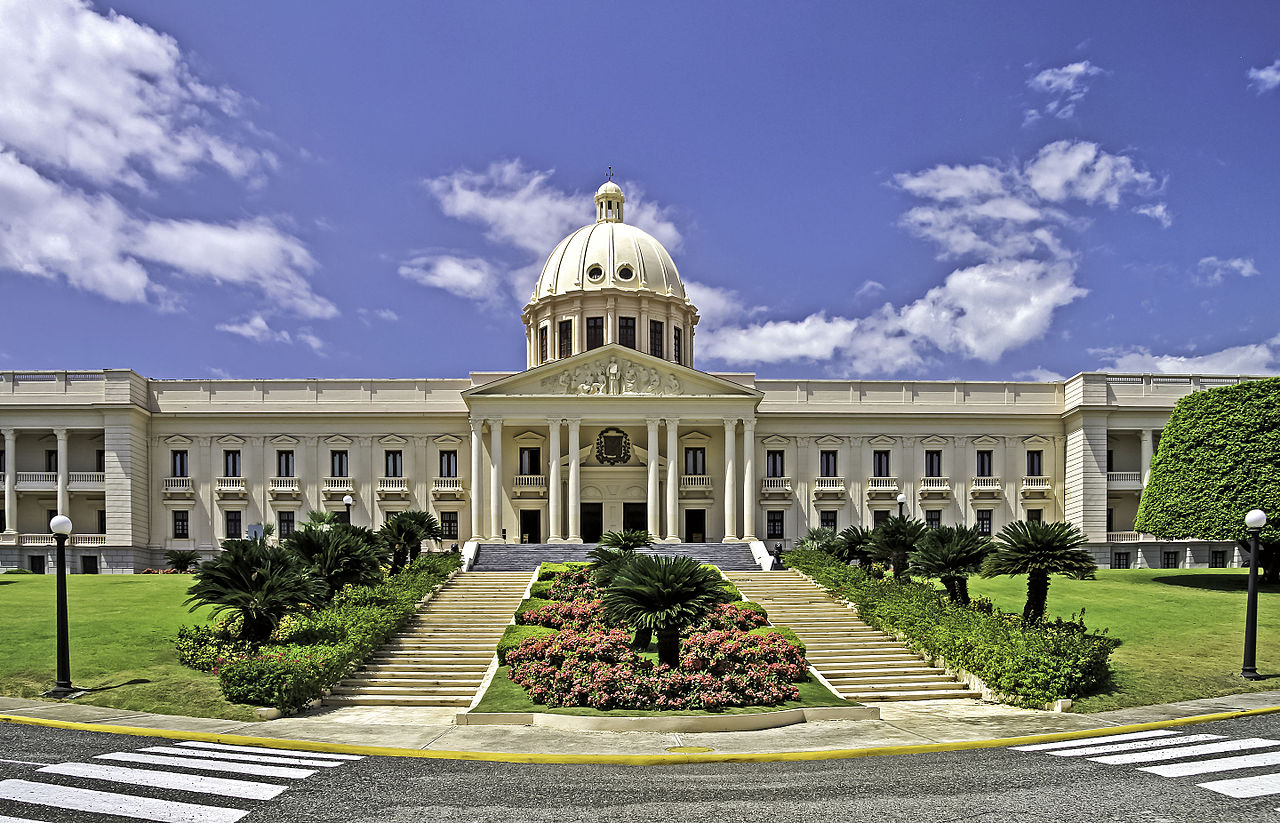
The government of the Dominican Republic is organized under a written constitution that establishes a presidential democratic republic. The Constitution (see text and references) sets the basic framework: a president who serves as both head of state and head of government, a national legislature, and an independent judiciary. The system is commonly described as a presidential republic, meaning executive authority is concentrated in an elected president rather than a separate prime minister.
Image gallery
10 Images



Structure and branches
- Executive: The president and vice president together lead the executive branch, supported by ministers or secretaries who form the cabinet. The president directs national policy, foreign affairs, and the armed forces.
- Legislative: A bicameral Congress makes national law and oversees the executive. It is divided into a Senate and a Chamber of Deputies, which adopt legislation, budgets, and treaties.
- Judicial: Courts interpret and apply the law, with a highest court charged with ensuring justice and upholding the Constitution. Separate judicial bodies handle ordinary cases and constitutional review.
In practice the constitution outlines checks and balances among these branches, including legislative oversight, judicial review, and electoral institutions that regulate voting and campaigns.
History and development
The country's institutions evolved through a long history of colonial rule, independence, and periods of political change. Over time successive constitutions and reforms have reshaped the balance of power, electoral rules, and the organization of courts and public administration. Democratic practices have strengthened in recent decades, although political competition and institutional reform remain important topics.
Elections, parties and administration
Citizens elect the president, vice president and members of Congress through competitive national elections. A multi‑party system produces coalition dynamics and turnover in government. At the subnational level the country is divided into provinces and municipalities that manage local services and governance through elected mayors and councils.
Notable features of the Dominican system include a strong presidential role, formal separation of powers, and institutional mechanisms to protect civil liberties. Ongoing public debates address transparency, judicial independence, decentralization, and the capacity of institutions to respond to social and economic challenges. For further legal and institutional details consult the constitutional text and official guides linked above.
Questions and answers
Q: What type of government does the Dominican Republic have according to its constitution?
A: The Dominican Republic has a presidential democratic republic according to its constitution.
Q: Why is the Dominican Republic considered a republic and not a monarchy?
A: The Dominican Republic is considered a republic because the chief of State is a president, and not a king, queen or emperor.
Q: Who is the head of government in the Dominican Republic?
A: The president is the head of government in the Dominican Republic.
Q: Is there a prime minister in the Dominican Republic?
A: No, there is not a prime minister in the Dominican Republic.
Q: How are the president, vice-president and members of Congress elected in the Dominican Republic?
A: The president, vice-president and members of Congress are elected by the people in the Dominican Republic.
Q: What do we mean by saying that the Dominican Republic is democratic?
A: We mean that the president, vice-president and members of Congress are elected by the people, that is why the Dominican Republic is democratic.
Q: Can the president hold the positions of head of State and head of government at the same time?
A: Yes, the president can hold the positions of head of State and head of government at the same time in the Dominican Republic.
Related articles
Author
AlegsaOnline.com Government of the Dominican Republic Leandro Alegsa
URL: https://en.alegsaonline.com/art/39959
Sources
- pdba.georgetown.edu : "CONSTITUCION POLITICA DE LA REPBULICA DOMINICANA DE 2002"
- fedomu.org.do : "Ley No. 3455, Organización Municipal, del 18 de diciembre del 1952"
- one.gob.do : "Listado de Codigos de Provincias, Municipio y Distritos Municipales, Actualizada a Junio 20 del 2006"