
Gottlob Frege: pioneer of modern logic and analytic philosophy
German logician and philosopher whose work on predicate logic, sense and reference, and logicism laid foundations for analytic philosophy and modern formal logic.
Gottlob Frege (1848–1925) was a German mathematician and philosopher whose innovations established the formal apparatus of modern logic and shaped early analytic philosophy. His attempt to show that arithmetic follows from purely logical principles and his careful analysis of language introduced ideas—such as quantification, function–argument structure, and the distinction between sense and reference—that remain central in logic, semantics, and the philosophy of mathematics. For a concise biographical overview see biographical sources.
Image gallery
6 Images

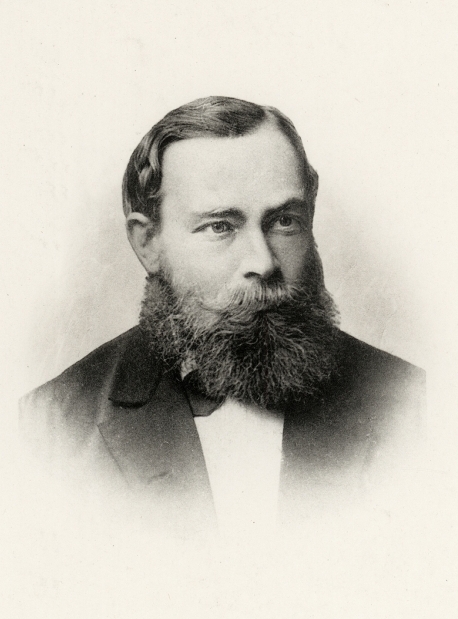


Major ideas and writings
Frege published foundational work that changed how philosophers and mathematicians think about propositions and inference. Key contributions include:
- Formal logic: He developed a symbolic notation for predicate logic that extended the expressiveness of earlier systems and influenced the rise of first-order logic (first-order logic).
- Logicism: The program to reduce arithmetic to logic, argued most fully in his book The Foundations of Arithmetic, aimed to show numbers are logical objects (foundations of mathematics).
- Sense and reference: His 1892 distinction between Sinn (sense) and Bedeutung (reference) clarified how expressions can convey meaning while referring to the same object, a central idea in the philosophy of language.
Historical context and reception
When Frege first published, his notation and aims were little noticed outside a small circle. Later logicians and mathematicians—most notably Giuseppe Peano and Bertrand Russell—recognized and disseminated his innovations, bringing them into mainstream mathematical logic and analytic philosophy. Russell's interaction with Frege also uncovered a contradiction (Russell's paradox) that revealed problems in Frege's system and spurred further development in set theory and axiomatic foundations (Bertrand Russell).
Importance and influence
Frege's work became a cornerstone for 20th-century philosophy. He is widely regarded as a progenitor of analytic philosophy and influenced figures such as Russell and early Wittgenstein. His formal techniques underpin modern logic, type theory, and formal semantics used in computer science and linguistics. Secondary literature and modern introductions can be found via resources on mathematical logic and the study of the philosophy of mathematics.
Although Frege's original system faced difficulties, his methodological insistence on clarity, rigorous definition, and the formal treatment of meaning remains a defining legacy. For further study consult introductory treatments of analytic philosophy and specialized discussions of Frege's writings available through academic and library portals (analytic philosophy, further readings, archives).
Selected primary works include his 1879 Begriffsschrift and his philosophical essays; secondary sources and curated editions provide commentary and context for readers new to his technical notation and philosophical aims (foundational texts, commentaries). For catalogues and digital collections see institutional guides (logic collections, research overviews).
Related articles
Author
AlegsaOnline.com Gottlob Frege: pioneer of modern logic and analytic philosophy Leandro Alegsa
URL: https://en.alegsaonline.com/art/39893