
Go Seigen (Wu Qingyuan): life, innovations and legacy in the game of Go
Comprehensive overview of Go Seigen (Wu Qingyuan, 1914–2014), his career, innovative opening theory, influence on modern Go, famous games, and lasting legacy.
Overview
Go Seigen, born Wu Qingyuan (吴清源, 吳清源; Wú Qīngyuán), was a 20th-century Go player widely regarded as one of the strongest and most original figures in the game. Born in Fuzhou (Fuzhou), China in 1914, he spent most of his professional life in Japan and died in Odawara (Odawara), Japan in 2014 at the age of 100. He is celebrated both for an exceptional competitive record and for the theoretical changes he helped bring about in modern play.
Image gallery
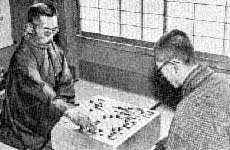
4 Images


Playing style and innovations
Go Seigen was known for his deep reading, bold strategic choices and a general inclination toward innovative opening play. In the 1930s he, together with contemporaries, experimented with what became known as "Shinfuseki" or the new opening ideas: unorthodox corner and center patterns that challenged established theory. His approach emphasized whole-board judgment, flexible frameworks (moyo), and the willingness to enter complex fights when it served long-term advantage. These ideas influenced generations of professional players and reshaped competitive opening theory.
Career and key events
After moving to Japan as a youth, he rose rapidly through the professional ranks, reaching the top echelons of the game and holding titles in the pre-modern and modern tournament era. His matches against other leading players of his time attracted wide attention and are still studied today for their instructive value. Among the episodes frequently cited by historians is his series of games against established masters that highlighted the tension between classical technique and his new strategic concepts.
Legacy and notable games
Go Seigen's legacy rests on three main pillars: his tournament achievements, the body of high-quality games he produced, and his role in transforming opening theory. Many of his recorded games are used as teaching material; students of Go study them to learn whole-board planning, fighting tactics and endgame precision. A small number of his encounters are labeled by commentators as historically pivotal or exceptionally beautiful, and they continue to appear in anthologies and professional study collections.
Notable facts and influence
- Dual identity: commonly known in Japan as Go Seigen, he retained his Chinese name Wu Qingyuan in other contexts and is recognized across East Asia.
- Innovator: instrumental in promoting new opening ideas that emphasized center influence and large frameworks rather than immediate territorial gains.
- Teacher and example: his methods and recorded games have influenced training approaches in professional dojos and amateur study alike.
- Longevity: he lived to be 100 and remained a prominent figure in Go culture throughout his later years.
For readers interested in exploring his life and games further, many collections of his matches and contemporary commentary are available in English and East Asian languages. His career provides a bridge between classical Go tradition and the modern strategic outlook that characterizes professional play today.
Related articles
Author
AlegsaOnline.com Go Seigen (Wu Qingyuan): life, innovations and legacy in the game of Go Leandro Alegsa
URL: https://en.alegsaonline.com/art/39346
Sources
- the-japan-news.com : "Go master Seigen Go dies"
- wikidata.org : wikidata.org/wiki/Q541005
- ci.nii.ac.jp : DA00563284
- d-nb.info : 1023188198
- isni.org : 0000 0000 8440 0167
- id.loc.gov : n81050517
- id.ndl.go.jp : 00005814
- nla.gov.au : 35623193
- nl.go.kr : KAC201766933
- data.bibliotheken.nl : 174182813
- viaf.org : 35773889
- worldcat.org : lccn-n81050517