
Kanagawa Prefecture: Coastal Kanto Region of Japan, Home to Yokohama, Kamakura, Hakone
Overview of Kanagawa Prefecture in Japan's Kantō region: a coastal area south of Tokyo centered on Yokohama, featuring historic Kamakura, resort Hakone, major ports, industry, and extensive rail links.
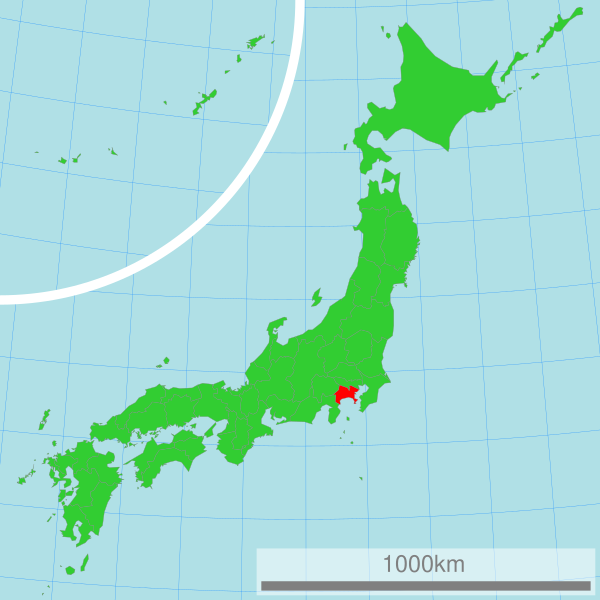
Kanagawa Prefecture (Japanese: 神奈川県, romanized Kanagawa-ken) is a coastal prefecture in the Kantō region of Japan, located on the main island of Honshu. It is administered as a prefecture and its designated capital city is Yokohama.
Image gallery
10 Images


Geography
Kanagawa lies just south of the Tokyo metropolitan area and features a varied landscape that ranges from the densely populated coastal plain along Tokyo Bay and Sagami Bay to forested hills and mountains inland. The prefecture's position on the Pacific coast has shaped its climate, economy, and settlement patterns, with major urban areas concentrated on the eastern plain.
History
Much of the territory of present-day Kanagawa was historically part of Sagami Province (with portions once included in Musashi Province). The opening of the port of Yokohama in the late 19th century accelerated the region's development, bringing trade, industry, and international contacts that helped transform it into a modern urban and economic center.
Population and major cities
Kanagawa is one of Japan's most populous prefectures, with an urbanized population concentrated in a number of large cities. Major municipalities include Yokohama, Kawasaki, and Sagamihara. The prefecture forms an integral part of the Greater Tokyo metropolitan area, with substantial commuter flows into Tokyo.
Economy and transport
The prefecture hosts a diverse economy: port facilities and maritime industries around Yokohama, heavy and precision manufacturing in parts of the Keihin industrial zone, and a growing services and technology sector. Kanagawa is well connected by rail and road to Tokyo and beyond; high-speed and regional rail services provide frequent links for commuters and freight.
Culture and attractions
- Kamakura: a historic city known for its temples, shrines, and the famous Great Buddha statue.
- Hakone: a popular hot-spring and mountain resort area offering views of Mount Fuji and boat cruises on Lake Ashi.
- Yokohama: a major port city with waterfront districts, museums, and a large Chinatown.
Kanagawa's combination of urban centers, coastal scenery, and cultural sites makes it an important and varied part of the Kantō region of Japan.
Questions and answers
Q: What is Kanagawa Prefecture?
A: Kanagawa Prefecture is a prefecture in the Kantō region of Japan on the island of Honshu.
Q: What is the capital city of Kanagawa Prefecture?
A: The capital city of Kanagawa Prefecture is Yokohama.
Q: In which region of Japan is Kanagawa Prefecture located?
A: Kanagawa Prefecture is located in the Kantō region of Japan.
Q: On which island is Kanagawa Prefecture situated?
A: Kanagawa Prefecture is situated on the island of Honshu.
Q: What is the meaning of Kanagawa-ken?
A: Kanagawa-ken is the Japanese name for Kanagawa Prefecture.
Q: What is the significance of Yokohama in relation to Kanagawa Prefecture?
A: Yokohama is the capital city of Kanagawa Prefecture.
Q: Is Kanagawa Prefecture a popular tourist destination?
A: Yes, Kanagawa Prefecture is a popular tourist destination due to its proximity to Tokyo and various attractions such as Kamakura, Enoshima Island, and Hakone.
Related articles
Author
AlegsaOnline.com Kanagawa Prefecture: Coastal Kanto Region of Japan, Home to Yokohama, Kamakura, Hakone Leandro Alegsa
URL: https://en.alegsaonline.com/art/52063
Sources
- books.google.com : "Kanagawa"
- books.google.com : "Kantō" at p. 479
- books.google.com : "Yokohama" at pp. 1054-1055
- books.google.com : "Provinces and prefectures" at p. 780
- env.go.jp : "General overview of area figures for Natural Parks by prefecture"
- eos.kokugakuin.ac.jp : "Nationwide List of Ichinomiya," p. 2