
Glock (series of pistols)
Overview of the Glock family of polymer-frame semi-automatic pistols: design, history, variants, uses, and notable facts about adoption and features.
Overview
The Glock pistol is a family of handguns recognized for its simple appearance, light weight and broad adoption in military, law enforcement and civilian markets. Introduced in the early 1980s, these pistols are notable for their use of a polymer-framed construction and a striker-fired action rather than a traditional hammer system, which contributes to a consistent trigger mechanism and a reduced part count. They are typically produced as semi-automatic pistols suitable for self-loading operation.
Image gallery
10 Images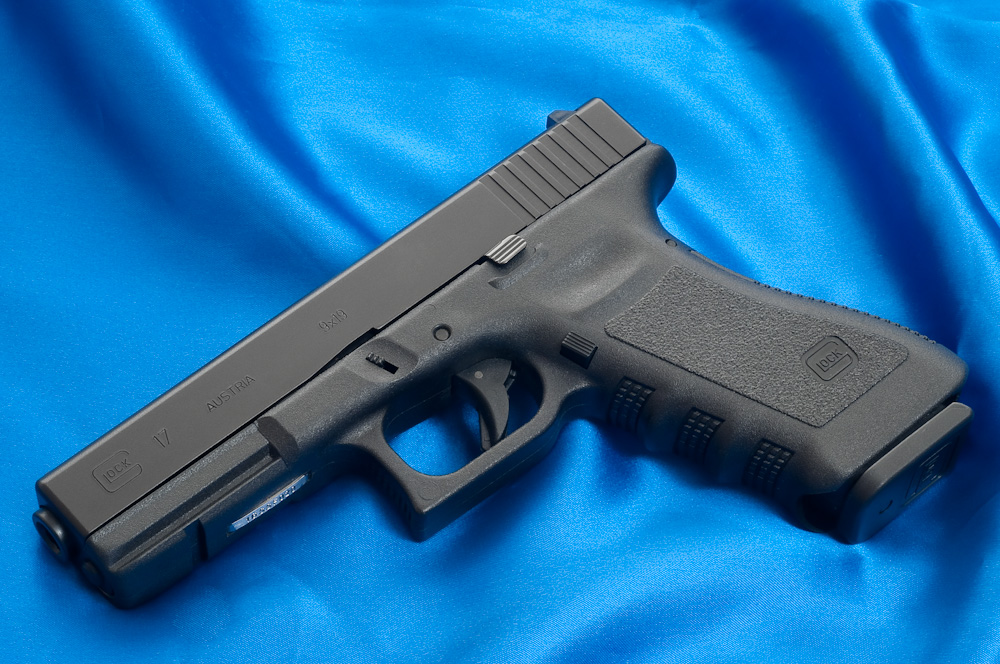


Design and characteristics
Key design priorities for Glock firearms include reliability, ease of maintenance, and a predictable trigger pull. The polymer frame reduces weight while remaining durable under a wide range of conditions; a steel slide and barrel provide the necessary strength at the action. Glock pistols feature a modular design that allows for straightforward disassembly and cleaning without tools. Many models incorporate accessory rails for lights or lasers and accept various sighting options.
History and development
Designed and manufactured by Glock Ges.m.b.H. in Deutsch-Wagram, Austria, the first Glock model entered service with Austrian armed forces and police in the early 1980s. Its rapid rise followed field trials that emphasized reliability and ease of use. Early skepticism about a firearm with substantial polymer content—sometimes called a "plastic gun"—was overcome as the design demonstrated robustness in service and in civilian comparisons.
Models, calibers and variants
The Glock lineup includes many models that vary by size, barrel length and chambering. Compact and subcompact variants serve concealed-carry and backup roles while full-size models suit duty and competition use. Different models are chambered for a range of ammunition types such as 9×19mm, .40 S&W, .45 ACP, and others, allowing users to choose combinations of capacity, recoil and terminal performance. Aftermarket parts and factory options produce a wide ecosystem of sights, triggers and finishing treatments.
Adoption and uses
Glock pistols have been widely adopted by law enforcement and military units worldwide. They are often selected for their durability, ease of training and logistical simplicity. In the United States, Glocks hold a large portion of the law-enforcement handgun market—frequently reported to be around two-thirds—making the line one of the company's most profitable products; observers note its prominent presence among most profitable offerings in the industry and many agencies in the United States law enforcement sphere use models as service pistols.
Notable facts and distinctions
- Striker-fired operation and a consistent trigger reset are often cited advantages for training and rapid follow-up shots.
- Modular options and strong aftermarket support have made Glocks popular for competitive shooting, concealed carry, and home defense.
- Despite early controversy, the use of polymer elements is now widespread across many manufacturers.
Because the Glock family spans many generations and specific configurations, users typically evaluate models by intended use—duty carry, concealed carry, competition, or collection—and by the cartridge that best meets their needs. For additional technical details, service information, or history, consult manufacturer resources and reputable firearms references for the latest model specifications and guidance.
Glock pistol | polymer-framed | semi-automatic | manufactured in Austria | ammunition options | commercial standing | law enforcement use
Related articles
Author
AlegsaOnline.com Glock (series of pistols) Leandro Alegsa
URL: https://en.alegsaonline.com/art/39238
Sources
- us.glock.com : Corporate Heritage