
GLONASS — Russia's Global Navigation Satellite System
GLONASS is Russia’s space-based satellite navigation system that provides global positioning, navigation and timing services. It serves civilian and military users and is interoperable with other GNSS like GPS.
Overview
GLONASS (Globalnaya Navigatsionnaya Sputnikovaya Sistema) is a Russian space-based system that delivers positioning, navigation and timing (PNT) services worldwide. Using radio signals transmitted by orbiting spacecraft, it enables users to determine location and time independently of ground infrastructure. Operated by Russian authorities, GLONASS is widely recognized as a full global alternative to the GPS system developed by the United States.
Image gallery
8 Images


Structure and operation
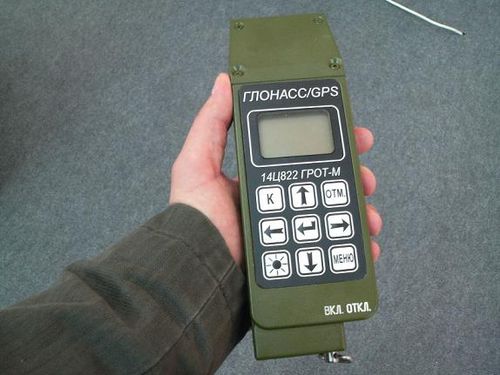
The GLONASS system is commonly described in three segments: the space segment (the satellites themselves), the control segment (ground stations and mission control) and the user segment (receivers). The space segment consists of a constellation of roughly two dozen medium-Earth-orbit satellites arranged to provide continuous global coverage. Signals are broadcast as radio transmissions from each satellite and received by devices ranging from dedicated survey instruments to consumer smartphones.
Key characteristics
- Signal types: designed to carry ranging and timing data suitable for civilian and military use.
- Orbit and geometry: satellites occupy medium Earth orbit in multiple orbital planes to give dependable coverage.
- Compatibility: many modern receivers are multi-constellation and combine GLONASS with other systems for faster fixes and improved accuracy.
History and development
Work on GLONASS began during the Soviet era and continued through the late 20th and early 21st centuries, with incremental launches and modernization programs over decades. After initial deployment and later periods of reduced capacity, sustained refurbishment and new satellite launches restored full global service. Modernization efforts have focused on signal improvements, longer-lived satellites and greater interoperability with other global navigation satellite systems.
Uses and importance
GLONASS serves civilian, commercial and military users. Common applications include vehicle and maritime navigation, geodesy and surveying, timing for telecommunications and power grids, and search and rescue support. In many devices, GLONASS is paired with other constellations to improve availability in challenging environments such as urban canyons or high latitudes.
Distinctions and interoperability
Unlike some rival systems, GLONASS historically used frequency-division techniques for satellite signals, while others used alternative multiplexing methods; however, ongoing updates aim to improve cross-system compatibility. GLONASS is administered by Russian governmental and defense organizations; for example, it is overseen by agencies associated with the Russian state. Receivers that combine GLONASS and other services gain redundancy and often better performance than single-constellation devices, making multi-GNSS operation a common approach today. For further technical background on satellite navigation concepts and other systems, see general resources about satellite platforms and navigation technology.
Related articles
Author
AlegsaOnline.com GLONASS — Russia's Global Navigation Satellite System Leandro Alegsa
URL: https://en.alegsaonline.com/art/39242