
Giovanni Battista Tiepolo: Venetian master of large-scale fresco and decorative painting
Giovanni Battista Tiepolo (1696–1770) was a Venetian-born painter famed for luminous Baroque/Rococo frescoes and grand ceiling decorations executed across Italy, Germany and Spain.
Overview
Giovanni Battista Tiepolo (5 March 1696 – 27 March 1770) was an Italian painter whose works define much of the decorative grandeur associated with late Baroque and Rococo art. Born and trained in Venice, he became celebrated for large-scale ceiling frescoes and elaborate palace decorations carried out in Italy, in German principalities and later in Spain, where he died in Madrid. His career fused theatrical composition with a luminous palette and a mastery of illusionistic perspective, traits often discussed within the broader context of Baroque painting.
Image gallery
10 Images





Style and distinguishing characteristics
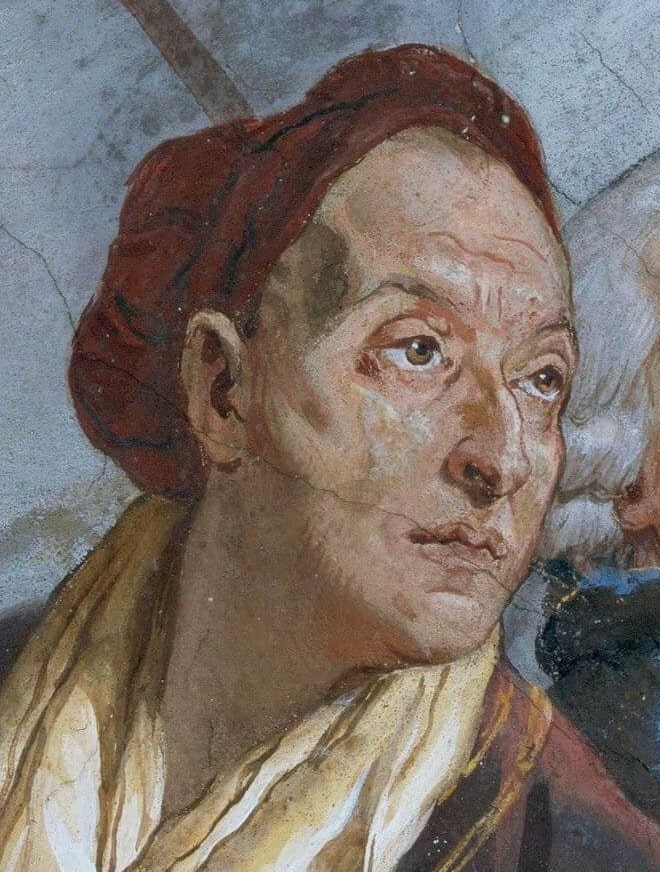
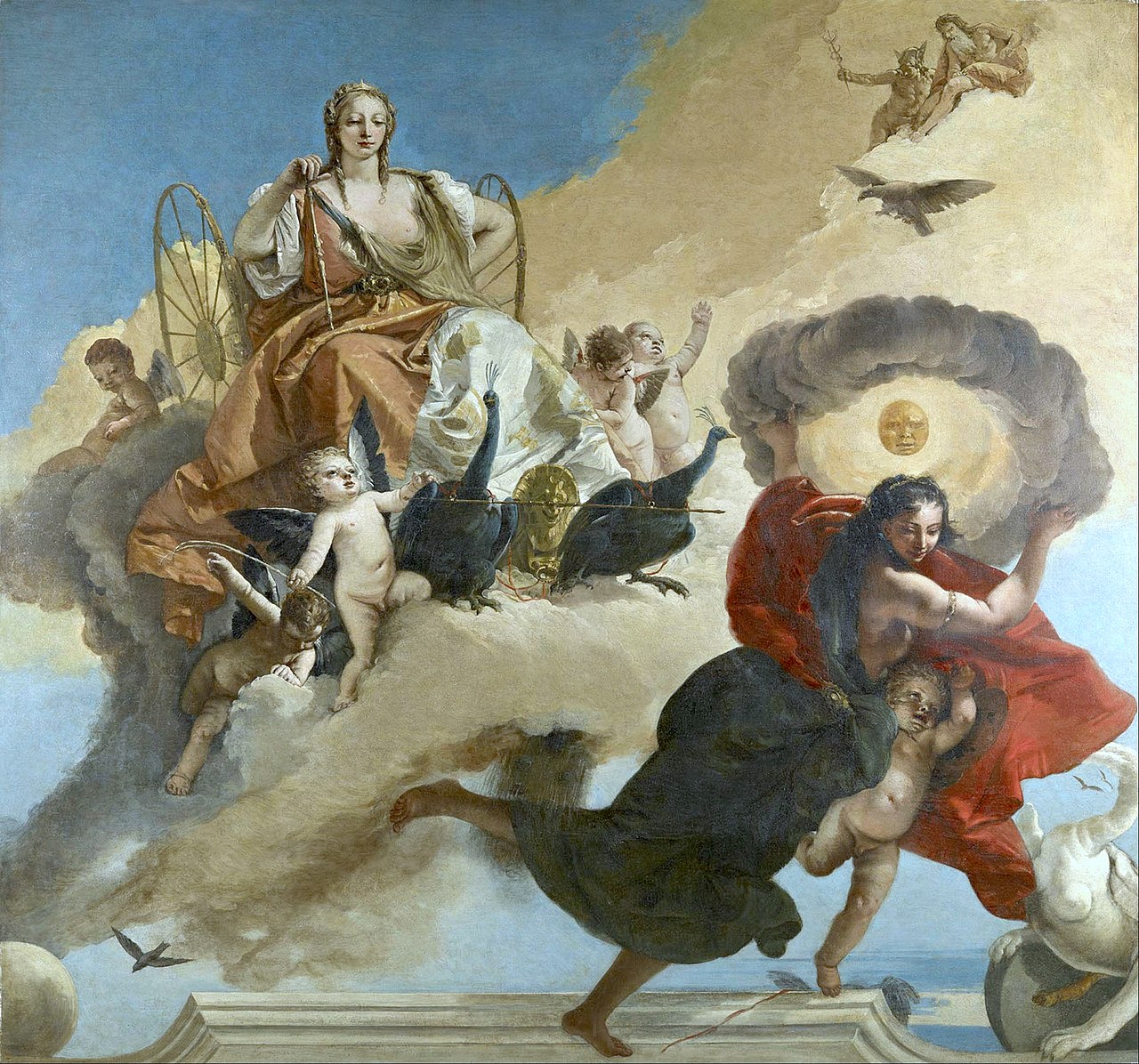
Tiepolo combined the dramatic movement of the Baroque with a lighter, more decorative Rococo sensibility. His ceilings and wall cycles are known for their bright, airy color, fluid brushwork and sweeping, upward-looking compositions that create a sense of open sky populated by figures in motion. He favored elegant, elongated figures, clear atmospheric effects and an ability to integrate architecture and painted illusion so that frescoes appear to extend the surrounding space.
- Large-scale illusionistic ceiling paintings (quadratura and open sky effects)
- Luminous, often pastel-inflected color and confident, rapid brushwork
- Compositions filled with many small, active figures arranged in theatrical groupings
- Strong draughtsmanship and use of preparatory drawings and etchings
Major commissions and examples
Tiepolo’s public reputation rests on ambitious decorative cycles that required complex planning and coordination. He received commissions from aristocratic patrons and ecclesiastical clients, producing frescoed ceilings in palaces and churches. Among his best-known achievements are monumental ceiling decorations executed for princely residences and late-career projects for royal patrons in Spain. These works display his gift for transforming architectural surfaces into expansive, narrative skies where mythological and religious scenes unfold.
Life, workshop and family
Trained in Venice, Tiepolo ran a large workshop that handled technically demanding fresco programs. He married Maria Cecilia Guardi and fathered nine children. Two of his sons joined the workshop as assistants and collaborators, while a third pursued a clerical life. The studio practice enabled him to sustain a high volume of commissions and to prepare the numerous cartoons and drawings needed for complex ceiling schemes.
Technique and working methods
Tiepolo worked in both fresco and oil, often beginning with detailed drawings and small-scale oil modelli that guided the execution of the final mural. Fresco painting at the scale he employed required scaffolding, rapid working in wet plaster and coordination with apprentices; his skill lies in producing surfaces that read as both vividly painted and seamlessly integrated with real architecture. Many of his preparatory drawings and prints were widely circulated and collected, extending his influence beyond completed commissions.
Legacy and influence
Regarded as one of the leading decorative painters of 18th-century Italy, Tiepolo influenced later generations of muralists and decorative artists across Europe. His ability to combine theatrical narrative with refined color and airy space helped shape the language of late Baroque and Rococo interior decoration. Major museums and historic houses continue to preserve his paintings and drawings, where they are studied for their technical virtuosity and inventive visual storytelling.
For further reading on the period and places connected with his life see resources on the Baroque, Venetian art and the Spanish court: Baroque art, Venice, Madrid.
Related articles
Author
AlegsaOnline.com Giovanni Battista Tiepolo: Venetian master of large-scale fresco and decorative painting Leandro Alegsa
URL: https://en.alegsaonline.com/art/38923