
Gigi (1958 musical film)
A lavish 1958 musical romantic comedy based on Colette's novella, directed by Vincente Minnelli, noted for its songs by Lerner and Loewe and its nine Academy Awards including Best Picture.
Overview
Gigi is a 1958 musical romantic comedy film set in turn‑of‑the‑century Paris. Directed by Vincente Minnelli, the picture adapts Colette's 1944 novella and transforms its intimate Parisian story into a large‑scale Hollywood musical. The screenplay and song lyrics were written by Alan Jay Lerner, with music by Frederick Loewe; the film's orchestral arrangements and conducting were handled by André Previn. Its themes examine coming‑of‑age, social expectation and the tension between private feeling and public roles.
Image gallery
3 Images

Plot and principal cast
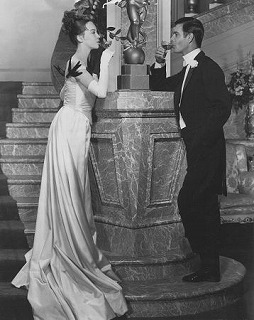
The narrative follows a young Parisian girl who has been raised by her family to take a particular place in society, and the affluent bachelor who comes to see her in a new light. The role of Gigi was played by Leslie Caron. The supporting cast includes celebrated performers such as Maurice Chevalier, Louis Jourdan, and Eva Gabor. Their performances, together with the film's period costumes and production design, help evoke the atmosphere of Paris in the early 20th century.
Production, music and style
The film is notable for its vivid Technicolor palette, crafted production numbers, and a score that balances light comedy with romantic sentiment. Lerner and Loewe's songs—several of which became standards—are integrated into the narrative rather than simply presented as isolated set pieces. Memorable numbers include the observational and slightly mischievous "Thank Heaven for Little Girls" and the wistful duet often remembered from the film. The screen adaptation respects the original author's sensibility while reshaping the material for the musical genre; the source novella by Colette provided much of the story's tone and character dynamics.
Reception and awards
On release the film received strong critical praise for its direction, performances, music and visual design. It achieved substantial recognition at the Academy Awards, winning nine trophies overall, including Best Picture, Best Director and Best Costume Design. Critics and audiences have continued to regard the film as a high point of the studio musical era and a prominent example of Hollywood's mid‑20th century adaptation of European literature.
Legacy and adaptations
Beyond its immediate success, the story of Gigi has persisted through subsequent stage and screen revivals and remains a reference point in discussions of how adaptations negotiate cultural differences between page and screen. The film is frequently cited when historians and critics survey the work of its director, the careers of its principal actors, and the collaborations of Lerner and Loewe. For readers wanting to explore further, contemporary film histories and archival material offer expanded commentary on the film's choreography, costume design and its place in the musical tradition.
Notable facts
- The cinematic version draws on a French novella by Colette but reshapes material to fit the conventions of an American musical.
- Leading performers include Leslie Caron, Maurice Chevalier, Louis Jourdan and Eva Gabor.
- The setting evokes Paris during the early 20th century, a period central to the novella's social commentary.
- Musical contributions include lyrics and book by Lerner, music by Frederick Loewe, and orchestral work credited to André Previn.
- The film's awards and historical standing are summarized in many accounts of the Academy Awards; it won nine Oscars in total, including the top honors for picture and direction (Academy Awards).
Related articles
Author
AlegsaOnline.com Gigi (1958 musical film) Leandro Alegsa
URL: https://en.alegsaonline.com/art/38781