
George Clymer
George Clymer (1739–1813) was an American merchant and politician, a Founding Father who signed both the Declaration of Independence and the U.S. Constitution; his life included public service and slave ownership.
George Clymer (March 16, 1739 – January 23, 1813) was an American merchant and public official best known as a Founding Father who signed two of the nation’s defining documents. He participated in Revolutionary-era politics, served in representative bodies at the state and national levels, and took part in early federal government. His career and memory are complex: alongside public service he was also a slave owner.
Image gallery
4 Images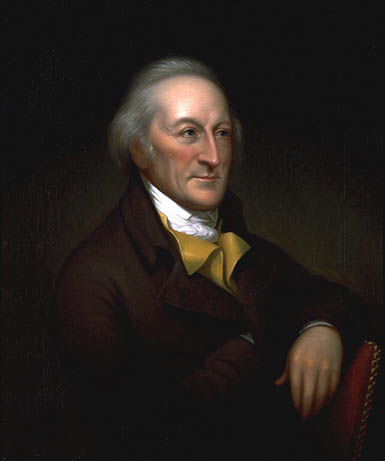


Life and public career
Born and raised in Philadelphia, Clymer made his early mark as a merchant and local civic leader before entering wider public affairs. He represented Pennsylvania in the Continental Congress during the Revolution and was among those who signed the Declaration of Independence in 1776. Later he added his signature to the United States Constitution, an uncommon distinction among the founders. Over the ensuing decades he continued in public roles, alternating between state institutions and service in the national legislature.
Roles and contributions
- Representative for Pennsylvania in Revolutionary assemblies and national bodies.
- Contributor to wartime provisioning and civic organization as a merchant-statesman.
- Participant in the difficult transition from colonial governance to the new federal system.
As an American politician Clymer navigated both local and national responsibilities: he worked with committees and legislatures that organized support for the Revolutionary cause, and later he took part in the early institutions of the United States as they were fashioned and tested.
Legacy and controversy
Clymer’s public record is often highlighted by the rare fact of signing both foundational documents, a point frequently noted in discussions of the era. At the same time, his ownership of enslaved people is an important part of his biography and of the broader contradictions of many Revolutionary leaders. Contemporary assessments place his actions in the complicated context of 18th-century Pennsylvania, where gradual abolition laws began to appear during his lifetime.
His life illustrates several broader tensions of the founding period: patriotic leadership and institution-building on one hand, and involvement in slavery and commercial interests on the other. For more on his life and the debates that surround it, see further biographical treatments and primary-source collections. He is discussed in surveys of the Founding Fathers as well as in local Pennsylvania history studies; readers can follow specialized entries at sources describing his political career and his status as a Founding Father and as a slave owner.
Related articles
Author
AlegsaOnline.com George Clymer Leandro Alegsa
URL: https://en.alegsaonline.com/art/38199