
General Dynamics F-16 Fighting Falcon
Compact overview of the F-16 Fighting Falcon: design, development, variants, operational use and notable facts about this widely exported single-engine multirole fighter.
The General Dynamics F-16 Fighting Falcon is a single-engine, multirole combat aircraft originally developed in the 1970s. Designed for agility, simplicity and cost-effectiveness, the F-16 serves air superiority and ground-attack roles. It began as a lightweight fighter concept and evolved into a versatile platform used for air policing, close air support and precision strike missions. For introductory information see single-engine multirole combat aircraft.
Image gallery
10 Images


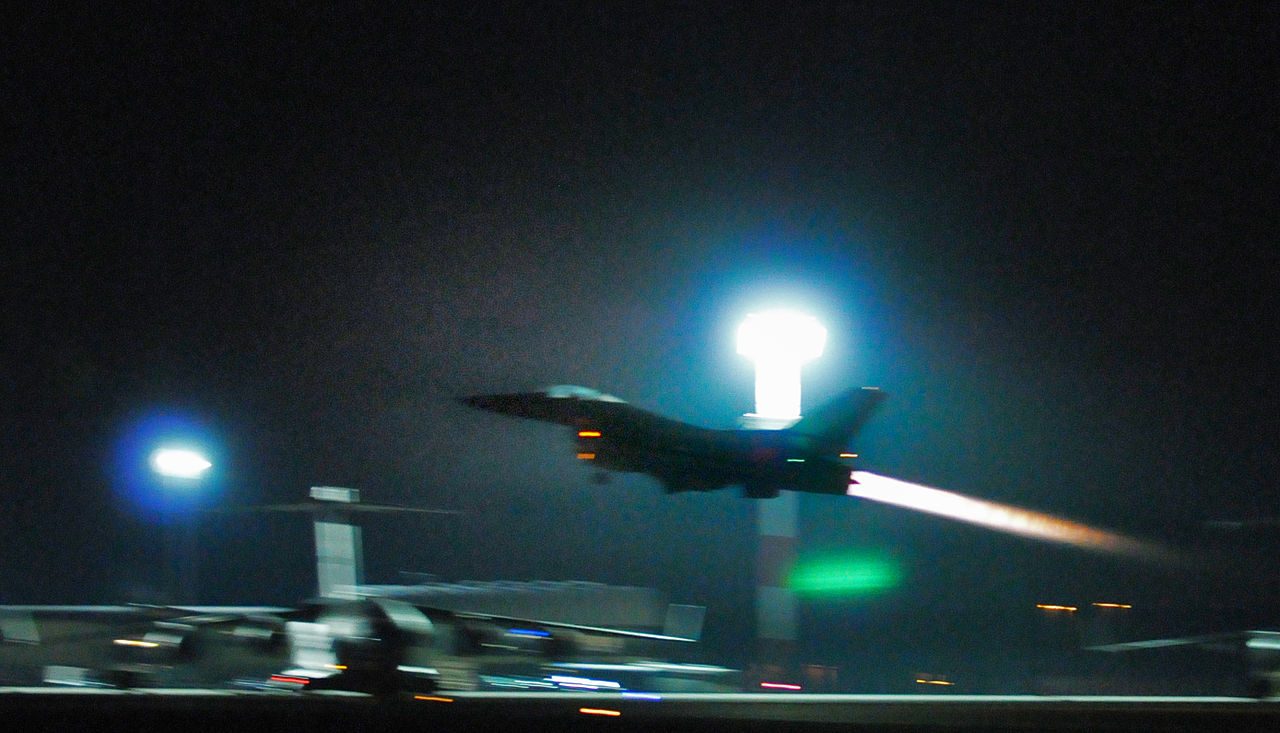

Design and key characteristics
The F-16 introduced features that were influential in later fighters: a frameless bubble canopy for improved visibility, a side-mounted control stick to aid g-force tolerance, and a relaxed static stability design coupled with fly-by-wire flight controls for enhanced maneuverability. Its powerplant is a single turbofan engine with afterburner; structural design emphasizes an advanced wing and light airframe for a high thrust-to-weight ratio. Typical avionics packages include radar, electronic countermeasures, and increasingly digital glass-cockpit updates in later blocks.
History and development
Developed by General Dynamics and later produced after company changes by manufacturers now associated with Lockheed Martin, the F-16 was ordered by the United States Air Force in the early 1970s. The prototype's first flight occurred mid-decade and production expanded rapidly as the type proved adaptable to upgrades. Over the decades the design has been modernized through block upgrades, new mission systems and structural life-extension programs.
Operational use and export
The F-16 has been widely exported and is operated by more than two dozen national air forces worldwide; many of these relationships include local assembly, upgrades and long-term sustainment arrangements. It performs in roles ranging from frontline combat to training and demonstration — notably it has been flown by the USAF aerobatic team known as the Thunderbirds. See operator references at more than 25 air forces.
Variants, upgrades and examples of capability
- Early blocks focused on air-to-air capability and basic strike.
- Later blocks added advanced avionics, conformal fuel tanks, improved radar and precision-weapons integration.
- Single-seat and two-seat trainer/strike variants exist; many countries have customized avionics and weapons suites.
Because of its production volume and longevity, the F-16 became one of the most numerous fixed-wing combat types: production totals and wide deployment have led observers to note its prominence among fixed-wing aircraft. Its long service life demonstrates the value of a flexible airframe that could accept iterative upgrades rather than wholesale redesign.
Notable facts and distinctions
The Fighting Falcon is credited with shaping fighter design thinking about maneuverability, pilot visibility and cost-effective multirole capability. Its continuing service is supported by an extensive aftermarket of avionics, weapons and structural upgrades that keep many air forces operating modernized examples well into the 21st century.
Related articles
Author
AlegsaOnline.com General Dynamics F-16 Fighting Falcon Leandro Alegsa
URL: https://en.alegsaonline.com/art/37941
Sources
- defenseone.com : "Lockheed to Move F-16 Production to South Carolina" · web.archive.org
- star-telegram.com : "How the F-16 fighter jet put Fort Worth on the aerospace map" · web.archive.org
- news.lockheedmartin.com : "Lockheed Martin Awarded Contract to Build F-16 Block 70 Aircraft for Bahrain" · web.archive.org
- af.mil : "F-16 Fact Sheet" · web.archive.org
- washingtonpost.com : "Downside of Dominance? Popularity of Lockheed Martin's F-16 Makes Its F-35 Stealth Jet a Tough Sell." · web.archive.org
- fundinguniverse.com : "Company Histories – Lockheed Martin Corporation" · web.archive.org
- mcclatchydc.com : "Lockheed Martin to deliver 4,500th F-16 fighter" · web.archive.org
- lockheedmartin.com : "United States Government Awards Lockheed Martin Contract to Begin Production of Advanced F-16 Aircraft for Morocco."