
General-purpose machine gun
A belt-fed, medium-calibre automatic weapon designed to serve multiple roles from infantry support to vehicle and aircraft mounts.
Overview
A general-purpose machine gun (GPMG) is a versatile, belt-fed machine gun intended to fill several battlefield roles. It bridges lighter squad automatic weapons and heavier crew-served guns by offering sustained firepower in a medium-calibre package. GPMGs are designed to be moved and reconfigured for different missions rather than optimized for a single mount or tactic.
Image gallery
10 Images
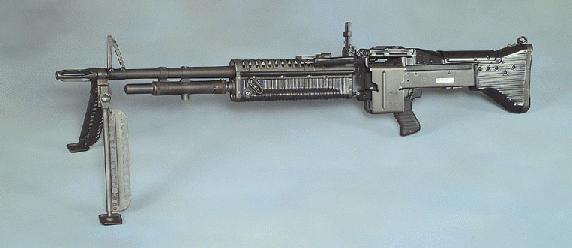


Characteristics
Typical features include a quick-change barrel for sustained fire, a robust receiver, and feed mechanisms that accept linked or disintegrating belts—collectively referred to as belt-fed ammunition. They normally fire full-power rifle cartridges, combining range and terminal effect with manageable weight for a small crew. Operating supports commonly include a detachable bipod for infantry use and a tripod for stabilized long bursts.
Mounting and mobility
GPMGs are intentionally adaptable. The same weapon can be mounted on a tripod for fixed defense, attached to vehicles for mobile fire support, or fitted to aircraft hardpoints. Common platforms include light vehicles, armored personnel carriers and helicopters such as when providing suppressive or escort fire from a helicopter or from an armoured vehicle.
Historical development
The concept emerged in the early 20th century as militaries sought weapons that could serve both on the move and in prepared positions. Designs from Europe and later manufacturers produced ubiquitous models—examples familiar to many forces include the German MG series and later designs like the FN MAG and its US derivative, the M240—that shaped the modern notion of a GPMG.
Roles and importance
- Infantry fire support: suppress and fix enemy positions.
- Vehicle armament: provide moving firepower without changing weapon type.
- Emplacement defense: deliver sustained barrage from tripods or fixed mounts.
Notable distinctions
GPMGs differ from light machine guns by caliber and sustained-fire capability, and from heavy machine guns by using rifle-calibre cartridges rather than larger, dedicated anti-material rounds. Their adaptability—interchangeable mounts, belts, and barrels—makes them a staple of modern armed forces and a pragmatic compromise between mobility and sustained suppressive fire.
For further reading on specific models and technical comparisons see machine gun overviews and references to ammunition handling, mounting accessories like the bipod and tripod, and applications on helicopter and armoured vehicle platforms; technical notes about calibres are found under rifle cartridges.
Questions and answers
Q: What is a general-purpose machine gun (GPMG)?
A: A general-purpose machine gun (GPMG) is a machine gun that uses a belt to get its ammunition and can be used for various purposes.
Q: What are some of the roles that a general-purpose machine gun can be used for?
A: A general-purpose machine gun can be used to support infantry from bipods or tripods, mounted on helicopters or armored vehicles, or as fire support from various mounting positions.
Q: What is the caliber of the ammunition used by a general-purpose machine gun?
A: A general-purpose machine gun typically fires rifle cartridges such as the 7.62×51mm NATO or 7.92x57mm Mauser.
Q: What is the usual placement for a general-purpose machine gun?
A: A general-purpose machine gun is usually placed on a bipod, tripod, or vehicle mount.
Q: Why is a general-purpose machine gun usually not fired well while moving?
A: A general-purpose machine gun is usually too powerful and heavy to be fired well while moving or on foot.
Q: What is the size of a general-purpose machine gun?
A: A general-purpose machine gun is generally considered to be a medium machine gun.
Q: Does a general-purpose machine gun fire ammunition from a magazine?
A: No, a general-purpose machine gun uses a belt to get its ammunition instead of a magazine.
Related articles
Author
AlegsaOnline.com General-purpose machine gun Leandro Alegsa
URL: https://en.alegsaonline.com/art/37958
Sources
- army.mod.uk : "British Army weapons"
- books.google.com : "Encyclopedia of Weapons of World War II"
- books.google.com : "Encyclopedia of Weapons of World War II"
- books.google.com : "Tactical Small Arms of the 21st Century: A Complete Guide to Small Arms From Around the World"