
Anadyr (town)
Anadyr is a remote port town and the administrative center of Chukotka Autonomous Okrug in far northeastern Russia, known for its Arctic climate, indigenous cultures, and role as a regional supply hub.
Anadyr is a small but important town in the Russian Far East. It serves as the administrative centre of the Chukotka Autonomous Okrug and stands near the estuary of the Anadyr River on the Gulf of Anadyr. The town is often described as one of Russia's most remote regional capitals, located on the Asian side of the Bering Sea and facing the wide maritime approaches toward Alaska. As of the 2010 census, the population was 13,045.
Image gallery
8 Images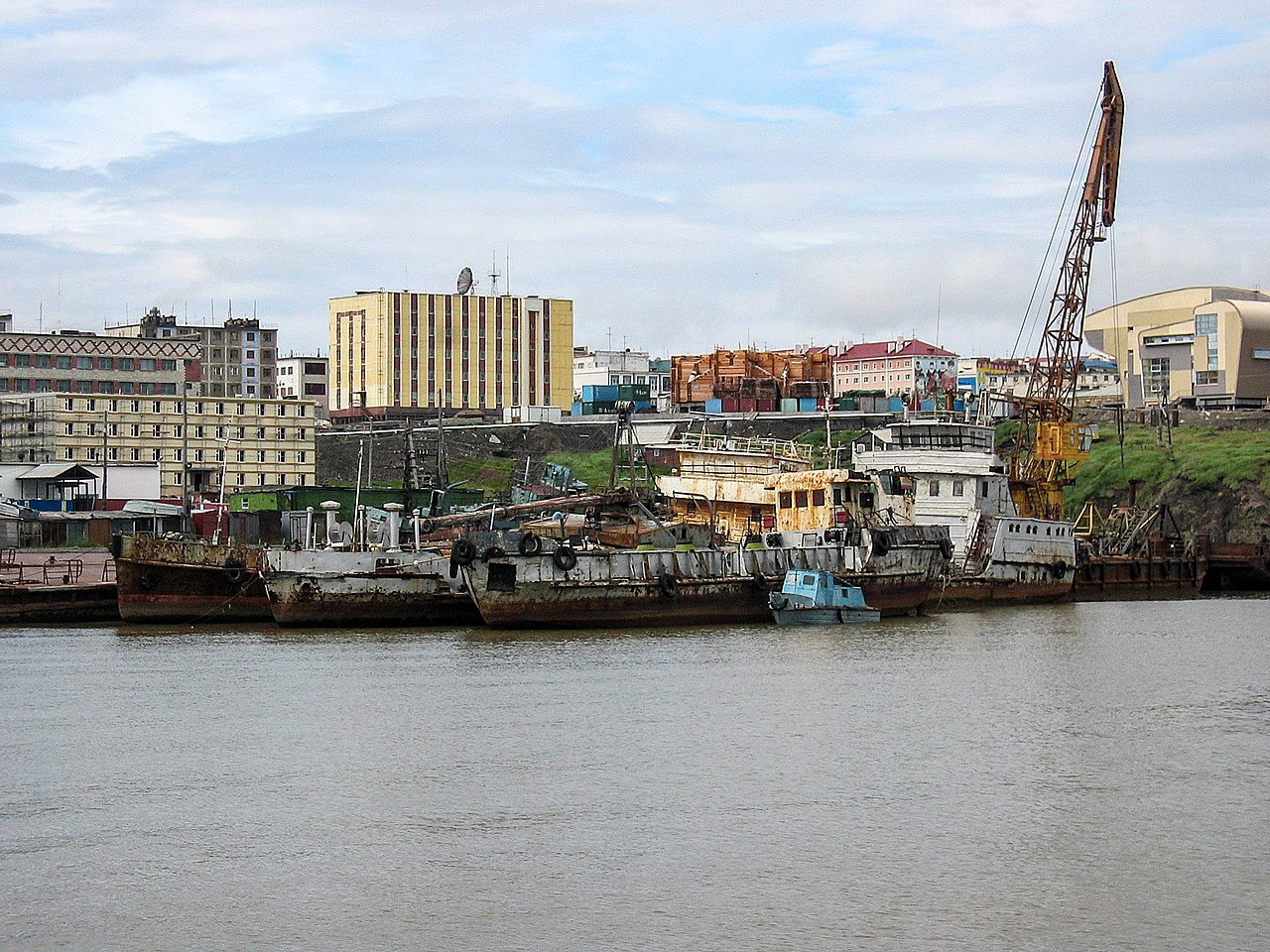


Location and environment
Anadyr lies within the tundra zone and experiences a harsh subarctic to polar climate: long, cold winters with sea ice and brief, cool summers. The surrounding landscape is characterized by permafrost, low vegetation, and coastal wetlands that support migratory birds and marine life. Its position on the estuary gives the town seasonal access to maritime transport when ice conditions permit.
History and development
The area around Anadyr has been home to indigenous peoples such as the Chukchi and Yupik for centuries. Russian explorers and traders reached the broader region during the era of Siberian expansion; the modern settlement developed later as an administrative and logistical centre. During the Soviet period the town's role grew as local administration, supply services, and military infrastructure were established to support the remote region.
Economy, transport and services
Anadyr's economy is driven largely by government administration, public services, and activities that support the region: commercial and subsistence fishing, supply and logistics for nearby settlements and mining operations, and services for indigenous communities. Overland connections are limited; transport relies on a seasonal seaport and an airport that links Anadyr with other Russian cities. Local roads connect adjoining settlements but long-distance road links are generally absent or sparse.
Culture and population
The town's population includes ethnic Russians alongside indigenous peoples such as the Chukchi and Yupik. Russian is the common language of administration and daily life, while native languages and traditions remain important in local communities. Cultural life reflects a mix of regional governmental institutions, schools, and events that sustain traditional crafts, reindeer-herding practices, and subsistence hunting and fishing.
Notable facts and distinctions
- Anadyr functions as the political and logistical hub of Chukotka Autonomous Okrug and is a gateway to many smaller settlements across the region.
- The town's location on the Gulf of Anadyr makes it strategically important for maritime access when ice conditions allow.
- Information about place names and languages can be found under the town's Russian name and local native names: see the Russian form and local designations as linked below.
For more details on the town's name, status as a port town, its Russian-language form Ана́дырь, broader context in Russia, and the administrative role within the Chukotka Autonomous Okrug, consult regional references and official sources.
Tags
Related articles
Author
AlegsaOnline.com Anadyr (town) Leandro Alegsa
URL: https://en.alegsaonline.com/art/3733