
Gainan Saidkhuzhin — Soviet road cyclist and national champion
Gainan Saidkhuzhin (1937–2015) was a leading Soviet road cyclist, ten‑time national champion and two‑time Olympic competitor, born in Novosibirsk to a Tatar family and later deceased in Miami.
Gainan Rakhmatovich Saidkhuzhin (Гайнан Рахматович Сайдхужин; 30 June 1937 – 13 May 2015) was a Soviet road cyclist best known for sustained national success and representing the USSR at two Olympic Games. Active mainly in the late 1950s and 1960s, he became one of his country’s most decorated riders.
Born in Novosibirsk into a family of Tatar background, Saidkhuzhin came from a region that produced a number of accomplished athletes. Like many Soviet sportsmen of his generation, he developed within state-supported training programs that emphasized endurance, tactical awareness and team discipline. His emergence at national level reflected both personal dedication and the broader organization of cycling in the USSR.
Image gallery
3 Images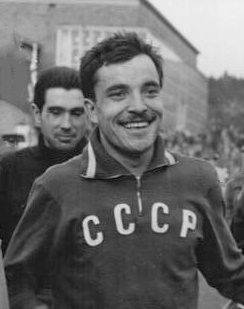


Career and achievements
Saidkhuzhin won multiple national championships, totaling ten Soviet titles over a range of road events and distances (Soviet titles). Those victories established him as a leading figure in domestic competition and secured his selection for international representation. As a road racer he competed in mass-start events and stage races, where consistent pacing, positioning and cooperation with teammates were important.
He represented the Soviet Union in the Olympic road race at both the 1960 and 1964 Summer Games, finishing 34th and 41st respectively. Participation in Olympic road races signified his status among the country’s top riders, as selection to the Olympic squad was highly competitive within the Soviet system.
- National dominance: Ten Soviet championships mark him as one of the era’s most successful domestic riders.
- Olympian: Competed for the USSR at the Rome 1960 and Tokyo 1964 Games.
- Background: Born in Novosibirsk to a Tatar family, reflecting the multiethnic composition of Soviet sport.
- Later life: He died of a heart attack on 13 May 2015 in Miami, Florida, United States, aged 77.
Although not as widely known internationally as some contemporaries who won major professional races, Saidkhuzhin’s record at home and his presence at major international events make him an important figure in the history of Soviet cycling. His career illustrates how athletes from diverse regions and ethnic groups contributed to national teams during the Cold War era, and his national titles remain a reference point for those studying the development of road racing in the Soviet Union.
Related articles
Author
AlegsaOnline.com Gainan Saidkhuzhin — Soviet road cyclist and national champion Leandro Alegsa
URL: https://en.alegsaonline.com/art/37222