
Norman Conquest of England (1066): origins, campaign, and consequences
The 1066 Norman invasion led by William the Conqueror transformed England’s ruling class, language, law and landscape, and reshaped relations with Continental Europe.
The Norman Conquest was a military invasion of England led by William the Conqueror in 1066. William was Duke of Normandy, a territory across the English Channel that is today a region of France. When King Edward the Confessor died without a clear heir, several men claimed the throne; William asserted that he had been promised the crown and that his claim superseded that of others. Harold II was crowned instead and led the Anglo-Saxon defense, commanding the core of the native Saxon army.
Image gallery
10 Images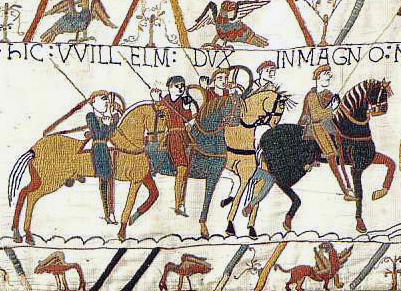




Background and the 1066 campaign
In the summer of 1066 William assembled a fleet and an army drawn from Normandy and allied continental lords. The conflict was preceded by other invasions and rival claims: in September Harold had defeated an invading Norwegian force at Stamford Bridge, forcing him to march north and then quickly return south. William landed on the Sussex coast and the two armies met at the Battle of Hastings on 14 October 1066. Harold was killed in the fighting; William’s combined arms tactics—cavalry, archers and infantry—and some tactical maneuvers such as feigned retreats overcame the Anglo-Saxon shield wall. William secured his position and was crowned king on 25 December 1066.
Political and social changes
The conquest linked England more tightly with Continental Europe and diminished Scandinavian influence. William replaced much of the Anglo-Saxon elite with Norman and other continental nobles, distributing land to his followers and creating a feudal hierarchy centered on the king. New administrative practices, writs, and taxes strengthened royal government; a comprehensive survey, the Domesday Book (1086), recorded landholding and resources across the kingdom.
Militarily and architecturally the conquest introduced widespread fortification building. Wooden motte-and-bailey castles were quickly erected and later rebuilt in stone; Romanesque church architecture and cathedral building followed. The English landscape was visibly altered by these defensive and religious structures, which served both practical and symbolic roles.
- Language and culture: The Norman ruling class spoke Old Norman and, over generations, Anglo-Norman French blended with Old English, contributing to the development of Middle English and altering vocabulary and administration; see English language.
- Economic effects: Redistribution of land and introduction of continental agrarian practices reshaped estates and local economies.
- Conflict and identity: The conquest set the stage for long-term rivalry between English and French interests and shaped English royal identity for centuries.
The Norman Conquest remains a pivotal event in English history. Its immediate effects—new elites, castles, and administrative reforms—were followed by gradual cultural assimilation: Anglo-Saxon and Norman customs and language mixed over generations. Historians continue to debate aspects of the invasion and its consequences, but its role in forming medieval England and altering the course of British and European politics is widely recognized. For further reading and primary-source material consult related resources and overviews available online: military analyses, national histories, biographies of William, and archival compilations referenced by academic projects and museums.
Although England has not experienced a successful large-scale foreign conquest since 1066, the conquest’s legacy endured in legal institutions, landholding patterns, language, and international rivalry. The events of 1066—claims to succession, rapid military campaigning, and decisive battles—illustrate how a single campaign can have long-term structural effects on a nation’s society, government, and place in Europe.
Questions and answers
Q: What was the Norman conquest of England?
A: The Norman conquest of England was a military invasion of England by William the Conqueror in 1066.
Q: Who was William the Conqueror?
A: William the Conqueror was Duke of Normandy, a country on the other side of the English Channel, now a region in France.
Q: Why did William invade England?
A: William invaded England after the death of King Edward the Confessor because he believed he had the most right to be King of England, but King Harold II had himself crowned king instead.
Q: When and where did King Harold and Duke William fight?
A: King Harold, with his Saxon army, and Duke William fought at the Battle of Hastings on October 14, 1066.
Q: What happened to King Harold during this battle?
A: King Harold was killed in the battle and his army left.
Q: When did William become king?
A: On December 25, 1066 William was crowned as new King of England.
Q: How did this event change English history?
A: The Norman conquest linked England more closely with Continental Europe, made Scandinavian influence less important, created one of Europe's most powerful monarchies, changed English language and culture and set stage for rivalry with France which would continue until 19th century.
Related articles
Author
AlegsaOnline.com Norman Conquest of England (1066): origins, campaign, and consequences Leandro Alegsa
URL: https://en.alegsaonline.com/art/70744