
Frontotemporal dementia (FTD): overview, symptoms, pathology, diagnosis and care
Frontotemporal dementia (FTD) is a group of disorders caused by progressive loss of neurons in frontal and temporal lobes, producing early changes in behaviour, language and executive function and often affecting younger adults.
Overview
Frontotemporal dementia (FTD) is the clinical syndrome associated with frontotemporal lobar degeneration. It is marked by progressive loss of neurons, particularly in the frontal and temporal lobes, and by a pronounced reduction of spindle (von Economo) neurons in some subtypes. FTD is an important cause of young‑onset dementia, second only to Alzheimer's disease in many series and accounting for about one‑fifth of cases beginning before the age of 65. Typical age at onset is often in mid‑life, commonly between the fourth and sixth decades.
Image gallery
2 Images
Clinical presentation
The clinical picture varies with the regions affected. Two broad groups are widely recognised: behavioural variant FTD (bvFTD), in which early and dominant changes in personality, social conduct and executive skills occur; and language variants, often described under the term primary progressive aphasia (PPA), which produce progressive impairment of speech, naming, grammar or word comprehension.
- Behavioural features: disinhibition, apathy, loss of empathy, social inappropriateness and changes in eating or social habits.
- Language variants: progressive nonfluent/agrammatic aphasia and semantic variant PPA are commonly associated with FTD pathology.
- Motor overlap: some patients develop parkinsonism or features of motor neuron disease.
Pathology and genetics
Neuropathologically, FTD is heterogeneous. Major molecular patterns include abnormal tau protein inclusions, TDP‑43 proteinopathy and FUS protein aggregates. The selective neuronal loss is most prominent in the frontal and temporal cortices; in certain forms more than 70% of spindle neurons may be lost while other neurons persist. A substantial proportion of cases are familial. Recurrent genetic causes include mutations in MAPT, GRN (progranulin) and expansions in C9orf72, which influence both clinical features and the underlying proteinopathy.
Diagnosis
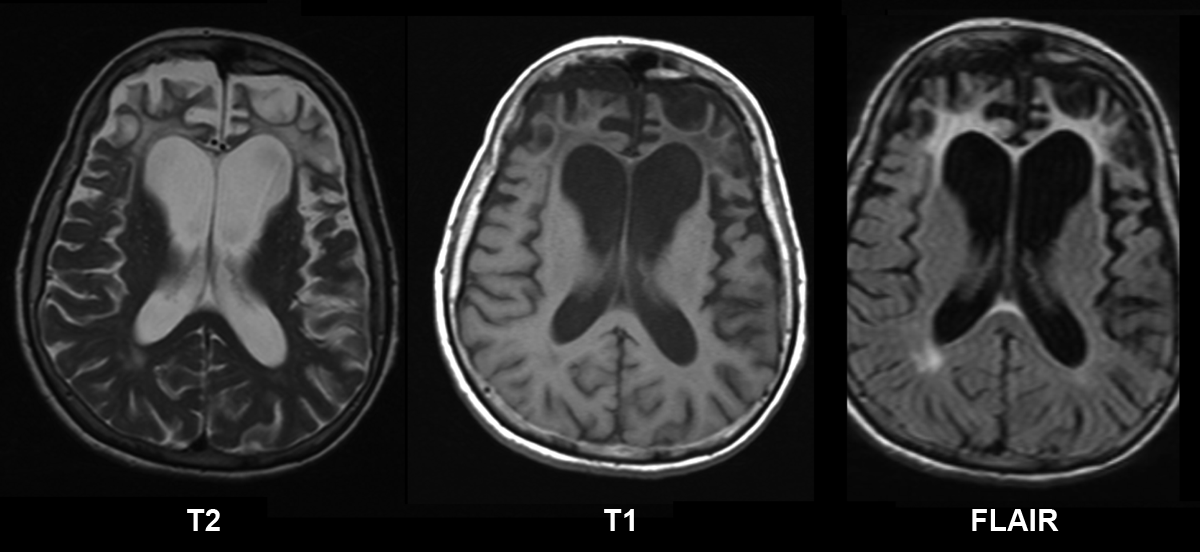
Diagnosis is primarily clinical and aided by neuroimaging and neuropsychological assessment. Structural MRI commonly shows focal atrophy of the frontal and/or temporal lobes. Functional imaging such as FDG‑PET or SPECT can demonstrate regional hypometabolism. Cerebrospinal fluid biomarkers that are informative in Alzheimer's disease are less specific for FTD, though specialised assays and genetic testing may clarify the diagnosis. Detailed cognitive and behavioural assessment helps distinguish bvFTD from psychiatric disorders and separate language variants from other causes of aphasia.
Management and prognosis
There is currently no proven disease‑modifying treatment for FTD. Management emphasises symptomatic care, safety planning and support for families. Interventions commonly include behavioural strategies, speech and language therapy for those with PPA, occupational therapy, and, when appropriate, pharmacological measures to reduce agitation or compulsive behaviours; certain antidepressants and other agents are sometimes used cautiously for specific symptoms. Genetic counselling is recommended for families with a suggestive history. Disease course is variable but typically progressive over several years, with functional decline that ultimately requires comprehensive care.
Context and resources
FTD is notable for its early impact on personality or language rather than memory at presentation and for its molecular and clinical heterogeneity. For background on affected cells and degeneration see neuronal loss, and for anatomical context see descriptions of the frontal lobe and temporal lobe. Families and clinicians may seek specialist centres for diagnosis, genetic counselling and management strategies tailored to the individual.
Related articles
Author
AlegsaOnline.com Frontotemporal dementia (FTD): overview, symptoms, pathology, diagnosis and care Leandro Alegsa
URL: https://en.alegsaonline.com/art/36835
Sources
- smithsonianmag.com : "Brain Cells for Socializing"
- doi.org : 10.1192/bjp.180.2.140
- pubmed.ncbi.nlm.nih.gov : 11823324