
Frontal lobe: anatomy, functions, and significance
Overview of the frontal lobe in mammals, its main regions and roles (motor control, decision-making, social behavior), development, clinical relevance, and notable distinctions.
Overview
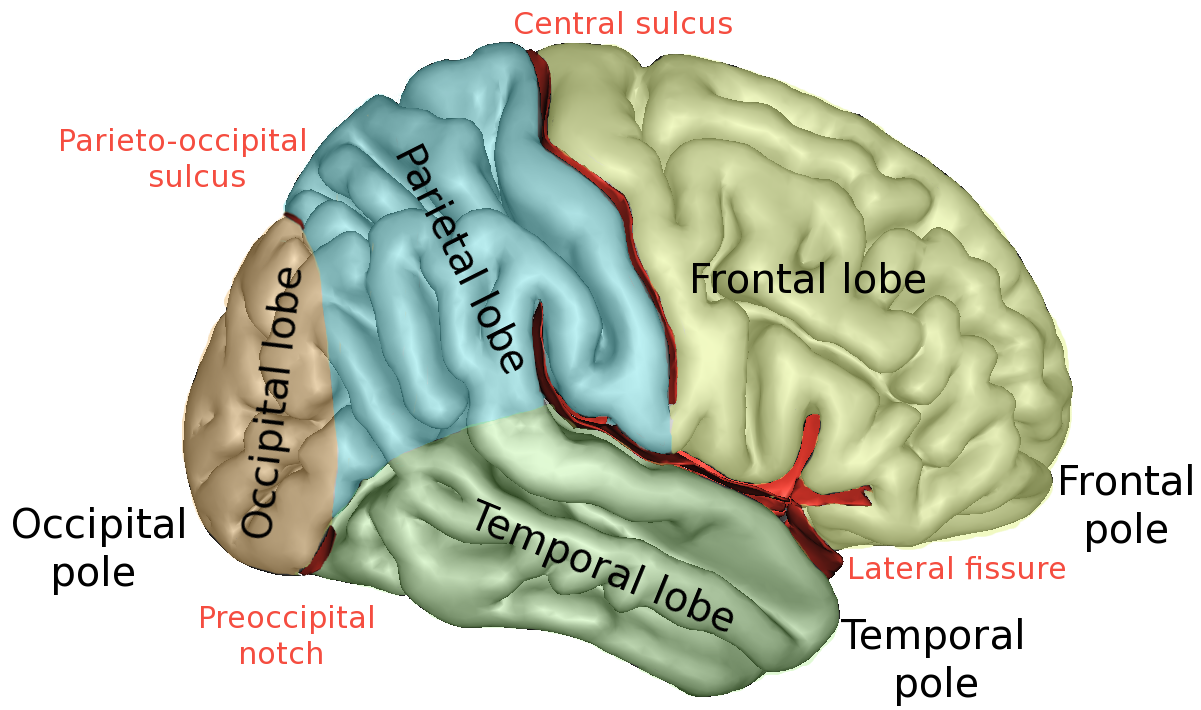
The frontal lobe is the forward-most portion of each cerebral hemisphere and is a major region of the brain. It is prominent in humans and present across many other mammals. Anatomically it lies anterior to the parietal lobe and superior and anterior to the temporal lobes. The frontal lobe integrates sensory inputs from the posterior cortex—related to vision, hearing and touch—to select and guide action.
Image gallery
3 Images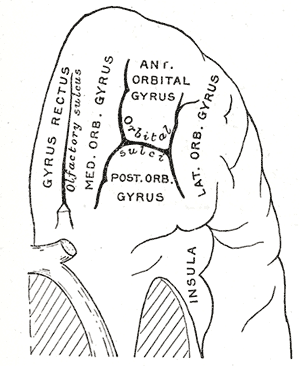

Major parts and characteristics
Several distinct subregions contribute different capacities. The precentral gyrus forms the posterior border and contains the primary motor cortex that directs voluntary movements. Just anterior lie premotor and supplementary motor areas that plan coordinated actions. The prefrontal cortex at the front is involved in higher-order processes such as planning, working memory and regulating social behavior. Language-related regions such as Broca's area are commonly located in the left frontal lobe in most people.
Functions and importance
The frontal lobe supports executive functions: setting goals, predicting outcomes, inhibiting inappropriate responses, and flexibly adjusting behavior. It helps balance basic drives—like hunger or defensive reactions—with learned social norms under the influence of frontal networks. Motor control, speech production, attention and aspects of personality are also centered here. The frontal cortex receives processed sensory information from the cerebrum and uses it to plan purposive acts.
Development and clinical notes
Frontal regions mature late compared with other cortical areas and continue developing into early adulthood. This protracted maturation is associated with the gradual refinement of impulse control and planning. Damage to the frontal lobe from injury, stroke or disease can produce weakness, changes in personality, impaired judgment, or problems with planning and language. Classic clinical and historical cases illustrate how focal frontal damage may alter decision-making and social behavior.
History and notable facts
Interest in frontal functions dates back to early clinical observations that linked frontal lesions to altered behavior. In the 20th century, surgical procedures that targeted frontal tissue prompted ethical debates and led to stricter standards for neurosurgery and psychiatric treatment. Modern neuroimaging and lesion studies continue to refine how particular frontal subregions—such as the orbitofrontal and dorsolateral prefrontal cortices—contribute to emotion regulation and cognitive control.
Summary and distinctions
- The frontal lobe is essential for voluntary movement and many aspects of complex cognition.
- Its anterior-most zone—the prefrontal cortex—mediates planning, working memory and social behavior and is influenced by broader limbic and sensory systems, including the pre-frontal cortex networks involved in self-regulation.
- Because it integrates drives, sensation and learned rules, the frontal lobe plays a central role in choosing context-appropriate actions and inhibiting impulses.
For further reading and anatomical references see specialized resources and neuroanatomy texts; clinical topics include rehabilitation after frontal injury and the role of frontal circuits in psychiatric conditions. More on brain anatomy, human frontal lobe, and comparative perspectives in other mammals provide useful starting points.
Questions and answers
Q: What is the frontal lobe?
A: The frontal lobe is an area in the brain of humans and other mammals, located at the front of each cerebral hemisphere.
Q: What is the function of the frontal lobes?
A: The frontal lobes take action based on sensory information (sight, sound, touch) from the three rear areas of the cerebrum.
Q: What is the role of the pre-frontal cortex?
A: The pre-frontal cortex moderates the action of the frontal lobe, serving as a gatekeeper by controlling and regulating behavior.
Q: How does the brain balance satisfying basic needs with socially acceptable behavior?
A: The system of the brain is a delicate balance between the need to satisfy urges from the most ancient parts of the brain, such as hunger, self-defence and sex, with the need to act in a way which is socially acceptable.
Q: What is the precentral gyrus?
A: The precentral gyrus is a part of the frontal lobe that contains the primary motor cortex.
Q: What is the function of the primary motor cortex?
A: The primary motor cortex in the precentral gyrus controls voluntary movements of specific body parts.
Q: What are the neighboring areas of the frontal lobe?
A: The frontal lobe is in front of the parietal lobe and above and in front of the temporal lobes.
Related articles
Author
AlegsaOnline.com Frontal lobe: anatomy, functions, and significance Leandro Alegsa
URL: https://en.alegsaonline.com/art/36827
Sources
- doi.org : 10.1038/nn814
- pubmed.ncbi.nlm.nih.gov : 11850633