
Frikandel (Dutch snack)
A frikandel is a skinless, deep-fried meat snack popular in the Netherlands and Belgium, commonly eaten at snack bars and served with fries, sauces and chopped onion.
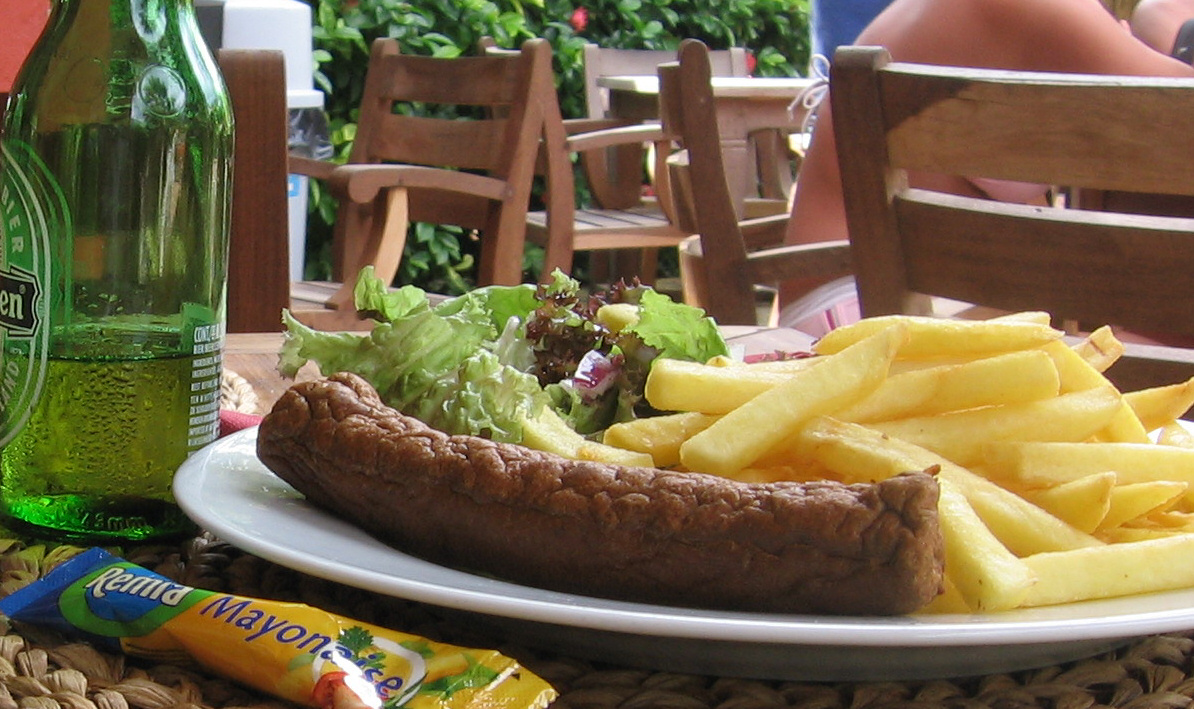
The frikandel is a common savory snack in the Low Countries, especially the Netherlands and Belgium. It is a skinless, cylindrical or slightly flattened meat roll that is deep-fried and sold at snack bars, kiosks and supermarkets. Often considered part of regional fast-food culture, it is typically eaten hot and may accompany French fries or be served on its own.
Image gallery
5 Images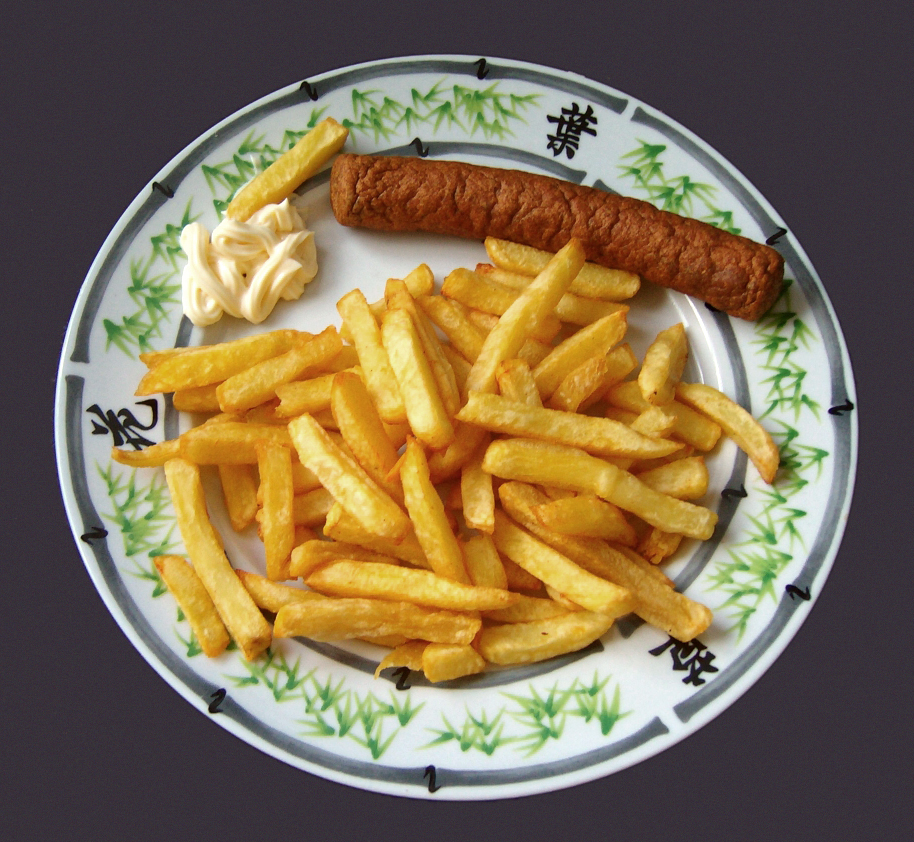


Characteristics and ingredients
Unlike a traditional sausage, the frikandel has no casing and a smooth texture. Typical commercial recipes use a mixture of finely ground meats (pork, beef, and sometimes poultry), seasonings, and binders. The exterior browns crisply during frying while the interior remains soft. Its appearance is sausage-like but the technique and texture set it apart from cased sausages.
History and development
The frikandel developed in the 20th century as a convenient, affordable snack produced for mass consumption. Variations and claims about its exact origin exist between regions; both the Netherlands and Belgium played roles in its evolution. Over decades it shifted from artisan preparation toward industrial production and frozen retail formats.
Preparation and common serving styles
Frikandellen are usually deep-fried from fresh or frozen. Common ways to serve them include whole, sliced, or split and filled. A popular variant is the frikandel speciaal, split lengthwise and topped with mayonnaise, curry ketchup or a spiced sauce, and raw chopped onion. In casual settings it is frequently eaten with French fries and condiments.
Variants and cultural notes
- Regional names and recipes vary; in Belgium you may see slightly different spellings or spice blends.
- Commercial versions include frozen products for home frying and larger or smaller portion sizes for snack bars.
- Compared with other Dutch snacks such as kroket or bitterballen, the frikandel is smoother in texture and lacks a pastry or breadcrumb coating.
As a ubiquitous element of local fast-food culture, the frikandel appears on many informal menus and is the subject of light culinary debate about best toppings and the ideal frying method. It remains a distinctive, widely recognized snack in its region of origin and a familiar example of European post-war convenience food traded between street vendors, snack bars and supermarket freezers. See also common references to regional fast-food items and sausages for context: fast-food snack, sausage-like forms.
Related articles
Author
AlegsaOnline.com Frikandel (Dutch snack) Leandro Alegsa
URL: https://en.alegsaonline.com/art/36752