
Freedom of Information Act (United States)
U.S. federal law (5 U.S.C. § 552) that creates public access to records of executive branch agencies, sets procedures, lists exemptions, and establishes administrative and judicial remedies. Enacted 1966.
Overview
The Freedom of Information Act (FOIA), codified at 5 U.S.C. § 552, is a federal statute that gives the public a statutory right to obtain records held by executive branch agencies. Its core purpose is government transparency and accountability: unless information falls within a specified exemption, agencies must disclose records in response to properly made requests. The FOIA applies to federal executive agencies and certain federal components, but not to Congress, the federal courts, or state and local governments; presidential records are governed separately.
Image gallery
3 Images
Scope and principal features
FOIA defines what counts as an "agency record," prescribes how members of the public may request them, and sets a timeline and fee structure for responses. Agencies are expected to search for responsive records, review them for exempt material, and release non-exempt portions. Requesters may seek records regardless of their motive: journalists, researchers, businesses, and private citizens all use FOIA to obtain documents, data, and correspondence.
Exemptions
The law balances disclosure with other public interests by listing nine exemptions that permit agencies to withhold information. These broadly include:
- Classified national defense or foreign relations information (Exemption 1)
- Internal agency rules and personnel matters where disclosure would be an invasion of privacy (Exemptions 2 and 6)
- Information explicitly protected by other statutes (Exemption 3)
- Trade secrets and confidential commercial or financial information (Exemption 4)
- Inter-agency or intra-agency memoranda reflecting deliberative process or privileged communications (Exemption 5)
- Law enforcement records where disclosure could interfere with proceedings, privacy, or endanger safety (Exemption 7)
- Information related to the supervision of financial institutions (Exemption 8)
- Geological and geophysical information concerning wells (Exemption 9)
How to request and appeal
Requests are usually made in writing to an agency's FOIA office and should reasonably describe the records sought. Agencies generally have statutory deadlines to respond, can assess fees, and may refuse or redact records under exemptions. When a request is denied or not timely answered, requesters may file an administrative appeal within the agency and, if necessary, sue in federal court to seek disclosure or challenge a withholding. Many agencies maintain online FOIA reading rooms and guidance for requesters; see the text of the statute or agency resources such as official FOIA guidance for procedural details and sample forms.
History and amendments
Signed into law in 1966, FOIA reflected a mid-20th-century push for more open government. Over subsequent decades it has been amended to address evolving needs: for example, Congress has strengthened judicial review and privacy protections, and lawmakers adopted provisions to account for electronic records and proactively published information online. Major amendments include provisions that expanded public access and required agencies to create electronic reading rooms; for an overview of legislative milestones consult historical summaries.
Uses, impact, and limitations
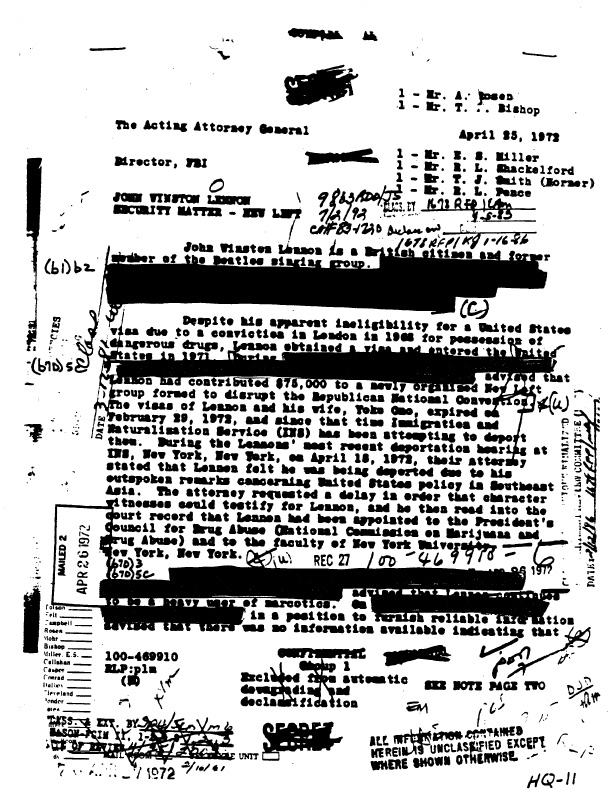
FOIA is a vital tool for investigative journalism, academic research, regulatory oversight, and corporate due diligence. It has revealed policy deliberations, safety reports, correspondence, and data that would otherwise remain hidden. Yet practical limits persist: agencies may apply exemptions broadly, searches can be slow or costly, and litigation to compel disclosure can take years. To improve access, requesters often use targeted requests, administrative appeals, and litigation; resources on filing and best practices are available from many public legal help centers and include online instructions such as those found at how to file a FOIA request.
Notable distinctions
FOIA governs federal executive branch records; it does not automatically cover congressional or judicial documents, state public records, or certain presidential communications. Separate laws and procedures—such as state open records acts and the Presidential Records Act—govern those categories. Understanding these distinctions helps requesters direct inquiries to the correct authority and set realistic expectations about the likelihood and timing of disclosure.
Related articles
Author
AlegsaOnline.com Freedom of Information Act (United States) Leandro Alegsa
URL: https://en.alegsaonline.com/art/36494
Sources
- www2.gwu.edu : "FOIA Legislative History"
- presidency.ucsb.edu : "Lyndon B. Johnson: "Statement by the President Upon Signing the "Freedom of Information Act.", July 4, 1966"
- edps.europa.eu : The Presidential Executive Order on the Freedom of Information Act