
Fugitive Slave Laws in the United States (1793 and 1850)
Federal statutes passed in 1793 and 1850 requiring authorities and citizens to assist in returning escaped enslaved people, provoking Northern resistance and heightening sectional tensions before the Civil War.
The term "Fugitive Slave Laws" usually refers to two pieces of United States federal legislation enacted in 1793 and 1850. Both statutes established procedures for the capture and return of people who had escaped from slavery and placed legal duties on officials and private citizens outside the slaveholding states. Supporters framed the laws as protection of property and interstate obligations; opponents in many Northern communities viewed them as an imposition on local liberty and an affront to justice.
Image gallery
6 Images


Major provisions and how they worked
The earlier measure, the 1793 Fugitive Slave Act, created a framework for owners or their agents to reclaim runaways and authorized federal judges to issue warrants. The later, much stronger 1850 Fugitive Slave Act was part of the Compromise of 1850 and expanded federal enforcement. Key features included:
- Authority for federal commissioners to hear claims and order removal without a jury trial.
- Financial incentives and different fees that critics said biased decisions toward returning the claimant.
- Criminal penalties for anyone who aided an escaped person or obstructed the law.
- Requirements that officials and citizens in free states cooperate with capture and handing over of alleged fugitives.
Regional reactions and resistance
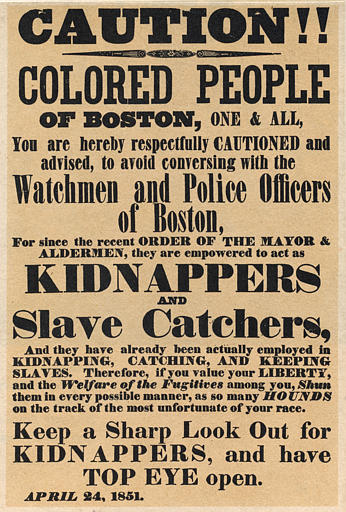
In many parts of the United States, especially in the Northern states, the 1850 law sparked strong opposition. Northern legislators passed "personal liberty" laws to protect local process and provide counsel or jury trials; abolitionists organized legal defense, public protests, and direct action. Communities, Underground Railroad networks, and individuals sometimes resisted by sheltering escapees or interfering with removals—actions that made enforcement controversial and dangerous.
Political impact and legacy
The Fugitive Slave laws were intended to defend the rights of slaveholders and maintain interstate legal obligations, but they also imposed legal obligations on non-slaveholding jurisdictions and private citizens. The statutes intensified sectional conflict by bringing the realities of slavery into Northern towns and courts, energizing the abolitionist movement and straining national compromise. Incidents tied to enforcement, publicized trials, and violent confrontations contributed to the polarization that preceded the American Civil War.
During the Civil War era the statutory regime was effectively overturned: federal enforcement of the fugitive slave laws ceased and Congress repealed parts of the legislation as the Union moved toward emancipation. The laws remain a prominent example of how federal policy, regional values, and human rights clashed in 19th-century America.
For further information, see primary texts and historical summaries: 1793 Act, 1850 Act, and related analyses at general historical resources: national overview, regional responses, Southern perspectives, legal obligations, Civil War context.
Questions and answers
Q: What were the Fugitive Slave Acts?
A: The Fugitive Slave Acts were two federal laws that dealt with runaway slaves in the United States.
Q: When were the Fugitive Slave Acts passed?
A: The two Fugitive Slave Acts were passed in 1793 and in 1850.
Q: What was the purpose of the Fugitive Slave Acts?
A: The purpose of the Fugitive Slave Acts was to involve the federal government in catching runaway slaves in Northern States and to protect Southern slave owners.
Q: What was required of states and jurisdictions under the Fugitive Slave Acts?
A: The Fugitive Slave Acts required those states and jurisdictions to help in the capture and delivery of fugitive slaves.
Q: Were the Fugitive Slave Acts popular in the North?
A: No, the Fugitive Slave Acts were very unpopular in the North.
Q: What did the Fugitive Slave Acts cause in the years leading up to the American Civil War?
A: The Fugitive Slave Acts caused a great deal of resentment in the years leading up to the American Civil War.
Q: How did the Fugitive Slave Acts play a role in the American Civil War?
A: The Fugitive Slave Acts played a role in the American Civil War by contributing to the tensions and conflicts between the North and the South over the issue of slavery.
Related articles
Author
AlegsaOnline.com Fugitive Slave Laws in the United States (1793 and 1850) Leandro Alegsa
URL: https://en.alegsaonline.com/art/36902
Sources
- history.com : "Fugitive Slave Acts"
- encyclopediavirginia.org : "Fugitive Slave Laws"
- history.com : "Slavery in America"
- nps.gov : "African Americans at Jamestown"
- civil-war.net : "Events Leading to War - A Civil War Timeline"
- ashbrook.org : "A Look Into the Constitutional Understanding of Slavery"
- gilderlehrman.org : "The American Civil War"
- memory.loc.gov : "Slavery and Indentured Servants"
- academic.udayton.edu : "The Realities of Enslaved Female Africans in America"
- bowdoin.edu : "Laws Pertaining to Slavery"
- oxfordaasc.com : "Forus on Dred Scott v. Sandford"
- pbs.org : "Dred Scott's fight for freedom, 1846 - 1857"
- loc.gov : "Northwest Ordinance"
- billofrightsinstitute.org : "Northwest Ordinance (1787)"
- classroom.synonym.com : "Was Slavery Allowed in the Northwest Territory in 1787?"