
Amir Ahmed Khan, Raja Sahib of Mahmudabad
Raja of Mahmudabad (1914–1973), Indian Muslim aristocrat and politician who played a complex role in the Pakistan Movement—initially opposing partition, later supporting Pakistan and living in Pakistan, Iraq and England.
Overview
Amir Ahmed Khan, commonly known as the Raja Sahib of Mahmudabad (5 November 1914 – 14 October 1973), was a prominent Muslim aristocrat and politician from northern India. He is most often remembered for his active participation in the politics of Muslims in British India during the years surrounding the Pakistan Movement. Contemporary accounts and later summaries describe him as a landowning notable who engaged both with the All India Muslim League and with groups opposed to partition at different moments in his career. For a short biographical sketch see biographical note.
Image gallery
4 Images


Political positions and activities
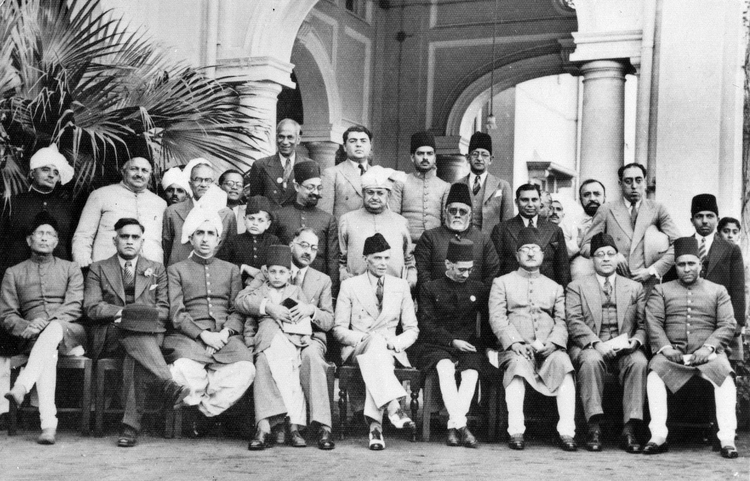
Raja Sahib initially opposed the idea of dividing British India into separate dominions. When the All India Muslim League adopted the Lahore Resolution in 1940 calling for separate states for Muslims in the north-west and east, he was one of several leading Muslims who disagreed with that course. To give institutional expression to this opposition he helped establish the All India Jamhur Muslim League. The inaugural session of that party was held at Muzaffarpur in Bihar, where Raja Sahib was chosen president and Dr. Maghfoor Ahmad Ajazi served as general secretary. His change of stance after these events is noted in accounts of the period: he later came to support the demand for a separate Muslim state under the persuasive influence of Muhammad Ali Jinnah; contemporary reports record his observation that "...the idea of a separate Muslim state in India stirred the imagination of the Muslims as nothing else had done before." For context on the wider Pakistan Movement see movement overview and the text surrounding the Lahore Resolution.
Later life and migrations
After the partition of India and the creation of Pakistan in 1947, Amir Ahmed Khan migrated to Pakistan. Like several other leaders who relocated at that time, he found the political environment there difficult and at odds with his expectations. He left Pakistan and spent a period in Iraq before settling in England. In Britain he continued to be involved in Muslim communal and cultural affairs and is recorded as serving as a director of the Islamic Cultural Centre in London. He died in London in 1973; later generations of his family returned to live in India.
Significance and legacy
Raja Sahib of Mahmudabad illustrates the complexity of Muslim political opinion in late colonial India: he was at once a prominent member of the landed elite, an organizer who led an alternative Muslim platform to the League for a time, and eventually a supporter of a separate state. His life after 1947—migration, disillusionment with politics in Pakistan, and cultural work in Britain—reflects the unsettled trajectories of several princely and landed families after the end of British rule. For a concise timeline and key events, see the list below.
- Born 5 November 1914; titled Raja Sahib of Mahmudabad.
- Active in Muslim politics during the 1930s–1940s; associated with the All India Muslim League and later the All India Jamhur Muslim League.
- Presided over the Jamhur Muslim League's first session in Muzaffarpur, Bihar.
- Initially opposed the Lahore Resolution but later supported Pakistan under the influence of Muhammad Ali Jinnah.
- Migrated to Pakistan after 1947, later lived in Iraq and then England.
- Served as a director of the Islamic Cultural Centre in London and died there on 14 October 1973.
- Descendants subsequently returned to live in India.
Readers interested in broader studies of the era can consult introductory resources on the Pakistan Movement and accounts of Muslim political currents in British India (Pakistan Movement, Lahore Resolution). For local and family histories related to the Mahmudabad estate and regional politics, see specialized studies and archival materials referenced in biographical sources and regional surveys.
Related articles
Author
AlegsaOnline.com Amir Ahmed Khan, Raja Sahib of Mahmudabad Leandro Alegsa
URL: https://en.alegsaonline.com/art/3563
Sources
- humsafar.info : "Raja Sahib of Mahmudabad"
- questia.com : "Remembering Partition: Violence, Nationalism, and History in India"
- wikidata.org : wikidata.org/wiki/Q12857694
- authority.bibsys.no : 8070525
- d-nb.info : 1089780087
- isni.org : 0000 0000 2993 713X
- id.loc.gov : n88186654
- viaf.org : 77875636
- worldcat.org : lccn-n88186654