
Ford Bronco: history, design, and legacy
Comprehensive overview of the Ford Bronco — its origins, generations, technical characteristics, uses, and cultural legacy from 1966–1996 and its 2021 revival.
The Ford Bronco is an American utility vehicle introduced by Ford in 1966 that evolved into a familiar sport utility vehicle (SUV) icon. Initially conceived as a small, purpose-built off-road vehicle and produced through several distinct generations, the Bronco lineup was built for a mix of utility, recreation and light-duty work. Production ran through 1996, and the Bronco name returned to Ford's catalog in 2021 as a modern, retro-styled compact SUV.
Image gallery
10 Images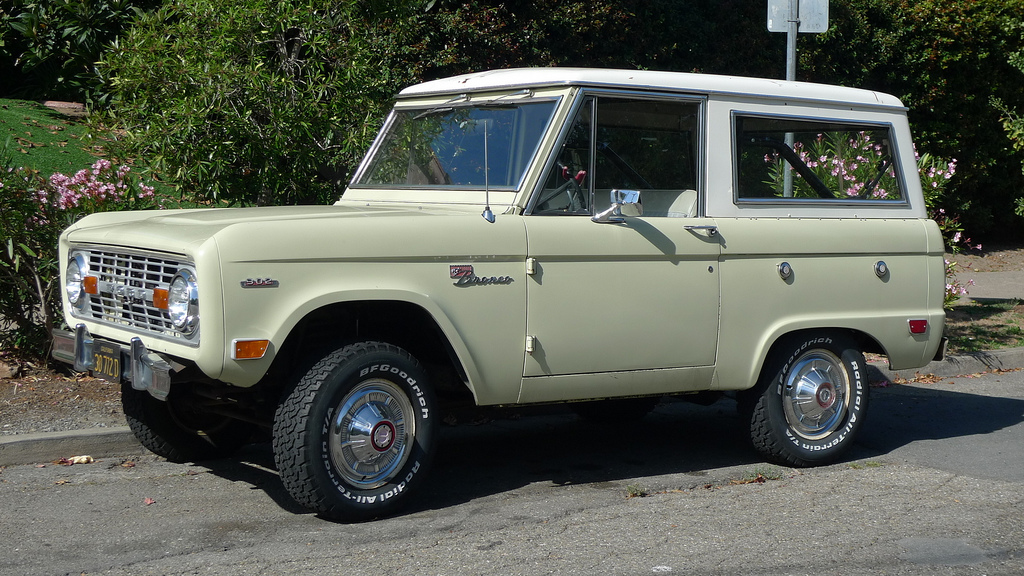




Origins and development
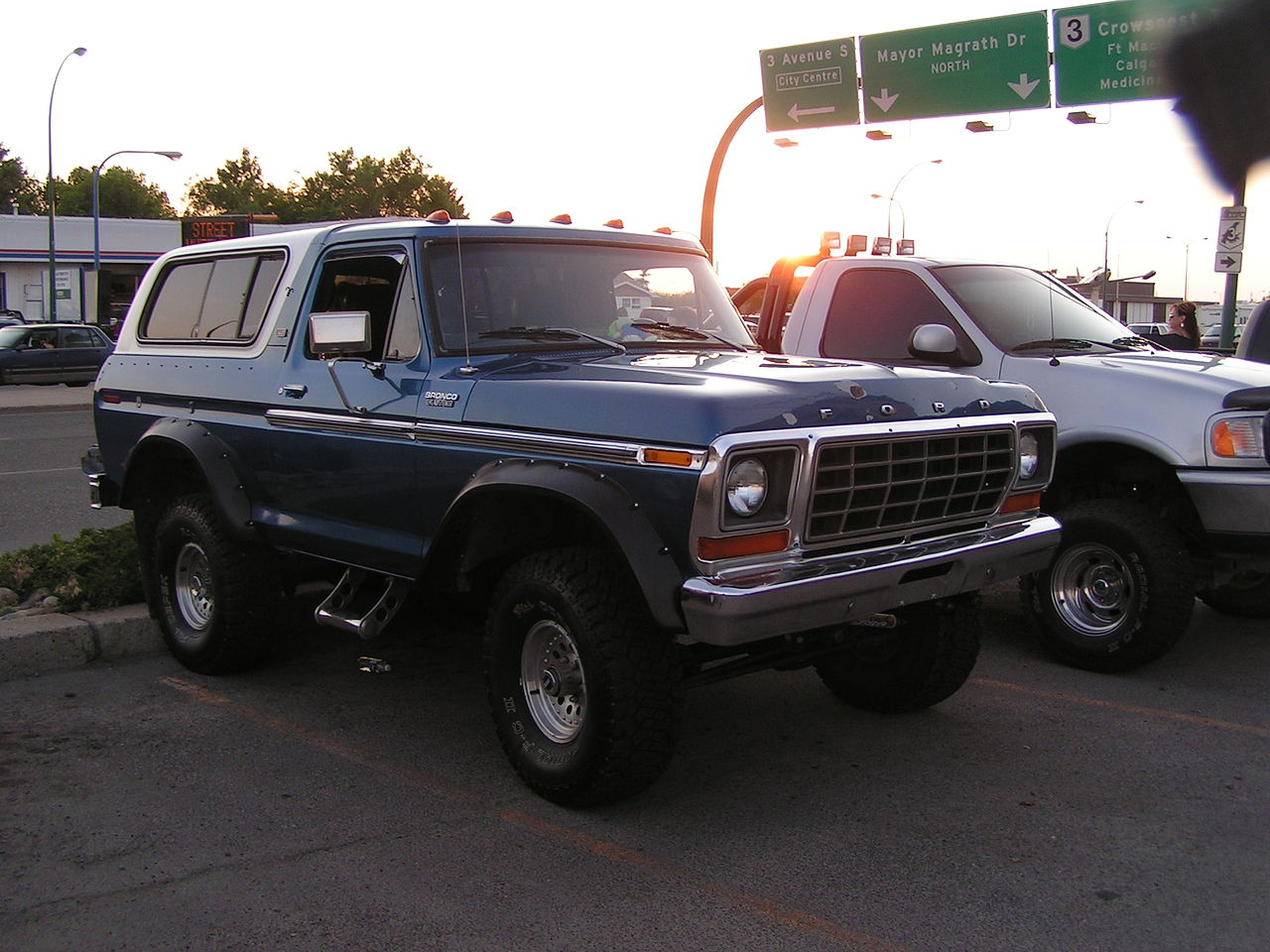
Ford launched the Bronco to compete with small, four-wheel-drive rivals. Early models were compact, two-door vehicles with simple, rugged construction and removable tops. After a decade of the original compact design, a major redesign in 1978 shifted the Bronco to a larger platform to address changing buyer preferences and to compete with larger sport utility offerings. Across its production life the Bronco line comprised several formal generations, as well as related variants produced in overlapping years.
Key characteristics
- Compact to full-size body styles: early short-wheelbase two-doors and later full-size four-wheel-drive SUVs classified as full-size Broncos.
- Four-wheel-drive capability, removable tops or hardtops, and a focus on off-road durability and simplicity.
- Engine options and trim levels varied widely by year, from economical inline engines to larger V8s for towing and highway use.
Beginning models shared nothing with Ford's pickup trucks and were built on a unique platform aimed at tight wheelbase handling and trail capability. The 1978 redesign moved the Bronco onto a shortened Ford F-Series frame and a heavier-duty truck chassis, giving it greater towing and passenger capacity and making it a direct rival to other truck-based SUVs such as the Chevrolet K5 Blazer.
Competitors, variants and market role
At launch the Bronco aimed to sit between the Jeep CJ-5 and the International Harvester Scout in size and capability, challenging the compact off-road market dominated by small four-wheel-drive vehicles like the Jeep CJ-5 and the International Harvester Scout, as well as other rugged compact models such as the small four-wheel-drive offerings of the era. Ford also introduced related models in the Bronco family during later years, including a smaller Bronco II in the 1980s to address a different segment.
Broncos were built and sold as versatile vehicles for work, recreation and daily driving. Their simple mechanical layout encouraged robust aftermarket support for off-road modification, restoration and collection. Full-size Broncos and their successor, the Ford Expedition, were assembled at Ford's Michigan Truck Plant in Wayne, Michigan, and many preserved Broncos are now valued by collectors and enthusiasts for their historic role in American sport-utility vehicle development.
Notable distinctions and legacy
- The Bronco name covers distinct eras: the original compact design (1966–1977), the larger, truck-based full-size models (1978–1996), and the modern revival beginning in 2021.
- Its transition from a bespoke compact platform to a truck-based SUV mirrors broader industry shifts toward larger, more versatile sport-utility vehicles.
- Today the Bronco remains culturally significant, with active enthusiast communities, restoration markets and a renewed production model that references classic styling while incorporating modern technology.
Related articles
Author
AlegsaOnline.com Ford Bronco: history, design, and legacy Leandro Alegsa
URL: https://en.alegsaonline.com/art/35549
Sources
- commons.wikimedia.org : Ford Bronco