
Ford Cortina: British mid-size car produced 1962–1982
Mid-size family car made by Ford Motor Company from 1962 to 1982. Produced in five generations, widely used in the UK as family, fleet and performance car; replaced by the Sierra.
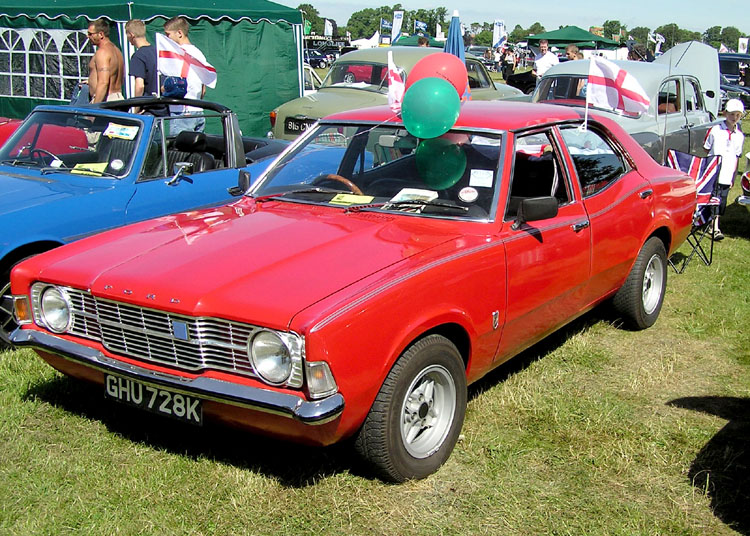
The Ford Cortina was a mid-size family car manufactured by Ford Motor Company between 1962 and 1982. Designed for broad appeal, it became one of the most common and recognizable cars on British roads during the 1960s and 1970s. The Cortina balanced simple, robust engineering with a range of body styles and trim levels that suited private buyers, company fleets and taxi operators alike.

Image gallery
10 Images


Characteristics
The Cortina was built with conventional rear-wheel drive and straightforward mechanicals that made it easy to service and modify. Over its life the model range offered a variety of four‑cylinder petrol engines and transmissions, practical interiors and modest equipment compared with today’s standards. Notable attributes included good parts availability, a light chassis amenable to tuning, and a layout that accommodated both saloon and estate designs.
Body styles and variants
- Saloon (four-door): the most common configuration.
- Estate (station wagon): offered for buyers needing extra cargo space.
- Sport and special editions: higher‑trim or performance models, including the famous Lotus‑tuned versions.

History and development
Produced across five distinct generations (commonly referred to as Mark I to Mark V), the Cortina evolved in styling and engineering to match changing market tastes. Early models launched in the 1960s emphasized compact family transport; by the 1970s the design converged with Ford’s German models and shared components with the Taunus in several markets. The Cortina remained a strong seller through the 1970s and was gradually phased out after the introduction of the Sierra in 1982.

Uses, motorsport and legacy
The Cortina was widely used by motorists, taxi firms and businesses because of its reliability and low running costs. A high‑profile chapter in its history is the collaboration with Lotus, which produced high‑performance Cortina variants that achieved success in club and national racing as well as rallying. Today the Cortina retains a following among classic‑car enthusiasts, appreciated for its period character and tuning potential.

As a mainstream model of its era, the Cortina illustrates how practical engineering and broad market positioning can produce enduring popularity. Its role in British motoring history remains notable: once ubiquitous on UK roads, it helped define family transport for two decades and left a legacy of accessible, serviceable design.
Related articles
Author
AlegsaOnline.com Ford Cortina: British mid-size car produced 1962–1982 Leandro Alegsa
URL: https://en.alegsaonline.com/art/35551