
Amiens Cathedral (Notre‑Dame d'Amiens)
Amiens Cathedral is a masterwork of 13th‑century French Gothic architecture in Amiens, France, famed for its large interior, rich sculpture, and UNESCO World Heritage status.
Amiens Cathedral, officially the Cathedral Basilica of Our Lady of Amiens, is a major medieval Roman Catholic church in northern France. Located in the city centre, it is commonly called Amiens Cathedral and was largely built in the decades after 1220. The building combines soaring vaults, a monumental west façade and elaborate carved portals. It serves both as a place of worship and as an emblem of Gothic architectural achievement. Cathedral Basilica of Our Lady of Amiens and the city of Amiens in France together frame its local and national significance.
Image gallery
10 Images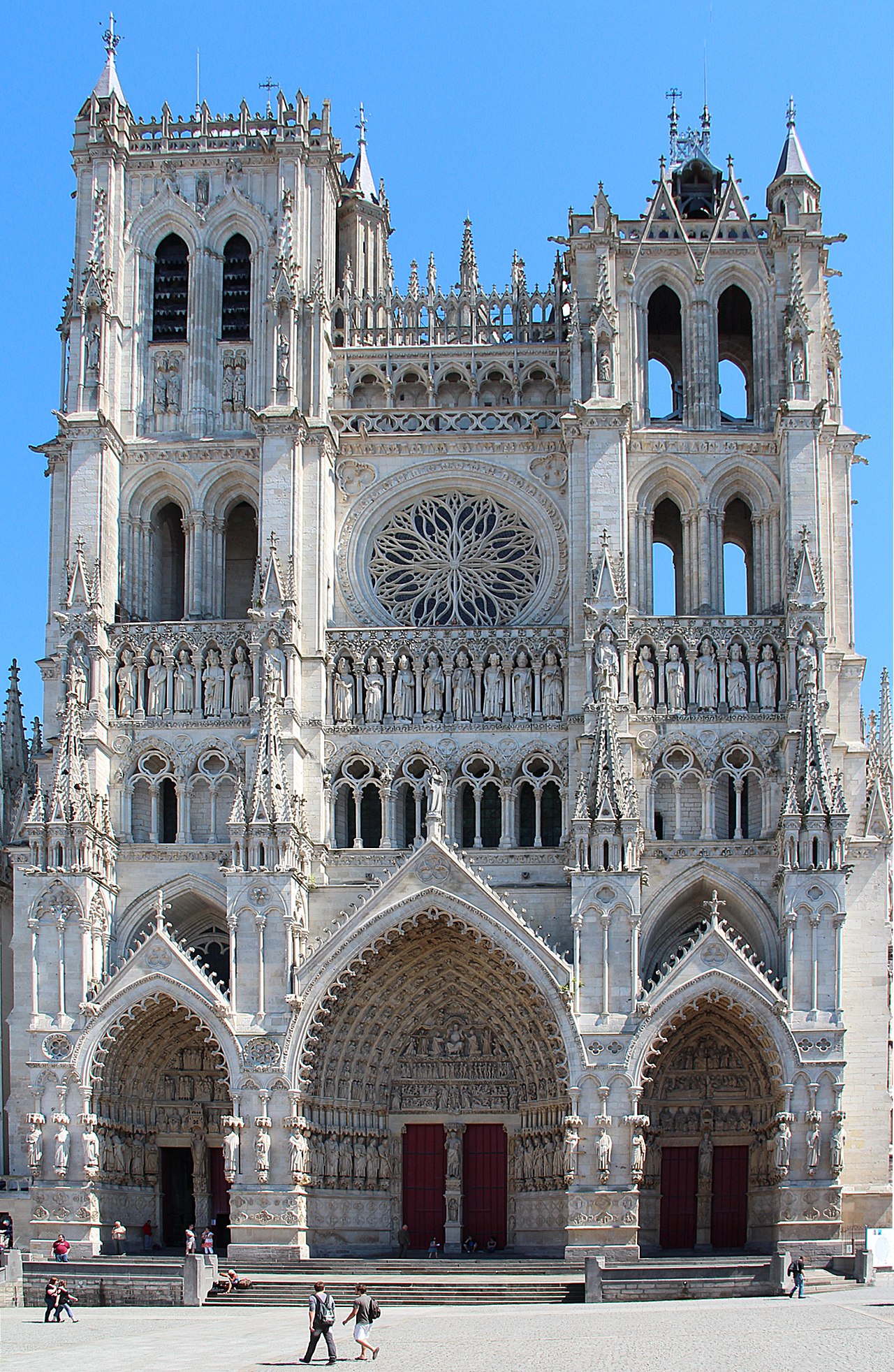


Architecture and layout
The cathedral follows a typical Gothic plan with a long nave, transepts and an extended choir. Its proportions emphasize verticality: pointed arches rise to ribbed vaults supported from the exterior by flying buttresses. The west façade is particularly notable for three large sculpted portals beneath a gallery of kings and a rose window. Interior dimensions and the volume of the building have led scholars and guides to describe Amiens as among the largest Gothic cathedrals in France.
Sculpture, portals and stained glass
Amiens is especially celebrated for the quantity and quality of its early 13th‑century sculpture. Tympana, archivolts and façade statuary present biblical scenes, saints and allegories in a style that balances narrative clarity with sculptural finesse. Large windows once filled the interior with colored light, and while some medieval glass survives, many windows have been restored or replaced over later centuries. Conservation and interpretation of these works have been a continuing concern for historians and conservators. See more about its artistic program at the sculpture and decoration.
History and construction
Construction began soon after a major fire damaged an earlier church in the early 13th century. Master builders traditionally associated with the project include Robert de Luzarches and the de Cormont family, who directed successive campaigns that shaped the cathedral's unified appearance. Building work concentrated between roughly 1220 and 1270, producing the core Gothic fabric; later centuries brought additional furnishings, repairs and adaptive changes. The site has been subject to restoration and conservation efforts since the 19th century to address wear, war damage and the effects of time.
- UNESCO World Heritage: Amiens Cathedral was inscribed for its outstanding Gothic art and architecture; see the listing at UNESCO.
- Cultural role: It remains an active cathedral, hosting liturgy, concerts and cultural programs while attracting many visitors annually.
- Comparisons: Along with Chartres and Reims, Amiens is widely regarded as one of the great classical French cathedrals of the Middle Ages; comparisons and contrasts are discussed in many studies and guides (Chartres and Reims).
Today Amiens Cathedral is both a religious centre and an important heritage site. Visitors come to admire the façade sculpture, experience the scale of the nave, and study Gothic engineering and iconography. Ongoing research, preservation campaigns and public programming aim to keep the cathedral accessible and intelligible to modern audiences while respecting its medieval origins.
Related articles
Author
AlegsaOnline.com Amiens Cathedral (Notre‑Dame d'Amiens) Leandro Alegsa
URL: https://en.alegsaonline.com/art/3547
Sources
- whc.unesco.org : "Amiens Cathedral"