
Fokker 100: regional twin‑engine jet airliner
The Fokker 100 is a twin‑engine, narrow‑body regional jet developed as a stretched, modernized successor to the F28. It seats roughly 100 passengers and served short‑ to medium‑haul routes in the late 20th century.
The Fokker 100 is a twin‑jet, single‑aisle regional airliner developed by Fokker as a lengthened and modernized successor to the earlier F28 Fellowship. Designed for short to medium sectors, it is powered by two rear fuselage turbofan engines and typically accommodates about 100 passengers in a single‑class layout. The aircraft combined a conventional T‑tail and rear‑mounted engines with updated aerodynamics and avionics for improved economy and passenger comfort.
Image gallery
8 Images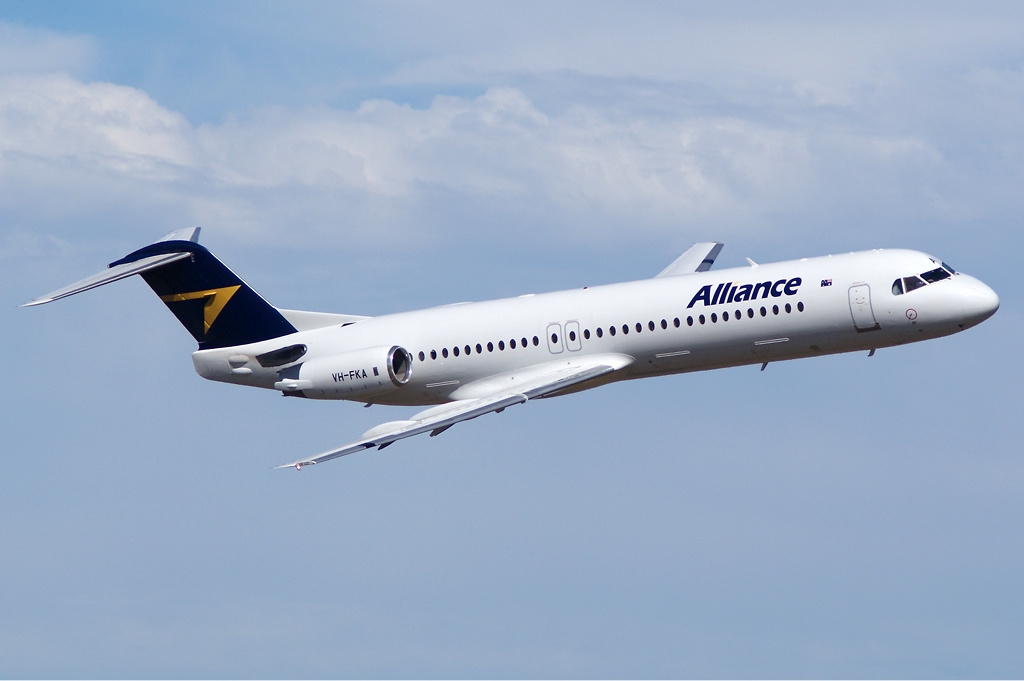


Design and characteristics
Compared with its predecessor, the Fokker 100 featured a stretched fuselage and revised systems intended to lower operating costs and extend range. Typical characteristics include:
- Two rear‑mounted turbofan engines for reduced cabin noise and simplified wing structure.
- T‑tail configuration and low wing to balance performance and ground handling.
- Modernized flight deck and avionics for its production era, with options that improved pilot situational awareness.
- Single‑aisle cabin with typical seating near the 100‑passenger mark, adaptable for higher density or two‑class layouts.
History and development
Conceived in the 1980s to meet growing demand for regional jets with greater capacity and efficiency, the Fokker 100 was part of a wave of new regional designs that emphasized jet speed and comfort over turboprops. The type entered airline service in the late 1980s and was produced through the 1990s. Production ended when the Dutch manufacturer reorganized and ceased civil airliner manufacture, but the type remained in airline fleets for many years afterwards.
Operations, roles and legacy
Airlines used the Fokker 100 on domestic and regional international routes where its passenger capacity and range matched demand. It was common with European carriers and found customers worldwide, with some later converted for corporate, VIP or freighter roles. The Fokker 100 is notable as the largest airliner built by the company and spawned a smaller sibling, the Fokker 70, aimed at lower‑capacity markets.
Though no longer in widespread production, the Fokker 100 played a significant role in the transition from turboprop and smaller jets to larger regional jet operations and remains a recognizable type in discussions of late‑20th‑century regional aviation.
Related articles
Author
AlegsaOnline.com Fokker 100: regional twin‑engine jet airliner Leandro Alegsa
URL: https://en.alegsaonline.com/art/35344