
Ford Anglia
Compact British family car built by Ford's UK division from 1939 to 1967, known for multiple redesigns, distinctive styling (notably the 105E's reverse-rake rear window) and varied body styles.
The Ford Anglia was a compact family car produced by Ford Motor Company in Britain, introduced in 1939 and manufactured in successive forms until 1967. Over nearly three decades the Anglia evolved through several distinct designs, offering simple, economical transport for private buyers and light commercial users. Its name became synonymous with small saloons and estates in the UK market.
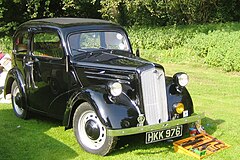
Image gallery
10 Images


Design and characteristics
The Anglia family included two- and four-door saloons, estate (wagon) versions, light vans and occasional coupé variants. Typical features across generations were modest four-cylinder engines, rear- or front-wheel drive depending on era, straightforward mechanicals aimed at ease of maintenance, and compact dimensions suited to urban driving. Interior trim and equipment levels were conservative by modern standards but aimed at practicality and affordability.

History and major models
Originally offered before World War II, the Anglia returned to production in the postwar period and underwent several redesigns. The best-known postwar variant is the 105E series (introduced in the late 1950s), notable for its forward-leaning, reverse-rake rear window and cleaner, modernized lines compared with earlier boxier versions. Throughout its life the Anglia followed changing tastes in the small-car market until production ceased and Ford shifted focus to newer models.

Uses, impact and legacy
The Anglia served as an everyday family car, a light commercial vehicle in van form, and a popular basis for budget modifications and motorsport in club competition. Its compact footprint and frugal running costs made it a common sight on British roads in the 1950s and 1960s. The Anglia was also retained in popular culture: a colourfully memorable example appears in contemporary fiction and cinema, helping to keep the model in the public imagination long after production ended.

Notable distinctions
- Multiple generations: successive redesigns addressed styling, packaging and mechanical layout to reflect market shifts.
- Distinctive styling cues: the 105E's reverse-rake rear window is its most recognized visual hallmark.
- Market role: positioned as an affordable small family car and fleet vehicle in postwar Britain.
- Succession: the Anglia line was phased out in the late 1960s as Ford introduced newer compact models to replace it.
The Ford Anglia remains of interest to classic-car enthusiasts and historians for its role in mid-20th-century motoring and as an example of British small-car design and industrial practice.
Related articles
Author
AlegsaOnline.com Ford Anglia Leandro Alegsa
URL: https://en.alegsaonline.com/art/35548