
Flatland: Abbott's Novella on Two Dimensions and Social Satire
Flatland (1884) is Edwin Abbott Abbott's satirical novella set in a two-dimensional world that examines geometry, social hierarchy, Victorian values and the concept of higher dimensions.
Overview
Flatland is a short fiction work by Edwin Abbott Abbott, first published in 1884 and subtitled A Romance of Many Dimensions. It presents a narrator from a plane: a society whose inhabitants are geometric figures. The book combines a literal account of life in two dimensions with a pointed critique of social conventions, especially those of the author's own Victorian context. The narrative has attracted readers from literature, philosophy and mathematics for its imaginative treatment of space and rank.
Image gallery
3 Images

Setting and structure
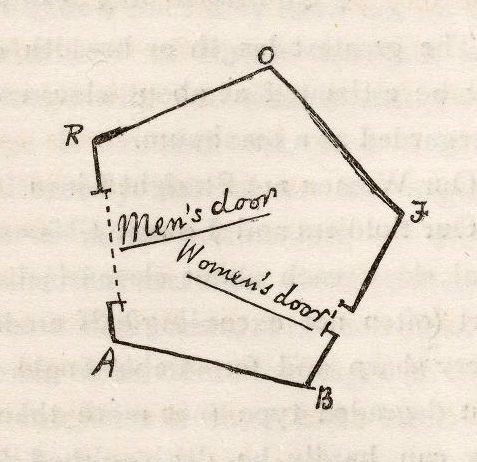
The story is told in the first person by a protagonist known as A. Square. He describes everyday life in a flat world where position and shape determine status, job and legal rights. Social hierarchy is tied to geometry: regular polygons and circles occupy higher ranks, while shapes with fewer sides have lower standing. The physical constraints of a two-dimensional plane shape perception, movement and interpersonal relations, and Abbott uses these constraints to explore how perspective and limited information influence a society.
Themes and ideas
Flatland operates on two levels. As a satire it lampoons social rigidity, class privilege and aspects of gender roles in the Victorian era. As a speculative and pedagogical work it introduces readers to the idea of higher dimensions, asking how beings of one dimensionality might conceive of another. Abbott's blend of social commentary and geometric metaphor encourages reflection on prejudice, confirmation bias and intellectual humility.
Key features
- Narrative voice: first-person account that mixes anecdote and analysis.
- Mathematical imagination: use of geometric concepts to frame philosophical questions.
- Satire: critique of hierarchical and gendered social norms, sometimes using exaggerated caricature.
Publication, reception and influence
Since its appearance the novella has circulated widely beyond its original readership. It has been reprinted, adapted and used as an introduction to thinking about spatial dimensions and to teach mathematical ideas informally. Readers and scholars cite Flatland for its enduring value as both social satire and a creative stimulus for discussions about perception and scientific imagination. The book has inspired stage productions, illustrated editions and modern reinterpretations in fiction and education.
Examples and distinctions
Flatland is often paired in discussions with other imaginative works that challenge ordinary perception. Its concrete, geometric conceit sets it apart from purely allegorical satires: the mathematical element gives readers a hands-on way to contemplate alternatives to taken-for-granted viewpoints. Educational resources and adaptations continue to point to Flatland when introducing concepts of dimensions, and scholars refer to Abbott's methods when exploring how narrative can clarify abstract ideas. For further context on the work as satire see satire, and for treatments of its geometric themes consult materials on dimensions and mathematical visualization.
Notable adaptations and uses
- Stage plays and radio dramatizations that emphasize the story's social critique.
- Educational versions and commentaries used in courses on mathematics and philosophy.
- Modern retellings and illustrated editions that expand accessibility to new audiences.
Flatland remains a compact but rich example of how fiction can explore scientific ideas while scrutinizing social norms. For readers interested in both cultural history and conceptual mathematics, it continues to provoke discussion about what we can know from within our own perspective and what it means to imagine beyond it. For more on the novella and its themes consult resources linked to this article: novella, satire, Victorian era and dimensions.
Related articles
Author
AlegsaOnline.com Flatland: Abbott's Novella on Two Dimensions and Social Satire Leandro Alegsa
URL: https://en.alegsaonline.com/art/35042