
Victorian era (United Kingdom, 1837–1901)
The Victorian era saw Britain expand its global influence while undergoing rapid industrial, social and cultural transformation under Queen Victoria's long reign (1837–1901).
Overview
The Victorian era denotes the period of Queen Victoria's reign from 1837 to 1901. It was a time of marked contrasts: rapid industrial growth and global expansion occurred alongside urban crowding and social conflict. During these decades Britain consolidated its position as a dominant global actor, often described contemporaneously as the foremost great power, and became the center of a vast British Empire. A growing and increasingly influential middle class shaped public life, politics and culture through new patterns of consumption, civic organization and moral discourse.
Image gallery
10 Images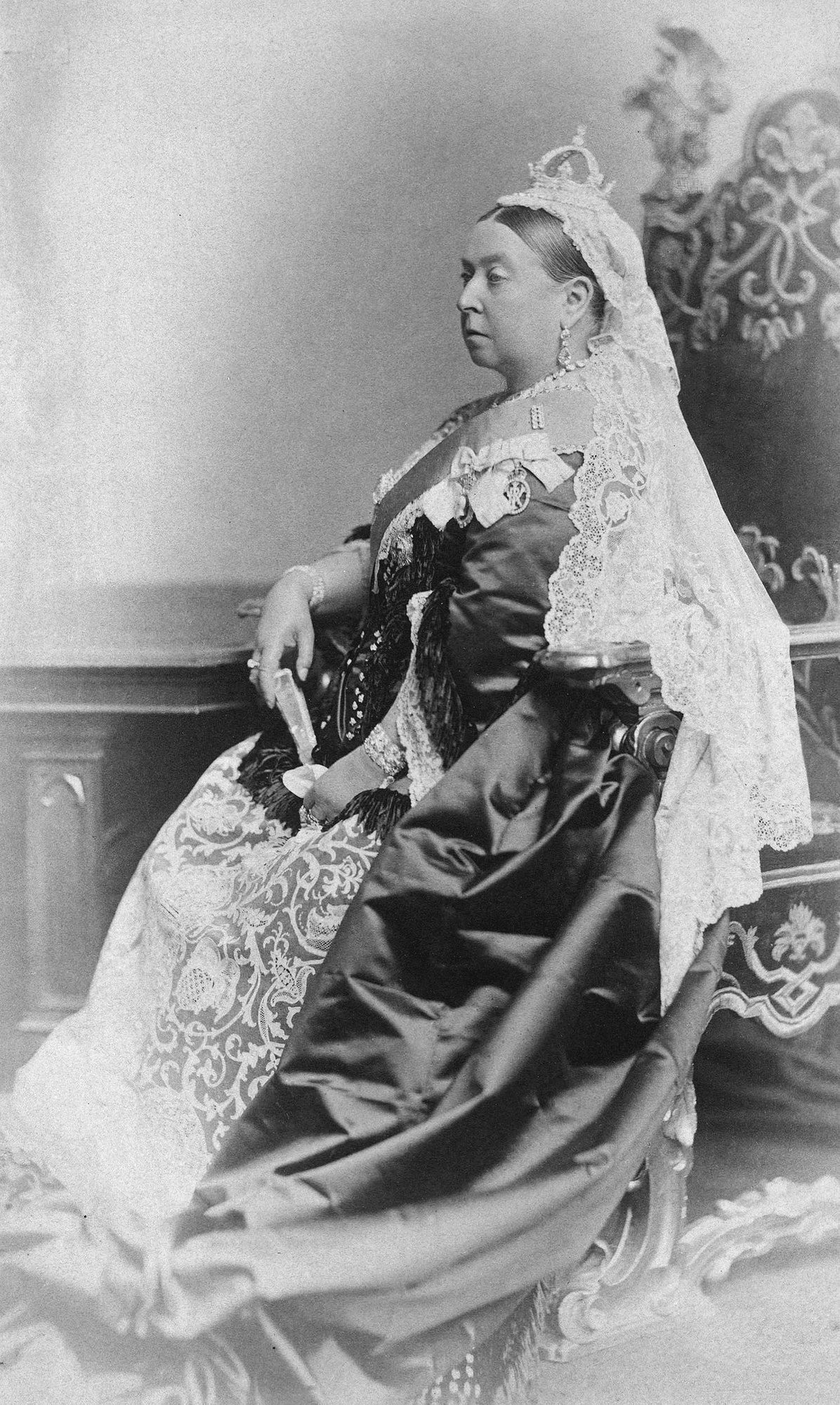


Industry, trade and infrastructure
The period overlapped with the maturing phase of the Industrial Revolution. Mechanized production, improved metallurgy and expanding transport networks remade the economy. Key industries included:
- Iron and steel production, driven by large furnaces and metallurgical advances.
- Fueling factories and locomotives, coal remained central to power generation.
- Shipbuilding on the Clyde and elsewhere, represented by robust shipbuilding yards, supported global trade and naval dominance.
- Textile manufacture—notably cotton and wool—continued as a major export sector.
- Ceramics, chemicals and engineering goods also expanded as part of industrial diversification.
Urban life, public works and technologies
Rapid urbanization created pressure on housing, sanitation and public health. One of the era's decisive public works was the overhaul of London's sewage and drainage systems, undertaken in response to recurrent outbreaks of disease and foul conditions. Lighting and communications transformed daily life: gas and oil street illumination gave way late in the century to electric systems and the construction of early power stations. Everyday technology also changed—photography moved from novelty to common use, and urban streetlights altered night-time activity and safety.
Society, culture and reform
Victorian society was shaped by a set of moral and social conventions often called "Victorian values": emphasis on thrift, family responsibility, respectability and work. These norms coexisted with growing awareness of poverty, child labour and public health failures, prompting philanthropic activity and legislative reform. Over the reign there were important political developments: expansion of the franchise through successive Reform Acts, the rise of organized labour movements, and debates over free trade, imperial policy and social welfare.
Legacy and notable features
The era left a complex legacy. It established durable institutions—rail networks, modern factories, public sanitation systems—and fostered cultural achievements in literature, science and the arts. At the same time, economic growth was uneven; industrial prosperity went hand in hand with social inequality and environmental change. The Victorian period is therefore remembered both for technological and imperial dynamism and for the social questions that modern Britain continued to address into the 20th century.
Further reading and reference points
To understand the era in depth, readers can follow thematic pathways: political reform, industrial technology, urban planning and cultural production. Key technical and social terms introduced above link to specialist discussions of the monarchy, industry and public works: Queen Victoria, the Industrial Revolution, metallurgy such as iron and steel, industrial fuels like coal, and public services including sewage systems and early power stations.
Questions and answers
Q: What period of time was Queen Victoria's rule?
A: Queen Victoria's rule was from 1837 to 1901, known as the Victorian era of the United Kingdom.
Q: How did Britain become a great power during this time?
A: During this time, other countries prospered but Britain became the greatest great power due to its increased productivity and prosperity.
Q: What industries were important during this era?
A: Making iron and steel, shipbuilding, cotton and wool production, ceramics production, photography, gas lighting and electric lightbulbs were all important industries during this era.
Q: How did transportation improve in the Victorian Era?
A: Canals and steam railways connected all parts of the country while British steamships connected the world. This improved transportation significantly in the Victorian Era.
Q: What changes were made to London during this period?
A: The sewage system in London was created during this period.
Q: When was photography invented?
A: Photography was invented in 1829.
Q: How did lighting improve during this time? A: Streetlights became common first followed by lights in public buildings and homes. In the 1880s people began making power stations and distribution systems to feed new electric lightbulbs which improved lighting significantly during that time.
Related articles
Author
AlegsaOnline.com Victorian era (United Kingdom, 1837–1901) Leandro Alegsa
URL: https://en.alegsaonline.com/art/105007
Sources
- historyhouse.co.uk : "What was known as a 'Tax on Knowledge'?"
- parliament.uk : "The 1870 Education Act"