
Flag of the United Nations
The United Nations flag shows the UN emblem in white on a light blue field. Adopted in 1946 and designed by Donal McLaughlin, it represents peace, global unity and the organization's identity worldwide.
The flag of the United Nations displays the organization's emblem in white set against a light blue field. Adopted on 7 December 1946, the flag functions as a visual identifier for the UN and its activities, flown at the UN headquarters, regional offices, and many diplomatic and field missions. Its colors and symbols have become widely recognized as representations of international cooperation and peacekeeping.
Image gallery
4 Images

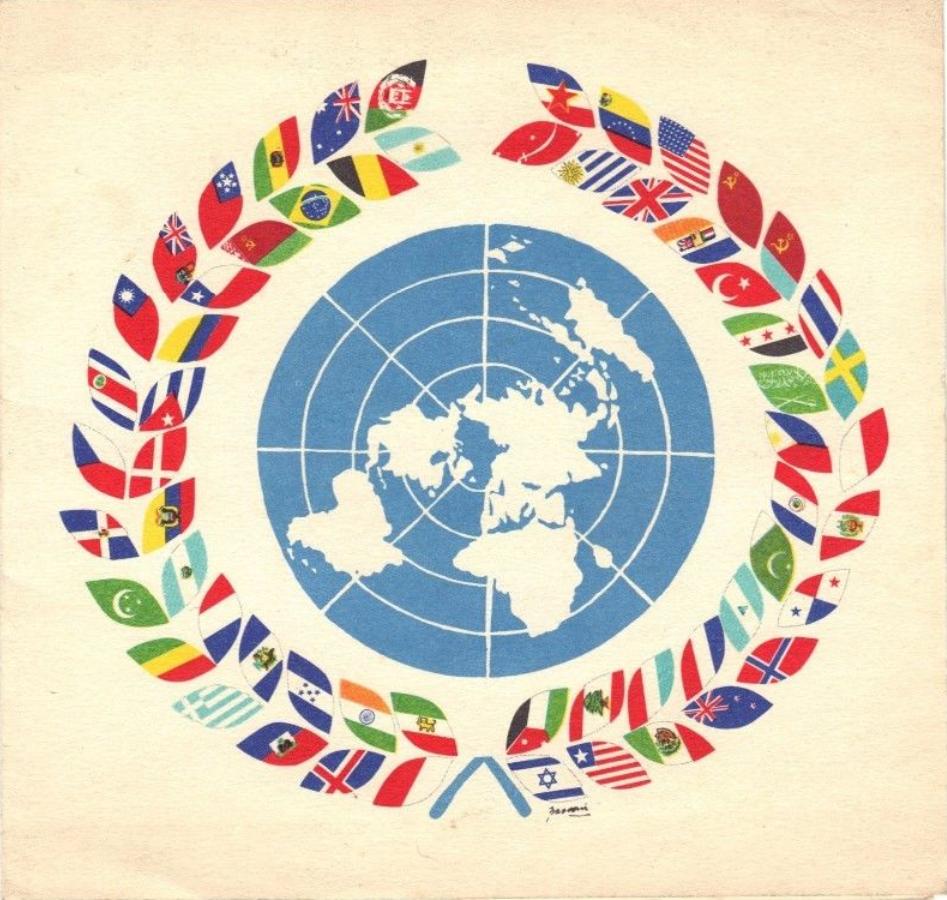

Design and components
The central emblem is a polar azimuthal equidistant projection of the world map, surrounded on either side by a pair of stylized olive branches. The map is intended to show all inhabited continents and major landmasses, while the olive branches are a traditional symbol of peace. The emblem and its placement on the flag are rendered in white, on a plain light blue background commonly referred to as "UN blue." The graphic layout and proportions are standardized by UN specifications so that reproductions remain consistent.
History and creation
The current emblem and flag were adopted in the months following World War II, when member states agreed on a common symbol to represent the newly formed organization. The version of the emblem used on the flag was finalized on 7 December 1946; the design work credited to American designer Donal McLaughlin is part of that early effort to create a clear and neutral visual identity for the UN. Since then, the flag has seen only minor graphic refinements rather than wholesale redesigns.
Symbolism and meaning
The flag's iconography emphasizes the UN's core purposes: maintaining international peace and security, and representing all nations. The olive branches signify peace and reconciliation; the world map conveys inclusiveness and the UN's global scope. White and light blue are used to suggest neutrality and calm—qualities the organization seeks to embody. For additional information on the emblem and color choices see the United Nations emblem and references to UN blue.
Uses, protocol and legal status
The UN flag is displayed at UN buildings, at many UN-sponsored events, and by peacekeeping contingents in the field. It is normally flown alongside national flags; UN regulations and customary protocol guide its placement so that it represents the organization without taking precedence over host-country flags. The emblem and flag are protected by UN rules: unauthorized commercial use and alteration are generally restricted, and member states follow established guidelines for reproduction, display and ceremonial use.
Notable facts
- UN peacekeepers are often associated with the same light blue color, especially visible on helmets and berets.
- The emblem's map projection centers the globe to emphasize global rather than regional perspectives.
- The flag has become an international symbol for neutrality, humanitarian action and multilateral cooperation.
Related articles
Author
AlegsaOnline.com Flag of the United Nations Leandro Alegsa
URL: https://en.alegsaonline.com/art/34942
Sources
- nytimes.com : "Origin of the UNO Seal"
- unausa.org : "UN Logo Designer Celebrates His Centennial"