
Flag of South Korea (Taegukgi)
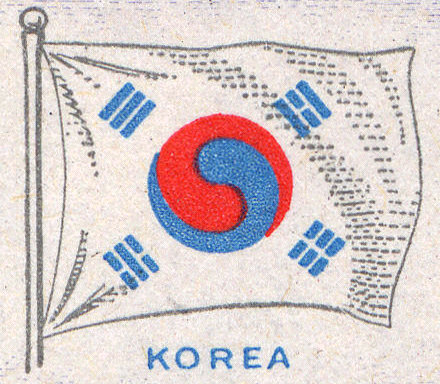
National flag of South Korea, known as the Taegukgi, featuring a white field, central red-and-blue taegeuk symbol and four black trigrams representing balance and cosmological principles.
Overview
The national flag of the Republic of Korea is commonly called the Taegukgi, a name derived from the central symbol. It is composed of a white rectangular field, a red-and-blue circular mark in the center and four black trigrams positioned toward the corners. The flag functions as a national emblem and is widely displayed on government buildings, at international events and on civic occasions.
Image gallery
7 Images


Design and symbolism
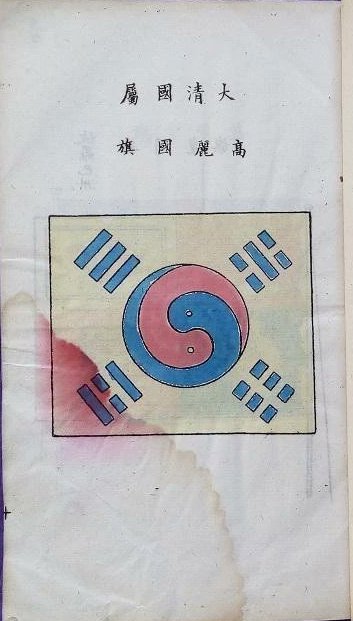
The flag's three principal elements express traditional Korean and East Asian ideas. The background is a plain white field on a rectangular cloth, symbolizing purity and peace. Centered on that field is the taegeuk (also spelled taeuk or taeguk), a red-and-blue yin-yang emblem representing balance and harmony between opposing forces. Surrounding the circle are four black trigrams chosen from an original set of eight; each trigram represents natural elements and complements the taegeuk's philosophical meaning.
Parts and meanings (summary)
- White field: impartiality, peace and the Korean people's character.
- Taegeuk (red and blue): complementary cosmic forces — active and passive, or yang and yin.
- Four trigrams: traditionally associated with heaven, earth, water and fire and with directional, seasonal and familial correspondences.
History and development
Elements of the taegeuk and trigram motifs have roots in ancient East Asian cosmology and the I Ching. The current arrangement evolved over the late 19th and early 20th centuries as Korea engaged with modern diplomacy and nation-state symbolism. Its modern use as the national flag became established in the 20th century and the design was standardized by law and custom to ensure consistent proportion and placement of elements.
Uses, protocol and notable facts
The Taegukgi is used for official ceremonies, sporting events and diplomatic functions. There are customary rules for display and handling to show respect, such as proper folding, positioning relative to other flags and treatment during mourning. The South Korean flag is visually and conceptually distinct from the flag of the Democratic People's Republic of Korea (North Korea), which uses a different arrangement and color scheme.
For further reading on design standards and historical variants, see related resources: shape and proportion, color meanings, and taegeuk symbolism. Additional references discuss the selection of trigrams and their cultural significance (trigram origins) as well as contemporary protocol and display practice (display rules).
Related articles
Author
AlegsaOnline.com Flag of South Korea (Taegukgi) Leandro Alegsa
URL: https://en.alegsaonline.com/art/34912