
Flag of Spain (La Rojigualda)
National flag of Spain: a horizontal red-yellow-red triband, nicknamed la Rojigualda. Designs, proportions, historical development, variants (civil/state/royal) and common use explained.
The flag of Spain Flag of Spain (Spanish: Bandera de España) consists of three horizontal bands — red, yellow and red — and is commonly called la Rojigualda. Its bold colors and clear proportions make it one of the most recognizable national flags in Europe.
Image gallery
5 Images


Design and proportions
The modern flag uses a 2:3 proportion for height to width. The horizontal stripes follow a 1:2:1 ratio, with the central yellow band twice the width of each red stripe. There are two official variants: a civil version without emblems and a state version that bears the national coat of arms centered on the yellow stripe. The colors are often referred to simply as red and yellow red and yellow in official descriptions and popular usage.
Coat of arms and symbols
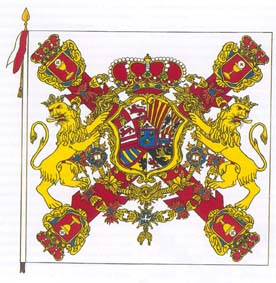
The state flag displays Spain's coat of arms on the central band. The coat of arms groups historical elements representing Spain's constituent kingdoms, surmounted by a crown and flanked by the Pillars of Hercules with their traditional motto. The royal standard and military flags are distinct from the national flag and bear additional heraldic features reserved for official or ceremonial use.
History and development
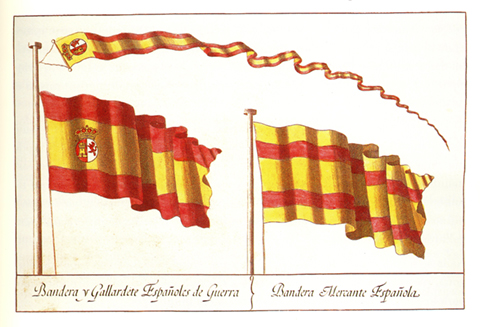
The bicolored red–yellow–red pattern has roots in naval and military flags from the late 18th century, chosen for visibility at sea. Over the 19th and 20th centuries the banner evolved: republican, monarchical and authoritarian governments altered the coat of arms or adopted different emblems. The form and use of the current flag were formally codified by law on 19 December 1981, following Spain's transition to democracy and the adoption of a new constitutional framework.
Usage and protocol
Spain’s flag is used on public buildings, embassies, official documents and during national ceremonies. Protocol distinguishes the civil flag (plain stripes) from the state flag (with coat of arms) and from the royal standard. There are established rules for display, half-mast mourning, and precedence when flown with other flags; misuse can be subject to administrative penalties under national regulations.
Notable facts and cultural meaning
- Popular nickname: la Rojigualda, a compound of the Spanish words for red and yellow.
- Colors are associated with Spain’s historical kingdoms and with maritime visibility rather than a single agreed symbolic meaning.
- The flag appears widely in sporting events, public demonstrations and cultural celebrations as a unifying national emblem.
For authoritative information on legal specifications, display rules and graphical standards consult official government publications or national heraldry sources. Further general information is available via official references and national archives.
Related articles
Author
AlegsaOnline.com Flag of Spain (La Rojigualda) Leandro Alegsa
URL: https://en.alegsaonline.com/art/34914