
Fender Stratocaster: design, history, variants, and influence
Overview of the Fender Stratocaster: its design features, development, manufacturing variations, notable players, common modifications and cultural legacy in modern music.
The Fender Stratocaster, commonly called the Strat, is a landmark solid‑body electric guitar whose combination of ergonomics, electronics and visual identity helped shape popular music in the second half of the 20th century. Conceived in the mid‑1950s by a team led by Leo Fender with input from colleagues, the instrument introduced a set of practical innovations that were widely adopted by other makers and adapted in many musical contexts.
Image gallery
10 Images


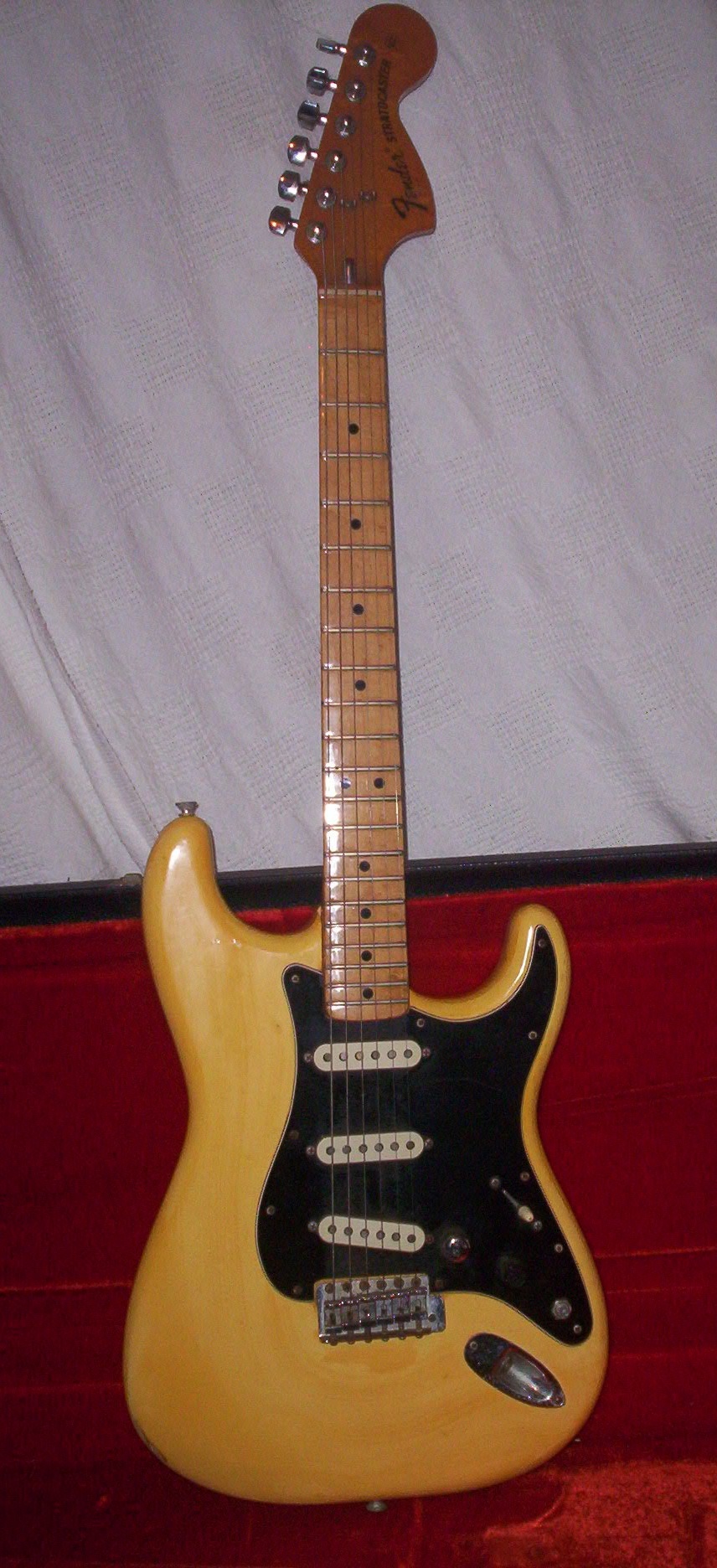
Design and technical features
Key elements of the Stratocaster remain familiar across many models: a double‑cutaway contoured body that improves upper‑fret access and playing comfort; a bolt‑on maple neck; and a standard scale length of 25.5 inches that contributes to the instrument's tension and tonal character. Traditional bodies are made from alder or ash, and fingerboards are commonly maple or rosewood, though many materials and finishes have been used over the decades.
- Pickups: the classic layout is three single‑coil pickups offering bright, articulate tones and a wide range of pickup combinations; variations include one or more humbucking pickups for a thicker sound (commonly referred to as HSS, HSH and similar configurations).
- Controls: master volume, two tone controls and a pickup selector allow multiple voicings and on‑the‑fly tonal changes.
- Tremolo/bridge: the synchronized vibrato bridge—often called a tremolo—permits pitch modulation; variants include vintage‑style six‑screw units, two‑point systems and modern locking bridges for improved tuning stability.
- Construction: a bolt‑on neck joint is standard, facilitating repair and replacement and contributing to the instrument's characteristic attack and note definition.
History and evolution
Introduced in the 1950s, the Stratocaster built on earlier Fender models and added features such as body contours and three pickups that distinguished it from many contemporaries. Over time Fender offered numerous revisions and submodels—vintage reissues, player series, and Custom Shop instruments—while aftermarket and boutique builders supplied further variations. The basic Strat layout proved adaptable to left‑handed models, 12‑string versions and many pickup and hardware permutations aimed at diverse genres and player preferences.
Manufacture, lines and copies
Fender produces Stratocasters in several countries and under different lines to cover a range of price points and player needs. American‑made and Custom Shop instruments are positioned as premium models. Mexico, Japan, Korea, China and Indonesia have all hosted Fender or Squier production, resulting in a wide range of quality and specification. Squier, a Fender‑owned brand, supplies more affordable Strats intended for beginners and budget‑minded players.
The Stratocaster's distinctive silhouette and feature set have also led many other manufacturers to produce "Strat‑style" guitars. These range from inexpensive import copies to carefully crafted high‑quality replicas; the term "strat copy" is commonly used for instruments that imitate the Stratocaster design without being produced by Fender or Squier. Quality and material choices vary widely among these copies and clones.
Tone, use and notable players
The Stratocaster is prized for a tonal palette often described as bright, clear and bell‑like, with pronounced clarity on single notes and a chime that suits both rhythm and lead playing. Players have long exploited pickup combinations, tone controls and vibrato effects to create signature sounds. Prominent artists associated with the Stratocaster include David Gilmour, Jimi Hendrix, Eric Clapton, Buddy Guy, Buddy Holly and Jeff Beck, each of whom used the instrument in ways that influenced players across genres.
Common modifications and maintenance
Because the Stratocaster platform is modular, players frequently modify pickups, electronics and hardware. Typical upgrades include replacing single‑coil pickups with higher‑output or noiseless designs, adding humbuckers, installing locking tuners, fitting modern bridge systems or changing pickguards for different wiring options. Regular maintenance items include neck adjustments, pickup height setting, fretwork and setup of the vibrato system to maintain tuning stability.
Collectibility and cultural legacy
Beyond its functional attributes, the Stratocaster holds a prominent place in visual and musical culture. Collectors prize early production examples and certain limited editions, while reissues seek to capture period‑correct specifications. Economically, instruments are often assessed by origin, year, condition and unique hardware or finish choices. As both a practical tool for musicians and an emblematic design, the Stratocaster remains central to modern guitar building, performance and popular imagination.
For more detailed information on models, specifications and historical timelines consult manufacturer's resources and dedicated reference works. The Stratocaster's combination of flexibility, identifiable tone and ergonomic design helps explain its enduring popularity among beginners, hobbyists and professional musicians alike.
Related articles
Author
AlegsaOnline.com Fender Stratocaster: design, history, variants, and influence Leandro Alegsa
URL: https://en.alegsaonline.com/art/33972