
Fiddle: the folk violin — form, history, tunings, and cultural role
A clear, concise overview of the fiddle: its construction, tunings and bowing, historical development from early fiddles to modern folk styles, and its social and musical uses.
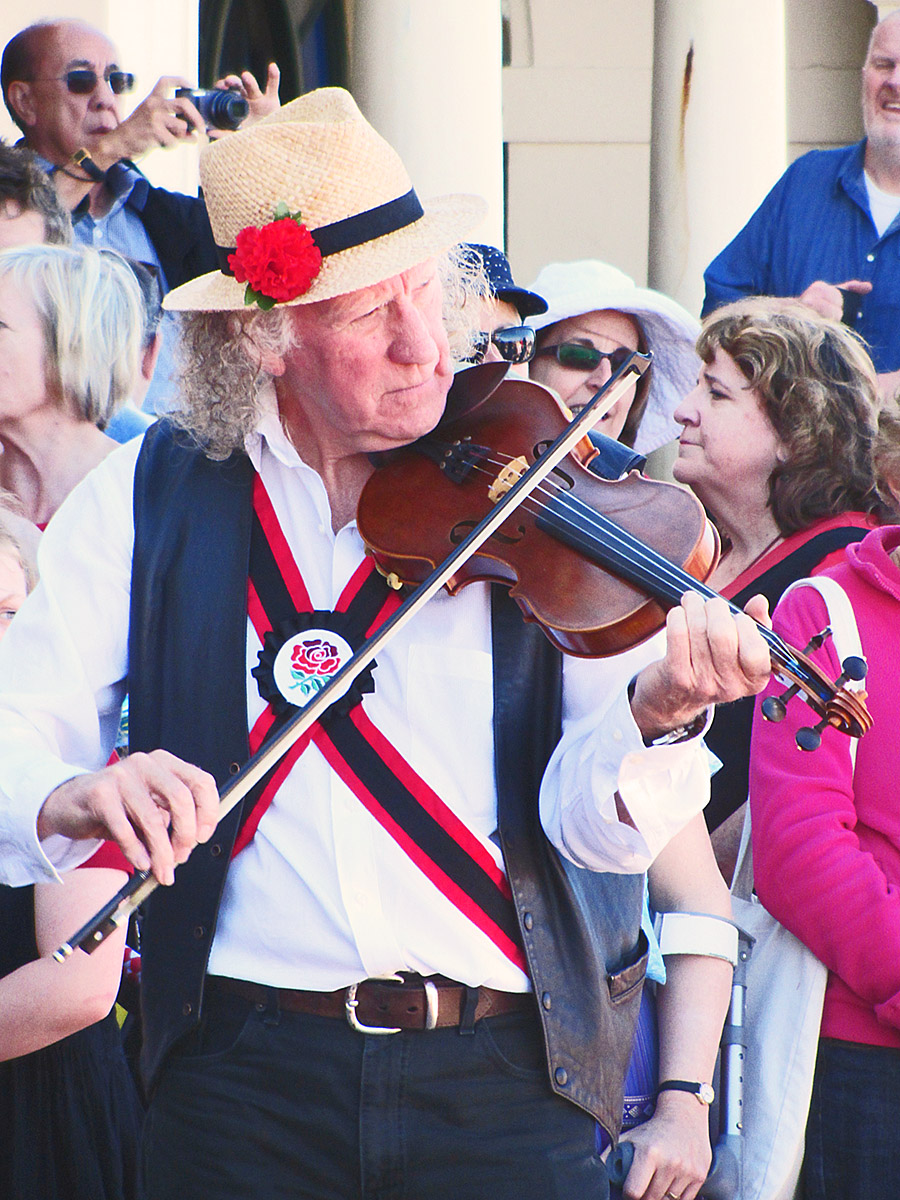
The term fiddle commonly denotes a violin when used in the context of traditional and popular music. In everyday speech it is often used interchangeably with violin, though it also conveys a particular playing tradition and repertoire: the informal, rhythmic, dance-oriented approach known as folk music. A player is called a fiddler; the bow is sometimes colloquially called a fiddling stick. While the modern concert violin and the fiddle share much construction and many techniques, fiddling emphasizes drive, rhythmic clarity, and idiomatic ornamentation suited to dancing and social performance rather than symphonic subtlety.
Image gallery
10 Images




Construction and distinct features
Fiddles are built on the same basic principles as classical violins: a hollow wooden body, soundpost and bass bar inside, an arched top and back, and four strings. However, some fiddles — particularly those used in historical traditions — differ in detail. For example, historical bowed instruments related to the fiddle date back several centuries and evolved in many shapes and sizes; earlier models were sometimes held against the chest rather than beneath the chin. In the Middle Ages, compact forms such as the kit were used by dancing masters and could even fit in a pocket. In parts of southeastern Europe, makers once used membranes for the soundboard, producing a belly made of skin rather than wood. Strings were traditionally gut, a material that gives a different timbre than modern synthetic or steel cores.
Tuning, bridges and playing setup
Many fiddlers prefer a slightly different setup from classical players. Bridges on folk instruments are often flatter across the top than those on orchestral violins; this makes it easier to play double- and triple-stops and to move rapidly across adjacent strings. Standard violin tuning (G–D–A–E) is common, but fiddlers frequently re-tune (a practice known as scordatura) for particular tunes or tonal effects. Alternative tunings include examples such as G–D–G–D and A–E–A–E, which facilitate drones and sympathetic resonances. Drones — continuous sustained notes produced by one or more open strings — are a recurring device in many regional styles and can be played on one, two, or three strings while the melody sits above them. The bow itself may vary: most use the same kind of bow as classical players, but in some traditions, for example in parts of Hungary, a shorter, heavier bow is used with horse hair tied in a different fashion and tightened by hand while playing.
Styles, techniques and repertoire
Fiddling is characterized by a range of bowed articulations, rhythmic bowing patterns, and ornamentation that differ across regions. Typical techniques include chops, slurs, slides, grace notes, and rhythmic shuffles designed to accompany dancing. Much fiddling relies on learning by ear: many players acquire tunes and stylistic details through imitation rather than formal notation. Repertoires are often associated with specific dance forms — reels, jigs, hornpipes, polkas, mazurkas, reels, and many local varieties — and some melodies circulate widely in altered forms. Because of this oral transmission, a tune heard in one place may survive in several variants across continents.
History and social role
In Europe and beyond, stringed bowed instruments that can be called fiddles have served many roles. They were played by people of all social ranks, from noble households to rural peasants, and by itinerant entertainers such as minstrels. At feasts and celebrations, fiddlers accompanied dancers, singers, acrobats and processions; historical records and paintings show them alongside trumpets, drums and other instruments. Some players could read music, but many learned and transmitted material orally. Minstrels sometimes played during ceremonial moments — for instance, as food was brought to the high table — and their repertory was practical, functional, and adaptable to social contexts.
Regional traditions and notable distinctions
Fiddle culture is highly regional. North American old-time and bluegrass fiddling, Irish and Scottish styles, Breton and other Celtic traditions, Scandinavian, Balkan and Romani variants each emphasize different bowing patterns, tunings and repertoire. For example, some American "old-time" tunes and certain Breton melodies can be traced through oral lineages to older European shapes, though specifics are often uncertain. Distinctions between a "fiddle" and a "violin" mainly reflect context and approach: the same instrument might be called a violin in a concert hall and a fiddle at a barn dance.
Uses, preservation and modern practice
Today fiddling is both a living folk practice and a subject of scholarly interest. It remains central to community dances, festivals, and cultural revival movements; it also informs contemporary genres and fusion projects. Instrument makers and players work to preserve traditional setups (from gut strings to regional bow types) while adapting to modern materials and amplification. Fiddle music is documented in recordings, transcriptions, and growing online archives, but the aural, social transmission — learning by listening, copying, and participating — continues to be integral to the tradition.
- Construction: body, bridge, strings, bow
- Common tunings: G–D–A–E (standard), G–D–G–D, A–E–A–E
- Typical uses: dance accompaniment, social entertainment, solo performance
- Related historical forms: medieval kits and regional bowed instruments
For readers seeking further information on specific aspects — instrument making, regional styles, historical sources, or notation and transcription methods — consult specialist books and archives, and explore recordings to hear how physical setup and cultural context shape the sound. The words and practices associated with the fiddle connect instrument, music, and community in ways that keep the tradition both rooted and adaptable across time and place. Violin, folk, bow, Middle Ages, skin, bridge, chords, tuning, drone, Hungary, horse, hair, peasants, minstrels, reading, food, singers, paintings, trumpets, drums, Breton.
Questions and answers
Q: What is a fiddle?
A: A fiddle is a violin used in folk music. It can also be used as a fun word for "violin". Someone who plays the fiddle is known as a "fiddler".
Q: How did the instrument change over time?
A: Fiddles changed over time from country to country and from one era to another. They were of different shapes and sizes, and even had many different names. In some cases they were held against the chest instead of being tucked under the chin. Some instruments, like the kit, were small enough to fit into pockets. In south eastern Europe there was even a fiddle with a belly (the front of the instrument) made of skin.
Q: What type of strings are used on a fiddle?
A: Fiddles usually have strings made out of gut material. The bridges are flatter than those found on classical violins which makes it easier to play chords and bow quickly between strings. The tuning may vary depending on what piece is being played, but G-D-A-E tuning or other tunings such as G-D-G-D or A-E-A-E are common.
Q: How do people learn how to play the fiddle?
A: Many people learn how to play by listening to other players and copying them rather than receiving formal training in classical playing techniques. This style of learning has been passed down through generations since many tunes were never written down but learned by ear from others who had also learned them by ear before them.
Q: What type of bows do most fiddlers use?
A: Most fiddlers use bows that are similar to those used for violins; however, in some countries such as Hungary shorter, heavier bows with horse hair tied around the frog (the heel) are more commonly used instead. With this type of bow, players tighten the hair while playing by squeezing it together with their hands.
Q: Who typically played these instruments?
A: People from all walks of life would have played these instruments including noble people, minstrels entertaining important people, simple peasants and more - often accompanying dancers and singers while they performed acrobatics at feasts or gatherings.
Q: Where did classical violin playing come from?
A: Classical violin playing developed out of country fiddle playing styles that originated centuries ago
Related articles
Author
AlegsaOnline.com Fiddle: the folk violin — form, history, tunings, and cultural role Leandro Alegsa
URL: https://en.alegsaonline.com/art/34188