
Federal Hall (New York City)
Historic site on Wall Street where the First Congress met and George Washington took the presidential oath; original 18th‑century capitol was demolished and later replaced by a Greek Revival memorial.
Overview
Federal Hall stands on Wall Street in lower Manhattan and marks the site of the young republic's first national capitol. The location is best known as the place where the new federal government convened after the Constitution took effect and where George Washington took the oath of office as the nation’s first president. The original 18th‑century building served municipal and national functions before being replaced in the 19th century.
Image gallery
10 Images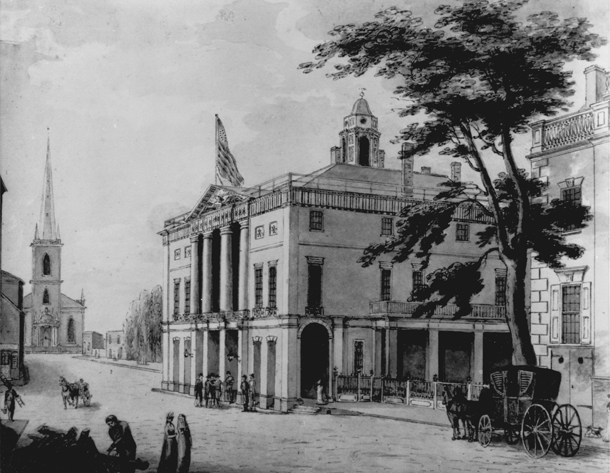




Location and significance
Situated at a crossroads of commerce and government, the site lies on historic Wall Street. It is widely cited as the first official capitol building for the United States under the new Constitution, hosting the First Congress and the early sessions that framed much of the federal government's initial structure. The building and site are important for their direct connection to the founding era of the United States.
Architecture and the present building
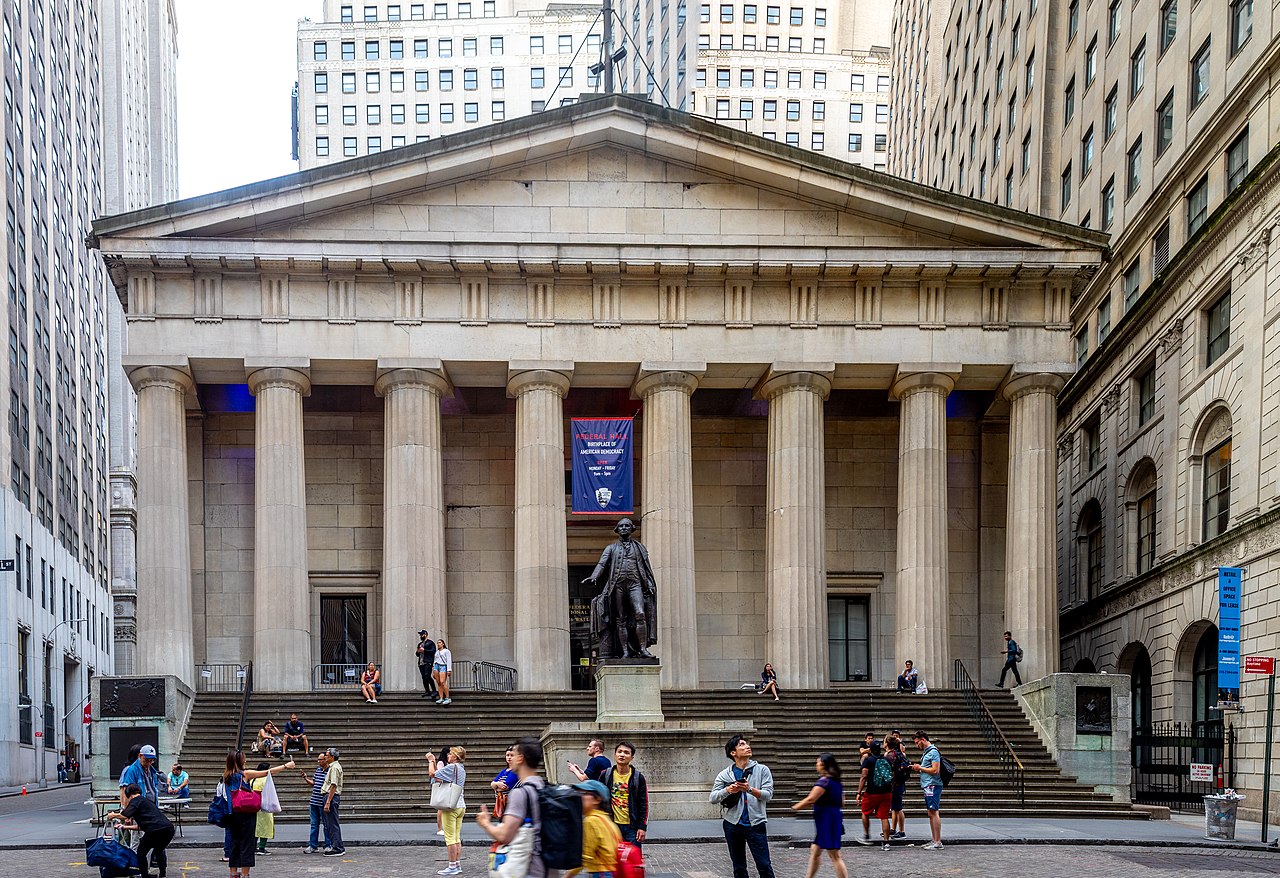
The original Federal Hall was an early colonial public building; that structure was dismantled in the early 19th century. The current edifice, erected in the 1840s on the same footprint, was designed in the Greek Revival style and originally served as a customs house and later federal financial offices. Its commanding Doric facade and broad steps set it apart among lower Manhattan's denser commercial architecture.
History and uses
During the 1780s and 1790s the hall functioned as a meeting place for the federal legislature and ceremonial occasions. Most famously, the building was the scene of the presidential oath that inaugurated Washington's administration in 1789. The First Congress met there and proposed early amendments and legislation that shaped the republic's foundations. After the capital moved and the city evolved, the original structure was taken down; the mid‑19th century replacement continued federal uses until the site was reinterpreted as a memorial to the founding period.
Legacy, preservation, and public memory
By the late 19th century a bronze statue of Washington was installed near the entrance to commemorate the inauguration and the building's national role. In the 20th century the site acquired formal protections and recognition for its historic importance. Today the building is preserved as a memorial and museum that interprets the events of the 1780s and 1790s and explains how early federal institutions were established.
Notable facts and visitor information
- The location is often described in two parts: the original 18th‑century hall where the nation’s first government sat, and the 19th‑century Greek Revival building that stands there now.
- The site commemorates both legislative activity—when Congress met—and executive ceremony—Washington’s inauguration and public addresses.
- For additional historical summaries and official resources see local archives and national park materials such as those linked by the city and federal agencies: inauguration history, capitol records, federal documents, Wall Street history, and biographies of Washington.
Federal Hall remains a focal point for understanding the physical places where the United States’ earliest national institutions took shape and for interpreting how public architecture and urban development reflect changing civic priorities.
Related articles
Author
AlegsaOnline.com Federal Hall (New York City) Leandro Alegsa
URL: https://en.alegsaonline.com/art/33840