
Federal Republic of Yugoslavia (1992–2003)
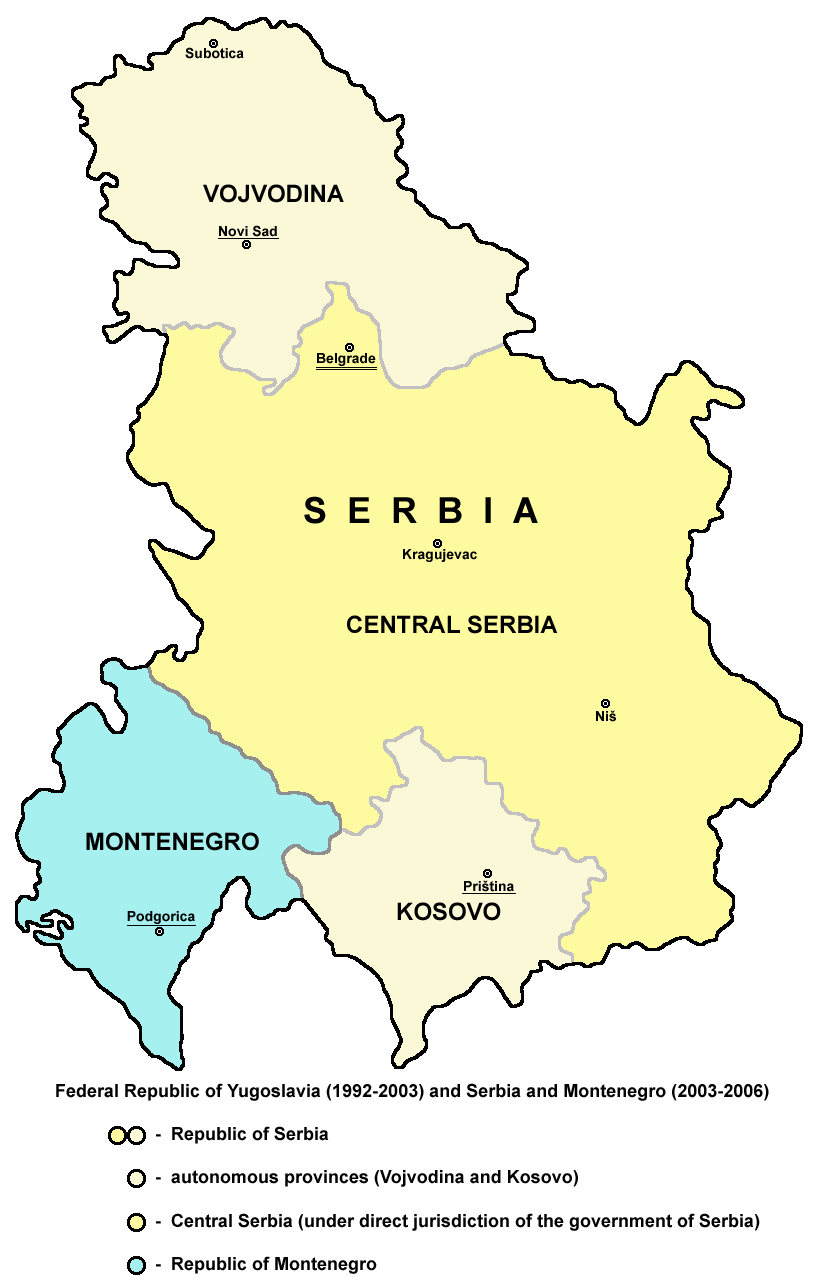
The Federal Republic of Yugoslavia was a federation of Serbia and Montenegro formed in 1992 after the breakup of socialist Yugoslavia, later reconstituted as the State Union of Serbia and Montenegro.
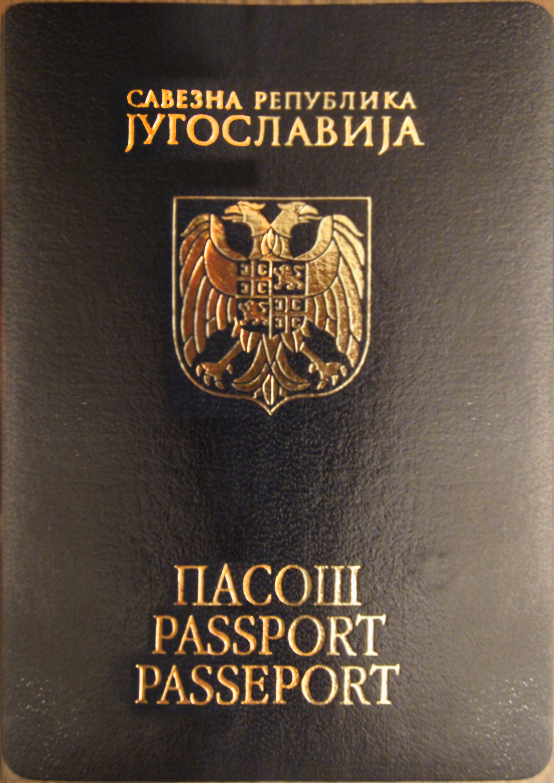
The Federal Republic of Yugoslavia (Serbian: Савезна Република Југославија / Savezna Republika Jugoslavija) was a federal state created in 1992 by the remaining republics of Serbia and Montenegro following the breakup of the Socialist Federal Republic of Yugoslavia. It was established as a successor political entity by the two republics that did not immediately declare independence. Its formation took place amid the violent dissolution of the former federation and was marked by contested international recognition, economic hardship, and regional conflict.
Image gallery
10 Images



Origins and international standing
The new federation emerged after Slovenia, Croatia, Bosnia and Herzegovina, and Macedonia left the Socialist Federal Republic of Yugoslavia (SFRY). The FRY declared continuity with the Yugoslav state in some domestic respects, but most of the international community treated the SFRY as a dissolved entity and the FRY as a new state. This ambiguous status affected diplomatic relations, United Nations membership, and the imposition of sanctions in the early 1990s. Demographically, the population of the FRY included a majority of ethnic Serbs, alongside Montenegrins and other minorities; references to the ethnic composition feature in many contemporary accounts and analyses (Serbs).
Government and institutions
The FRY was organized as a loose federation of two republics. Its constitution established federal institutions including a presidency, a bicameral assembly, and a federal government responsible for foreign policy and defense, while republic-level authorities retained powers over many domestic matters. Over time, relations between Belgrade and Podgorica were influenced by political leadership in both republics, varying degrees of autonomy, and differing economic priorities.
Conflict, economy and society
The 1990s were turbulent: wars in the former SFRY, international sanctions, and internal political strains affected stability and living standards. The FRY was involved indirectly and directly in regional conflicts and experienced a period of international isolation. In 1999, the Kosovo conflict and subsequent NATO military intervention had major political and humanitarian consequences for the federation. Domestic politics included contested elections and a popular movement that led to significant political change around 2000.
Dissolution and legacy
Political change and negotiations between Serbia and Montenegro culminated in a transformation of the state's constitutional framework. In 2003 the federal arrangement was replaced by a more decentralized State Union of Serbia and Montenegro (State Union of Serbia and Montenegro), which provided for greater freedom of movement toward eventual independence. A referendum held in Montenegro in 2006 resulted in a vote for independence (Montenegro referendum), and the two republics became fully separate states: Montenegro and Serbia (Serbia).
Notable facts and distinctions
- The FRY used the name "Yugoslavia" despite most former Yugoslav republics having become independent states.
- Its international status was distinct from the SFRY; questions of continuity and succession were subject to negotiation and international law.
- Major political events included sanctions in the early 1990s, the Kosovo conflict in the late 1990s, and the political transition after 2000 that altered leadership and policy direction.
Today the period of the Federal Republic of Yugoslavia is studied as part of the broader breakup of Yugoslavia, the post-Cold War upheavals in Southeast Europe, and the processes of state transformation that led to the independent countries of Serbia and Montenegro. For more detailed historical and legal discussion, consult primary documents and specialized studies on the SFRY's dissolution, the FRY's international recognition, and the 2003 constitutional changes.
Questions and answers
Q: What was the Federal Republic of Yugoslavia?
A: The Federal Republic of Yugoslavia was a federal state constructed by the republics of Serbia and Montenegro.
Q: How was the Federal Republic of Yugoslavia formed?
A: The Federal Republic of Yugoslavia was formed after the other four republics broke away from Yugoslavia amid rising ethnic attacks, war, and tension.
Q: What was the majority ethnic group in the Federal Republic of Yugoslavia?
A: The majority of the people in the Federal Republic of Yugoslavia were Serbs.
Q: When did the Federal Republic of Yugoslavia exist?
A: The Federal Republic of Yugoslavia existed from 1992 to 2002.
Q: How was the Federal Republic of Yugoslavia reconstituted in 2002?
A: The Federal Republic of Yugoslavia was reconstituted as a State Union of Serbia and Montenegro in 2002.
Q: How long did the State Union of Serbia and Montenegro exist?
A: The State Union of Serbia and Montenegro existed for three years.
Q: What resulted in both Montenegro and Serbia becoming different countries?
A: A referendum for independence in Montenegro resulted in the majority of Montenegrins supporting separation from Serbia, which resulted in both Montenegro and Serbia becoming different countries.
Related articles
Author
AlegsaOnline.com Federal Republic of Yugoslavia (1992–2003) Leandro Alegsa
URL: https://en.alegsaonline.com/art/33851