
Farid-ud-din Attar: Persian Sufi poet and author of The Conference of the Birds
Farid-ud-din Attar (c.1140s–c.1220) was a Persian Sufi poet and hagiographer from Nishapur, author of the allegorical Mantiq al-Tayr and the Tazkirat al-Awliya, influential in later Sufi literature.
Overview
Abū Hamīd bin Abū Bakr Ibrāhīm, better known by his pen-name Farīd-ud-dīn Attār (literally "the perfumer"), is remembered as a major figure in Persian Sufi literature. He is commonly described as a Persian poet, mystic and writer of hagiography. Most accounts place his birth in or near Nishapur in the 12th century and give his death around 1220. Precise biographical details are scarce and many aspects of his life remain the subject of careful scholarly reconstruction rather than firm fact.

Image gallery
8 Images



Life and historical context
Attar lived during a period of political change in the Iranian world, when the Seljuk and later regional dynasties shaped urban life and intellectual exchange. His sobriquet suggests a family link to the perfumer's or apothecary trade, a conventional origin for the name "Attar." Later tradition holds that he died about 1220, and some sources cautiously connect his death with the upheavals of the Mongol invasions; however, contemporaneous records are limited and details remain uncertain.

Major works and themes
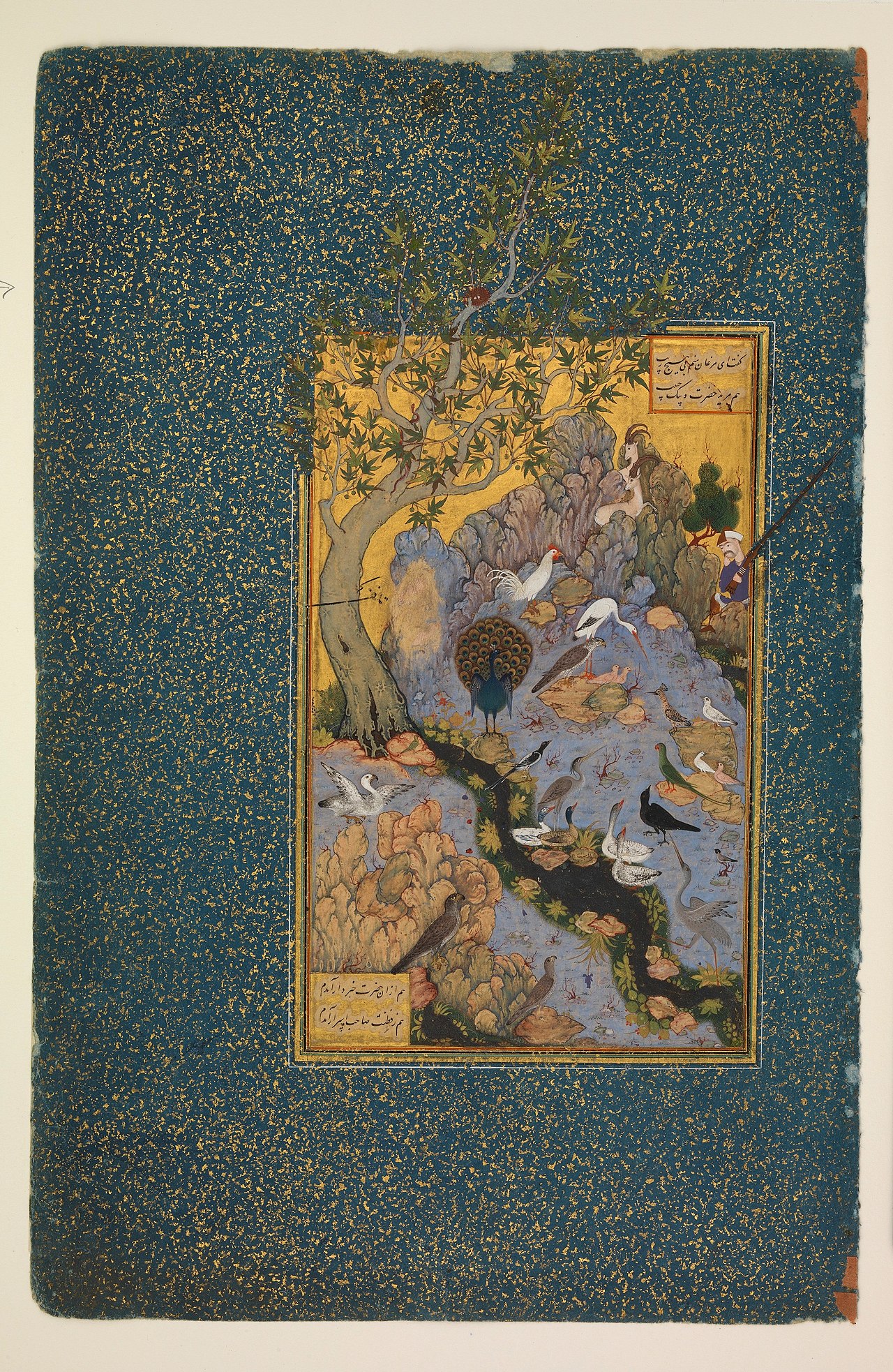
Two works stand at the center of his literary reputation. The allegorical poem Mantiq al-Tayr (The Conference of the Birds) stages a symbolic journey: a flock of birds, each representing a human condition, undertakes a perilous quest to find the Simorgh. The poem maps stages of the spiritual path and uses parable, dialogue and paradox to explore the seeker’s inner transformation. The other major work, the Tazkirat al-Awliya (Memoirs of the Saints), is a collection of biographies, sayings and anecdotes about early Sufi masters and has been widely read as a source of devotional exemplars and practical teaching.
Structure and motifs
Mantiq al-Tayr is structured around successive challenges and revelations that are often described as "valleys" or stages of progress toward union with God. The poem balances moral instruction and mystical paradox, repeatedly foregrounding themes such as renunciation, love, self-annihilation and the limits of language when speaking of ultimate reality. Attar frequently employs vivid imagery, animal allegory and paradoxical aphorisms to unsettle complacency and point toward direct spiritual insight.

Style and influence
Attar's style mixes narrative verse, anecdote and didactic commentary. His writing influenced subsequent Persian poets and Sufi thinkers; later figures, most notably Jalal al-Din Rumi, drew on Attar's imaginative vocabulary and spiritual concerns. Over the centuries, manuscript copies, commentaries and translations have transmitted his work beyond Persian literary circles, making his allegories accessible to readers in many languages and traditions.

Works and legacy
- Mantiq al-Tayr (The Conference of the Birds) — an allegorical long poem on the spiritual quest.
- Tazkirat al-Awliya (Memoirs of the Saints) — biographical sketches and sayings of Sufi masters.
- Various shorter poems and didactic treatises on ethics, devotion and mystical practice.
Attar's combination of vivid storytelling and spiritual instruction established a model for later mystical literature. His works are studied both as literary masterpieces of Persian poetry and as continuing sources of insight in Sufi devotional and intellectual traditions.
Related articles
Author
AlegsaOnline.com Farid-ud-din Attar: Persian Sufi poet and author of The Conference of the Birds Leandro Alegsa
URL: https://en.alegsaonline.com/art/33535