
Amberg: Historic Upper Palatinate Town in Bavaria
Amberg is a town in the Upper Palatinate region of Bavaria, Germany, known for its medieval center, historic iron-mining and 19th-century metallurgy, and its role as a regional administrative and cultural hub.
Amberg is a town in the state of Bavaria in Germany. It lies in the Upper Palatinate (Oberpfalz) region and has long served as a local administrative and market town. At the start of the 21st century the municipality counted roughly 44,000 residents; its compact historic core and preserved urban fabric attract visitors and scholars of regional history.

Image gallery
3 Images

Geography and setting
Amberg stands roughly midway between the cities of Regensburg and Bayreuth. The town is built along the Vils river, which has shaped its streets, bridges and economic life. Its location on secondary trade routes and near upland mineral deposits influenced Amberg's development from medieval times onward.
History
Medieval records and later local histories indicate that Amberg grew in importance during the High Middle Ages. From about 1270 the area around the town became a center for the extraction and processing of iron ore (iron), and mining activity helped to finance urban growth, fortification and civic institutions. Over the centuries Amberg weathered regional power shifts while retaining civic importance in the Upper Palatinate.
Economy and industry
Industrialization affected Amberg in the 19th century when a blast furnace was established in the town (blast furnace), marking the transition from medieval craft production to modern metallurgy. While heavy industry declined or modernized in later decades, the town's economy diversified into services, light manufacturing and public administration.
Culture, architecture and landmarks
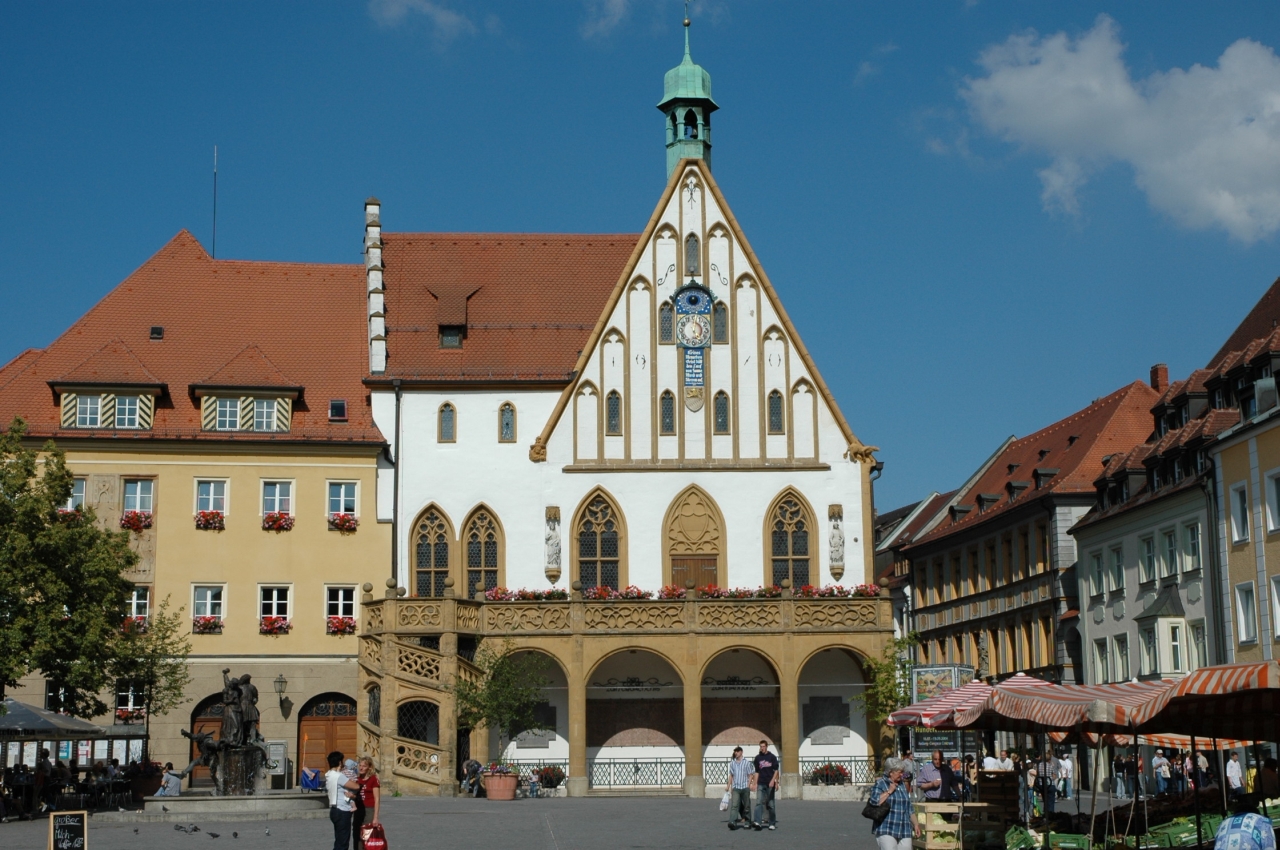
Amberg is noted for a well-preserved medieval townscape: stretches of city wall, defensive towers and tightly knit lanes around a historic market square. Museums and local institutions document the town's mining and industrial past as well as regional art and rural traditions. Annual cultural events and markets continue to draw visitors from the surrounding districts.
Key features and significance
- Regional center in the Upper Palatinate with administrative and cultural functions.
- Historic connection to iron ore mining and 19th-century metallurgical industry.
- Preserved medieval urban fabric and riverside setting.
- Accessible by road and rail to larger Bavarian cities, making it a modest transportation hub.
Amberg's combination of industrial heritage and medieval architecture makes it a representative example of smaller Bavarian towns that bridged preindustrial and industrial eras. For visitors and researchers it offers a compact case study of regional urban continuity and economic change.
Related articles
Author
AlegsaOnline.com Amberg: Historic Upper Palatinate Town in Bavaria Leandro Alegsa
URL: https://en.alegsaonline.com/art/3284
Sources
- destatis.de : "Alle politisch selbständigen Gemeinden mit ausgewählten Merkmalen am 31.12.2018 (4. Quartal)" · web.archive.org
- statistikdaten.bayern.de : "Fortschreibung des Bevölkerungsstandes"
- luitpoldhuette.com : "Luitpoldhütte AG "