
Evolution of cetaceans: from terrestrial mammals to ocean specialists
Summary of how whales, dolphins and porpoises evolved from land-dwelling mammals into fully aquatic animals, including key adaptations, fossil evidence and relationships to other mammals.
Overview
Cetaceans — the groups commonly called whales, dolphins and porpoises — are fully aquatic mammals adapted to life in the oceans and some coastal waters. Although their modern forms are specialised for swimming, breathing at the surface and deep diving, many anatomical and developmental features retain clear evidence of a terrestrial ancestry. The evolutionary story of cetaceans explains how land animals became the large leviathans of the sea and smaller, agile odontocetes that rely on echolocation.
Image gallery
10 Images



Key characteristics and adaptations
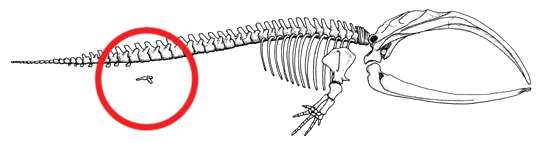
Modern cetaceans show a suite of adaptations to aquatic life: streamlined bodies, forelimbs modified into flippers, reduced or absent external hind limbs, thick blubber for insulation, and tail flukes that provide propulsion with powerful up‑and‑down strokes. They retain mammalian traits such as warm blood, hair at birth, live birth and nursing. Their spine moves vertically rather than the side-to-side undulation typical of fish.
- Breathing and respiration: lungs and a conscious need to surface for air.
- Locomotion: development of a dorsoventrally moving tail fluke.
- Sensory and feeding changes: baleen for filter feeding in some, echolocation in others.
Fossil record and transitional forms
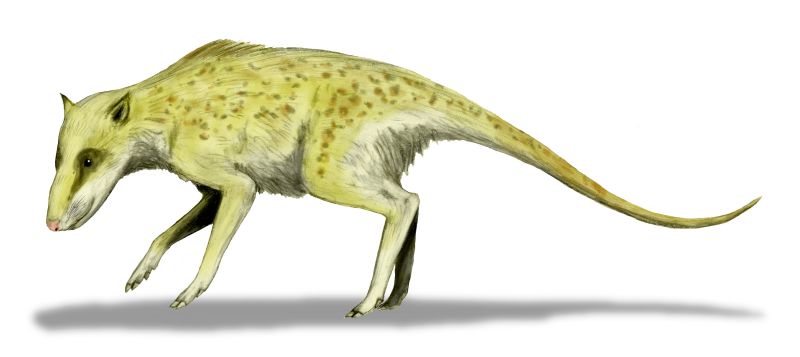
The transition from land to sea is documented by a sequence of fossil taxa, many discovered in the Indian subcontinent. Early forms such as Pakicetus, Ambulocetus and Rodhocetus show a progression from terrestrial to amphibious to fully aquatic lifestyles; many of their fossils were recovered in what is now Pakistan (site reports). These fossils record gradual changes: limb shortening, ear modifications for hearing in water, skull changes and the posterior migration of the nostrils toward a blowhole.
Relationships and evidence from anatomy and molecules
Comparative anatomy and molecular studies link cetaceans to even-toed ungulates (artiodactyls). Structural details of the ankle in early fossils and DNA evidence indicate a close relationship with animals like hippopotamuses, which are the closest living terrestrial relatives. This combined evidence reconciles the fossil sequence with genetic patterns of descent.
Importance and modern diversity
Understanding cetacean evolution has broad significance: it provides a vivid example of major habitat transition in vertebrates and illustrates how complex adaptations accumulate gradually. Today’s cetaceans range from the enormous baleen whales that filter feed in open oceans to highly social, toothed dolphins that hunt with sophisticated sonar. Work in paleontology, comparative anatomy and genetics continues to refine the details of this classic evolutionary narrative (mammal research, marine studies, giant whale biology, dolphin ecology, whale conservation, porpoise surveys).
Questions and answers
Q: What are cetaceans?
A: Cetaceans are a group of mammals that includes whales, dolphins and porpoises.
Q: How do we know that cetaceans evolved from land animals?
A: We can tell that cetaceans evolved from land animals because they need to breathe air from the surface, their fins resemble the limbs of land mammals and their spines move vertically like a running mammal instead of horizontally like fish.
Q: Where were recent discoveries made about the transition of cetaceans from land to sea?
A: Recent discoveries about the transition of cetaceans from land to sea were made in Pakistan.
Q: What does it mean when something is a leviathan?
A: A leviathan is an enormous creature or force, usually referring to a large sea creature such as a whale or other marine animal.
Q: How did scientists uncover stages in the transition of cetaceans from land to sea?
A: Scientists uncovered stages in the transition of cetaceans from land to sea by making recent discoveries in Pakistan.
Q: What type of movement do fish typically have compared with mammals?
A: Fish typically have horizontal movement while mammals have vertical movement.
Related articles
Author
AlegsaOnline.com Evolution of cetaceans: from terrestrial mammals to ocean specialists Leandro Alegsa
URL: https://en.alegsaonline.com/art/32831
Sources
- doi.org : 10.1146/annurev.ecolsys.33.020602.095426
- ui.adsabs.harvard.edu : 2007Natur.450.1190T
- doi.org : 10.1038/nature06343
- pubmed.ncbi.nlm.nih.gov : 18097400
- sciencenewsdaily.org : "Scientists find missing link between the dolphin, whale and its closest relative, the hippo"
- mbe.oxfordjournals.org : "More DNA support for a Cetacea/Hippopotamidae clade: the blood-clotting protein gene gamma-fibrinogen"
- pubmed.ncbi.nlm.nih.gov : 9159931
- ncbi.nlm.nih.gov : "Analyses of mitochondrial genomes strongly support a hippopotamus-whale clade"
- doi.org : 10.1098/rspb.1998.0567
- pubmed.ncbi.nlm.nih.gov : 9881471
- ncbi.nlm.nih.gov : "The position of Hippopotamidae within Cetartiodactyla"
- doi.org : 10.1073/pnas.0409518102
- pubmed.ncbi.nlm.nih.gov : 15677331