
Extensible Messaging and Presence Protocol (XMPP)
XMPP is an open, XML-based protocol for instant messaging, presence, and real-time communication. It supports decentralized servers, extensible features, and many clients and services through standardized extensions.
Overview
The Extensible Messaging and Presence Protocol (XMPP), originally known as Jabber, is a communication protocol for real-time messaging and presence information. It is built on an XML streaming foundation and designed to be extensible so developers can add new features without changing the core protocol. XMPP enables users to exchange messages, broadcast availability (presence), and negotiate additional services across independently run servers. For a general description of instant messaging concepts see instant messaging, and for the underlying data format see XML.
Image gallery
2 Images
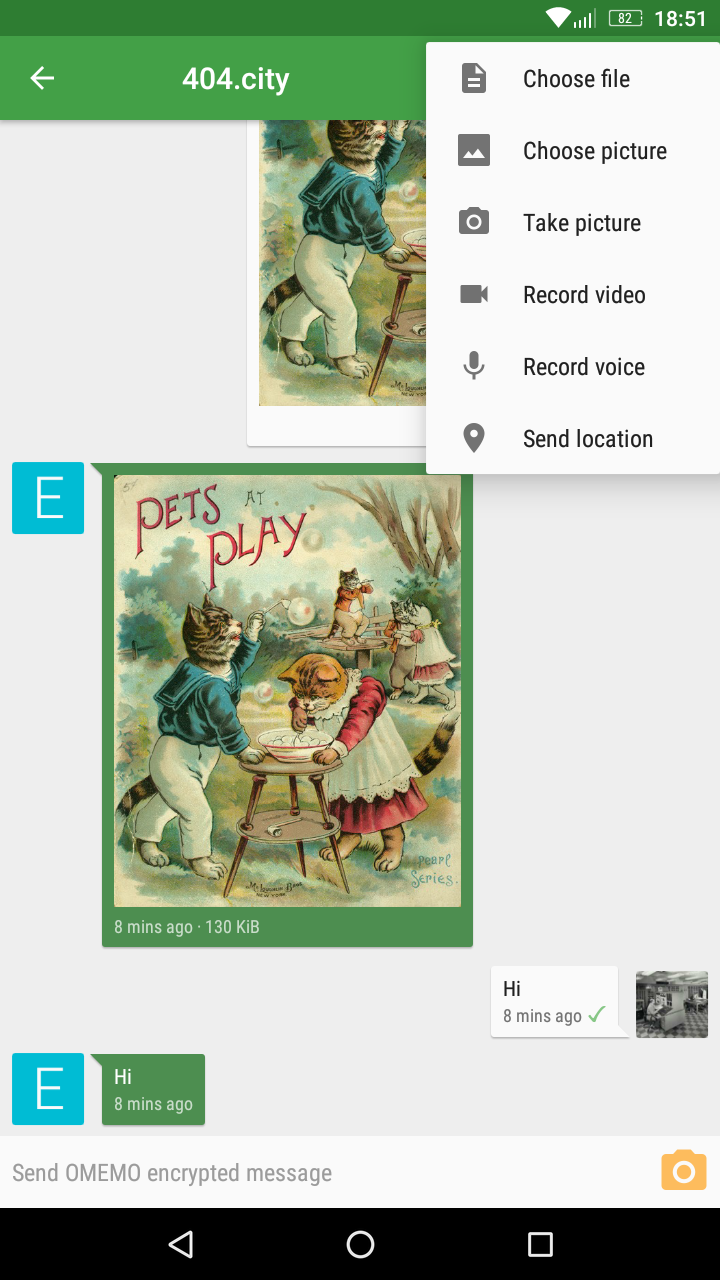
Technical characteristics
XMPP is notable for its decentralized architecture: any organization or individual with a domain name and network access can run an XMPP server and interoperate with others. Communications are broken into small XML elements called "stanzas". The common stanza types include message for chat, presence for availability, and iq (info/query) for structured requests and responses. User addresses follow the Jabber ID (JID) format: user@domain/resource.
- Core transport: XML streams over TCP, often secured with TLS and authenticated with SASL.
- Extensibility: Optional features are specified as XMPP Extension Protocols (XEPs) maintained by the community.
- Interoperability: Federation between servers allows cross-domain messaging similar to email.
History and standards
XMPP began as the open Jabber community in the late 1990s and evolved into an IETF-standardized protocol. Early specifications were published as RFCs and later consolidated into updated core documents. The protocol is stewarded by community organizations that coordinate extension development and documentation. Many client and server projects are available under open source licenses, reflecting the protocol's community-driven origins and implementation model.
Common features and extensions
A wide ecosystem of extensions broadens XMPP beyond simple chat. Notable capabilities include:
- Presence subscription and contact rosters (who is online and reachable).
- Multi-user chat (group rooms) and publish/subscribe patterns.
- File transfer, vCard-based profiles, structured queries, and service discovery.
- Media and telephony signaling via extensions such as Jingle for voice/video sessions.
- End-to-end encryption options (e.g., OMEMO, OTR) layered on the protocol for private communications.
Uses, implementations, and examples
XMPP has powered both independent open-source projects and proprietary services. Many desktop and mobile clients implement the protocol; examples include widely used clients such as Pidgin and Apple’s former iChat. Historically, services like Google Talk and early VoIP gateways like Gizmo5 operated on XMPP or XMPP-derived protocols. The protocol has been deployed on thousands of servers across the internet, and implementations are distributed under open licenses by numerous projects and communities (open source).
Notable distinctions and impact
Unlike many centralized messaging services, XMPP's federated model allows independent operation and cross-provider communication, giving users greater control over accounts and data. Its extensible design encourages innovation through XEPs, enabling use cases from instant chat to IoT signaling and collaborative applications. While commercial ecosystems have shifted in many places to proprietary platforms, XMPP remains an important open standard for interoperable, extensible real-time communication.
Further reading and protocol documentation are available from standards and community resources; introductory material often links basic concepts such as instant messaging and structured data formats like XML to deeper XMPP specifics.
For additional client or server project references see links for implementation examples such as Pidgin, historical services like Google Talk, and community-hosted documentation at various project sites (open source, domains, service ventures, the broader internet).
Questions and answers
Q: What is XMPP?
A: XMPP stands for Extensible Messaging and Presence Protocol. It is a protocol for instant messaging that is inspired by XML and is an open standard.
Q: How is XMPP different from other protocols?
A: XMPP is different from other protocols because it is an open standard. This means that anybody who has a domain name and an internet connection can run their own server.
Q: What are some software that use XMPP protocol?
A: Google Talk and Gizmo5 are examples of software that use the XMPP protocol. Most of the software and the clients are open source.
Q: How many servers across the internet have installed XMPP?
A: XMPP has been installed on thousands of servers across the internet.
Q: How many users use software based on the XMPP protocol?
A: There are over five hundred million users who use software based on the XMPP protocol.
Q: What are some clients that use XMPP?
A: Some clients that use XMPP include Pidgin and iChat.
Q: What is the main advantage of XMPP being an open standard?
A: The main advantage of XMPP being an open standard is that anybody who has a domain name and an internet connection can run their own server.
Related articles
Author
AlegsaOnline.com Extensible Messaging and Presence Protocol (XMPP) Leandro Alegsa
URL: https://en.alegsaonline.com/art/33010
Sources
- jabber.com : Jabber Inc. - About Us
- xmpp.org : Jabber Instant Messaging User Base Surpasses ICQ
- xmpp.org : History of XMPP
- xmpp.org : Jabber Software Foundation Renamed to XMPP Standards Foundation
- jabber.org : jabber.org
- jabberlive.org : Can I use Jabber when I'm behind a firewall?