
Emilia Plater: Polish–Lithuanian noble and November Uprising leader
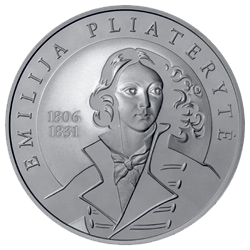
Emilia Plater (1806–1831) was a Polish–Lithuanian noblewoman who took part in the November Uprising. She led insurgent detachments, became a symbol of female patriotism, and inspired art and memorials across the region.
Emilia Plater was a noblewoman from the lands of the former Polish–Lithuanian Commonwealth who became identified with the November Uprising of 1830–1831. Born into a gentry family and raised with a strong sense of patriotic duty, she left the relative safety of her estate to join the insurgent movement against imperial rule. Although her direct military role was limited in duration and scope, her personal choice to take up arms against a larger occupying force captured public imagination.
Image gallery
8 Images


Life and insurgent activity
Plater joined the uprising when it reached her region, organizing and leading a small unit of volunteers. Contemporary reports describe her wearing a uniform and appearing at the head of detachments in several skirmishes; she served as an example of voluntary enlistment and leadership at a time when formal armies were dominated by men. Toward the end of the uprising she fell ill and died, ending a short but dramatic chapter in the conflict.
Characteristics and public image
Though not a commander of a large formation or the victor of major battles, Plater became a symbol of courage and national aspiration. Writers and visual artists of the nineteenth century emphasized her youth, determination and the contrast between her aristocratic origins and her revolutionary activity. She was often represented in a military habit, sometimes likened to other female martial figures in European memory, an image that aided her adoption as an emblem of patriotic female participation.
Legacy and commemoration
Her story quickly entered the cultural memory of several nations that trace heritage to the Commonwealth. She has been commemorated in poems, paintings, monuments, and school curricula, and her name appears on streets, institutions and commemorative plaques. Institutions and artists across Poland, Lithuania and Belarus have invoked her as a national heroine, while literary and artistic studies use her image to discuss gender, nationalism and Romantic-era values. Her life has also been the subject of biographies and popular histories that place her in the broader context of nineteenth-century European revolutions; for resources on her life and the insurgent movement see revolutionary accounts and surveys of art and literature.
Notable distinctions
- Symbolic importance outweighs battlefield achievements: remembered more for what she represented than for military success.
- Cross-cultural figure: celebrated in multiple modern nations that emerged from the old Commonwealth.
- Subject of Romantic-era iconography that connected individual sacrifice with national liberation movements.
Today Emilia Plater is studied both as a historical participant in the November Uprising and as a cultural symbol whose image informed debates about gender, service and national identity in the nineteenth and twentieth centuries. Her life illustrates how brief acts of defiance can be magnified by literature and art into enduring emblems of collective memory.
Related articles
Author
AlegsaOnline.com Emilia Plater: Polish–Lithuanian noble and November Uprising leader Leandro Alegsa
URL: https://en.alegsaonline.com/art/31156