
Emerald Coast (Florida Panhandle)
Coastal region of northwest Florida known for white sands, clear green waters and tourism-driven towns from Pensacola to Port St. Joe.
Overview
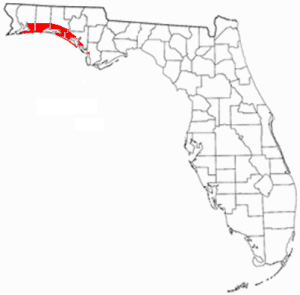
The Emerald Coast is a stretch of coastline in northwest Florida celebrated for its pale quartz beaches and translucent, green-tinged water. It lies along the coast of the Gulf of Mexico and is commonly described as the shoreline roughly bounded by Pensacola on the west and Port St. Joe on the east. The name highlights the region's characteristic water color and has become a popular brand for tourism and real estate.
Image gallery
6 Images


Geography and natural features
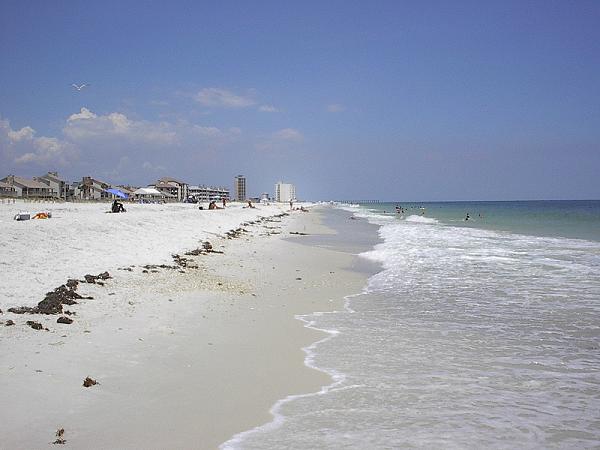
The area includes barrier islands, bays, estuaries and a relatively shallow continental shelf that contributes to the vivid green color of nearshore waters. Beaches are often composed of fine, quartz sand that resists heating and remains bright white. Important natural habitats include sand dune systems, coastal forests, seagrass meadows and tidal marshes that support diverse marine and bird life.
History and development
Indigenous peoples lived along this coastline for millennia before European contact; later centuries brought fishing villages, maritime trade and periodic military presence. In the 20th century the region shifted toward recreation and resort development as automobile travel and coastal real estate grew. Military installations around Pensacola and Eglin also shaped local economies.
Uses, economy and recreation
Tourism is a primary economic driver: beaches, boating, deep-sea and shore fishing, snorkeling and family resorts attract seasonal visitors. The region also supports commercial fishing, military bases and growing residential communities. Popular recreational activities include fishing charters, paddleboarding, beachcombing and wildlife viewing.
Conservation and challenges
Conservation efforts focus on protecting dunes, sea turtle nesting beaches and seagrass beds. Coastal development, erosion and tropical storms pose ongoing challenges; hurricanes periodically reshape dunes and infrastructure, prompting restoration and hazard planning. Several state parks, wildlife refuges and protected shorelines conserve key habitats and provide public access.
Notable places and distinctions
- Major communities and destinations along the corridor include resort towns, barrier islands and small coastal cities.
- The region is noted for exceptionally white sand and shallow, clear waters that range in green shades—hence the name.
- Protected areas and parks preserve coastal ecosystems and offer recreational facilities for visitors and residents.
Together these features make the Emerald Coast one of the most visited and ecologically significant shorelines in the southeastern United States.
Related articles
Author
AlegsaOnline.com Emerald Coast (Florida Panhandle) Leandro Alegsa
URL: https://en.alegsaonline.com/art/31103