
Elfriede Brüning: German journalist, novelist and political activist
Elfriede Brüning (1910–2014) was a German journalist and novelist who wrote under her name and the pseudonym Elke Klent. A Communist Party member persecuted under Nazism, she remained active in leftist politics and literature.
Elfriede Brüning (8 November 1910 – 5 August 2014) was a German journalist, novelist and political activist who wrote fiction and reportage over many decades. She also published under the pseudonym Elke Klent. Brüning is remembered for her long career as a writer in Berlin, her early membership in the Communist Party of Germany, and for surviving political persecution in the 1930s. Her work engaged with social issues and everyday life in twentieth‑century Germany.
Image gallery
2 Images
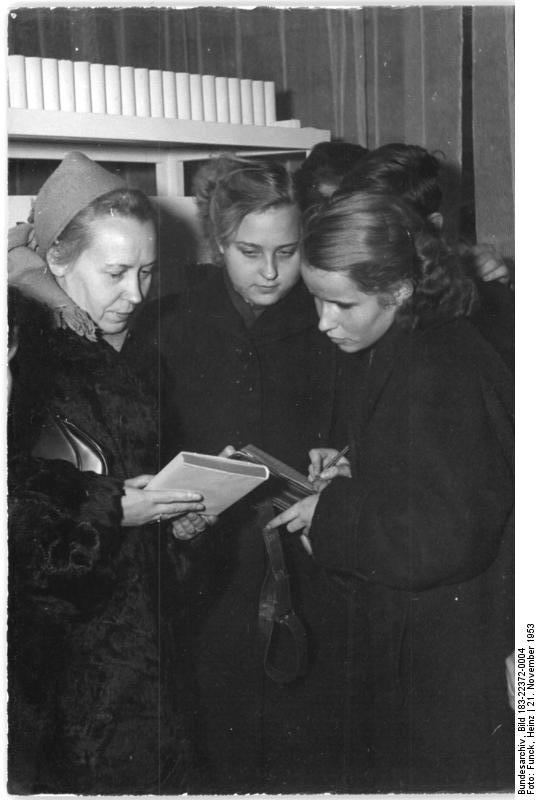
Life and career
Born in Berlin, Brüning began working as a journalist and contributed to several prominent Berlin papers of the interwar period, including the Berliner Tageblatt, the Berliner Börsen‑Courier and the Vossische Zeitung. In 1930 she joined the Communist Party of Germany (KPD), at a time of intense political struggle on the German left and right. Her political activity led to arrest under the Nazi regime in 1935; she was held for a period and released in 1937. After the war she continued to write, publishing novels, short stories and essays as well as features for newspapers and magazines.
Brüning's fiction and reportage often focused on social conditions, the experiences of women and workers, and the pressures of political change on ordinary lives. She continued to publish well into old age and maintained a public presence in German literary and political life. Her use of a nom de plume, Elke Klent, allowed her to reach different readerships and to separate journalistic work from fiction in some instances.
Personal life and later years
In 1937 Brüning married the writer and editor Joachim Barckhausen. They had a daughter, Christiane, born in 1942, who also became a writer. In the decades after World War II Brüning lived and worked through the changing political landscape of divided and later reunified Germany. After German reunification she joined the party Die Linke (The Left), continuing her long association with left‑wing politics. She reached the age of 100 in November 2010 and died of natural causes in Berlin on 5 August 2014 at the age of 103.
Legacy and notable facts
Elfriede Brüning is notable for a remarkably long and sustained literary career against a backdrop of political turmoil. Her experiences of arrest and repression under the Nazi state, followed by decades of writing in postwar Germany, make her a figure of interest for those studying exile, resistance, and the role of women writers in the twentieth century. She is also remembered as a centenarian author whose life spanned the German Empire, Weimar Republic, Nazi era, division and reunification of Germany.
Selected associations and further reading
- Newspapers she contributed to: Berliner Tageblatt, Berliner Börsen‑Courier, Vossische Zeitung
- Political affiliation: Communist Party of Germany (KPD) and later Die Linke
- Biographical resources and archives: biography and interviews, literary archives
- Family and personal records: information on Joachim Barckhausen and Christiane Brüning
- Obituaries and remembrances: contemporary notices
For readers and researchers interested in twentieth‑century German literature and political history, Brüning's long life and steady output offer a lens onto the social and ideological currents that shaped modern Germany. Her dual presence as journalist and novelist illustrates the close ties between reportage and fiction in the representation of everyday historical experience.
Related articles
Author
AlegsaOnline.com Elfriede Brüning: German journalist, novelist and political activist Leandro Alegsa
URL: https://en.alegsaonline.com/art/30805
Sources
- jungewelt.de : "Vom Alltag in der Etappe"