
Elektra — daughter of Agamemnon in Greek myth
Elektra is a figure of Greek mythology, daughter of Agamemnon and Clytemnestra, known for her role in avenging her father's murder and for her portrayal in ancient and modern drama.
Elektra is a prominent figure in the cycle of myths surrounding the house of Atreus. Traditionally described as a daughter of Agamemnon and Clytemnestra, and sister to Orestes, Iphigeneia and Chrysothemis, she appears in a number of ancient Greek plays and later adaptations. Her story is bound up with the return of the Greek kings from the Trojan War and the violent family quarrels that follow.
Image gallery
3 Images
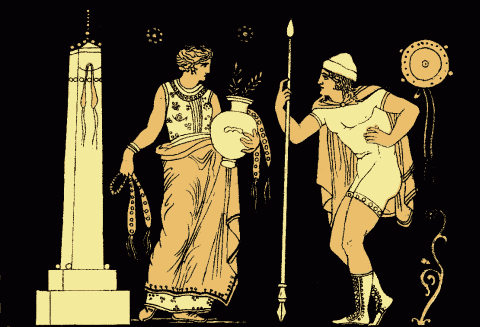

Mythic narrative
The basic sequence is familiar across sources: Agamemnon’s command to sacrifice his daughter Iphigeneia (in some versions only threatened) to obtain favourable winds for the expedition to Troy fuels hatred in Clytemnestra. On Agamemnon’s return from war, Clytemnestra and her lover Aegisthus kill him. Elektra remains in the palace, grieving and consumed by the need for justice. She becomes a driving force behind her brother Orestes’s eventual return and the killing of Clytemnestra and Aegisthus, an act variously treated as revenge, justice, or further crime in different authors.
Character and themes
Elektra is often portrayed through themes of loyalty, rage, and the tension between private vengeance and public law. Ancient tragedians disagree about her temperament: some present her as a pious avenger who preserves her father’s memory, others as an implacable instigator whose fixation on blood ties complicates moral judgement. Her psychological intensity has made her a symbol of familial obsession and bereavement.
Literary and cultural impact
Elektra appears in several classical tragedies, most famously in plays by Aeschylus (part of the Oresteia), Sophocles, and Euripides. Her story has been reshaped in later culture: Richard Strauss’s opera Elektra, modern stage adaptations, and Eugene O’Neill’s play Mourning Becomes Electra are notable examples. In psychoanalytic discourse the term "Electra complex"—coined by Carl Jung to describe a daughter's psychosexual competition with her mother—draws its name from this mythic figure.
Relations and variations
- Family: daughter of Agamemnon and Clytemnestra; sibling to Orestes, Iphigeneia, Chrysothemis.
- Sources: her role differs between epic tradition and the surviving tragedians, and later retellings emphasize different motives and outcomes.
- Interpretations: scholars debate whether Elektra represents justified retribution, destructive vengeance, or a tragic instrument of fate.
Elektra remains an enduring figure for studies of gender, revenge, and the limits of familial duty in Western literature. For introductions to the broader cycle and the archaeological setting of her story see accounts of Mycenae and the post-Trojan War narratives.
Related articles
Author
AlegsaOnline.com Elektra — daughter of Agamemnon in Greek myth Leandro Alegsa
URL: https://en.alegsaonline.com/art/30769